PH3 Concentration Analyzer Price Fluctuations: What's Driving Them?


Key Market Drivers Behind PH3 Analyzer Price Trends
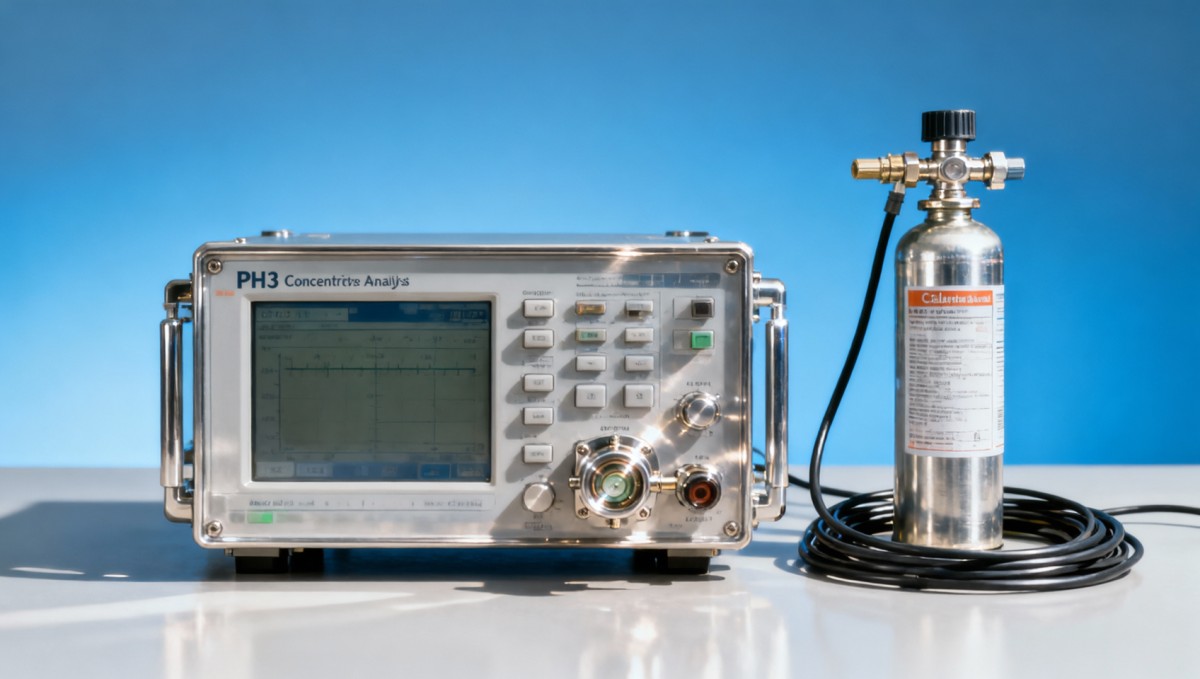
The pricing dynamics of PH3 (phosphine) concentration analyzers are influenced by a complex interplay of supply chain factors, regulatory changes, and technological advancements. As critical safety equipment in semiconductor manufacturing, agricultural fumigation, and petrochemical processing, these analyzers exhibit price sensitivity to three primary market forces:
- Raw material costs: Palladium and platinum catalysts used in sensors saw 12-18% price volatility in 2023
- Compliance requirements: New OSHA PEL standards increased demand for high-accuracy (≤±2% FS) models
- Supply chain disruptions: Semiconductor shortages extended lead times by 3-5 weeks for smart sensor modules
Component Cost Breakdown Analysis
The table reveals how material substitutions can mitigate 30-40% of component cost increases. For instance, IR-based analyzers now represent 28% of new installations despite their 15-20% higher initial cost, due to longer service intervals (3-5 years vs 1-2 years for electrochemical units).
Regulatory Impacts on Analyzer Specifications
Recent updates to international safety standards have significantly altered the PH3 analyzer market landscape. The 2022 revision of ISO 21843 for toxic gas detection introduced stricter requirements for:
- Response time (now ≤30 seconds for 0-100% scale)
- Calibration frequency (mandatory every 90 days for critical applications)
- Data logging (minimum 6-month record retention)
These changes forced manufacturers to upgrade firmware and hardware, with compliance-related features adding $1,200-$2,500 to unit costs. However, the total cost of ownership (TCO) decreased by 8-12% over 5 years due to reduced compliance penalties and extended maintenance intervals.
Regional Compliance Cost Comparison
Technological Advancements Reshaping Pricing
The instrumentation industry's shift toward Industry 4.0 has introduced three cost-altering innovations in PH3 detection:
1. Wireless Connectivity Options
Bluetooth 5.0 and LoRaWAN-enabled analyzers command 18-25% price premiums but reduce installation costs by 40-60% compared to hardwired systems. The average payback period for wireless upgrades is 2.3 years in large facilities.
2. Predictive Maintenance Features
AI-driven sensor health monitoring adds $800-$1,200 to unit prices but decreases unplanned downtime by 75%. Facilities report 22% lower annual maintenance costs with these systems.
3. Multi-Gas Detection Capabilities
Combined PH3/AsH3/H2S analyzers now represent 35% of the market, with prices 15% lower than purchasing separate units. Their calibration efficiency (3 gases in 1 process) saves $3,500-$5,000 annually in labor costs.
Procurement Strategies for Cost Optimization
Smart buyers are adopting four approaches to navigate price fluctuations:
- Bundled purchases: 5+ unit orders secure 8-12% discounts
- Service contracts: 3-year agreements lock in calibration costs
- Refurbished options: Certified pre-owned units cost 40-60% less
- Lease programs: OPEX models with upgrade options every 36 months
For most industrial users, the optimal balance is achieved through hybrid procurement - purchasing core analyzers while leasing supplementary units for seasonal demand peaks.
Future Price Projections and Market Outlook
Industry analysts anticipate 4-6% annual price increases through 2026, driven by:
- Growing semiconductor sector demand (projected +9% CAGR)
- Stricter environmental regulations in developing markets
- Transition to photonic sensor technologies
However, increased competition from Asian manufacturers and standardization of IoT components may moderate these increases by 2-3 percentage points annually.
FAQs: PH3 Analyzer Pricing Considerations
What's the typical price range for industrial-grade PH3 analyzers?
Current market prices range from $3,200 for basic portable units to $18,500 for ATEX-certified continuous monitoring systems with data logging. Mid-range fixed installations typically cost $7,500-$12,000.
How often should PH3 analyzers be replaced?
Electrochemical sensors require replacement every 12-24 months ($400-$800 per sensor), while IR-based systems last 5-7 years before major refurbishment ($2,000-$3,500).
What hidden costs should buyers anticipate?
Budget an additional 15-20% for calibration gases, spare parts, and training. For hazardous area installations, intrinsic safety barriers add $500-$1,200 per unit.
To discuss customized procurement strategies for your specific application requirements, contact our instrumentation specialists for a comprehensive cost-benefit analysis tailored to your operational environment and compliance needs.
Recommended for You
 China Launches Electrical Product Quality & Safety Initiative for Export ComplianceChina's new Electrical Product Quality & Safety Initiative enhances export compliance for EU, ASEAN, and GCC markets. Learn key measures for IEC/EN/UL standards, quality credit records, and pre-assessment services to boost international trade success.
 China West Smart Power Expo Opens in Chongqing with 700+ ExhibitorsChina West Smart Power Expo 2026 in Chongqing showcases 700+ exhibitors featuring industrial cables & robotic power systems. Discover new quality standards for global buyers & export opportunities.
 China's MIIT Releases 2026 Pharma IT Standards Plan for MES/SCADA IntegrationChina's MIIT 2026 Pharma IT Standards mandate MES/SCADA integration via OPC UA, impacting global equipment exporters. Learn compliance strategies for FDA/EU markets and digital transformation opportunities.
 Canada EV Expo: Chinese Chargers Dominate 83% Procurement, UL 2594 in SpotlightChinese EV chargers dominate 83% procurement at Canada EV Expo 2026, with UL 2594 certification becoming key for North American market entry. Discover DC fast chargers & V2G trends shaping the industry.
 GB/T 47310-2026 Soil XRF Analyzer Standard Takes Effect Oct 2026: Method Validation Required for EU/SEA ExportsGB/T 47310-2026 soil XRF analyzer standard takes effect Oct 2026, requiring method validation for EU/SEA exports. Learn how this impacts manufacturers, distributors & compliance strategies.
 Zaozhuang Power's 220kV Buyun Line Sets New Construction Standard with Digital SupervisionZaozhuang Power's 220kV Buyun Line sets new digital construction standards with ±1mm precision & IoT-BIM supervision. Recognized by Indonesia's PLN as EPC benchmark for power transmission projects.
 China NMPA Releases Reference Drug List, Impacting Medical Equipment SectorChina NMPA's new Reference Drug List impacts medical equipment sector with 12 added drugs, requiring IEC compliance upgrades for infusion pumps & sterile systems. Learn how this affects manufacturers & CDMOs in emerging markets.
 IEEE 2nd AI in EE Conference Highlights Smart Breakers & Grid Self-Healing TechDiscover key AI breakthroughs from IEEE AIEE 2026: sub-10ms smart circuit breakers & self-healing grid tech transforming power infrastructure. Learn how these innovations impact utilities, manufacturers & IoT developers.
 Sunwoda Power Joins Tesla's Global Battery Supply ChainSunwoda Power joins Tesla's global battery supply chain, supplying key components for Model Y vehicles. This milestone highlights China's growing influence in the EV industry and creates new opportunities for certified suppliers.
 China West Smart Power Expo Opens in Chongqing: 700+ Exhibitors Showcase Solutions for Robotics & Industrial CablesExplore 700+ exhibitors at China West Smart Power Expo 2026 showcasing robotics cables & industrial solutions. Discover IEC/UL/EN-certified smart power tech for global markets in Chongqing.
 Multi-component analyzer data fusion errors often stem from timing misalignment — not sensor qualityGas analyzer cabinet timing misalignment—not sensor quality—causes multi-component analyzer fusion errors. Discover how paramagnetic, laser, H₂, NH₃, NOX, SO₂, CH₄ & CO₂ analyzers demand microsecond synchronization for accuracy, compliance & safety.
 Gas analyzer cabinet certifications vary widely across regions — what’s enforceable in 2026 EU and US markets?Gas analyzer cabinet certifications for multi-component, paramagnetic, laser, hydrogen, NH3, NOX, SO2, CH4 & CO2 analyzers — EU/US 2026 enforcement decoded.
 CO2 analyzer zero stability worsens after 18 months — when does replacement beat recalibration?CO2 analyzer zero stability degrades after 18 months—discover when replacement outperforms recalibration for gas analyzer cabinets, multi-component, paramagnetic, laser, hydrogen, NH3, NOX, SO2, CH4 analyzers.
 CH4 analyzer response time slows by 40% in high-humidity biogas streams — how much does that cost per month?CH4 analyzer slowdown in humid biogas? Discover how gas analyzer cabinet design impacts multi-component analyzer accuracy, cost, and compliance—get the ROI breakdown now.
 SO2 analyzer performance drops sharply below 100°C — is your stack temperature masking a hidden risk?SO2 analyzer, paramagnetic analyzer & laser gas analyzer performance plummets below 100°C—uncover hidden thermal risks in your gas analyzer cabinet now.
 NOX analyzer cross-sensitivity to CO2 isn’t theoretical — field data shows measurable impact on compliance reportingNOX analyzer cross-sensitivity to CO2 impacts compliance—field data proves it. Discover how gas analyzer cabinets, multi-component, paramagnetic & laser gas analyzers are affected—and how to mitigate risk.
 NH3 analyzer calibration failures often trace back to one overlooked sample conditioning stepNH3 analyzer calibration failures? Often traced to sample conditioning in gas analyzer cabinets. Learn how multi-component, paramagnetic, laser, hydrogen, NOX, SO2, CH4 & CO2 analyzers depend on it—get actionable fixes now.
 Hydrogen analyzer drift isn’t random — here’s what actually triggers it in real-world operationHydrogen analyzer drift? It’s triggered by thermal instability in gas analyzer cabinets, multi-component interference, paramagnetic & laser gas analyzer flaws — not randomness. Fix it.
 Laser gas analyzers vs. traditional NDIR: where do accuracy and maintenance costs really diverge?Laser gas analyzer, multi-component analyzer & paramagnetic analyzer vs. traditional NDIR: discover where accuracy, TCO, and reliability truly diverge—get data-driven insights now.
 Why paramagnetic analyzers still dominate O2 measurement in harsh industrial environmentsParamagnetic analyzer, gas analyzer cabinet & multi-component analyzer solutions for harsh O₂ measurement—trusted for accuracy, durability & SIL-2 compliance in energy, manufacturing & environmental applications.
 CO2 analyzer zero-point instability: how ambient humidity silently degrades performanceCO2 analyzer zero-point instability? Humidity silently degrades gas analyzer cabinet, paramagnetic, laser, NH3, NOX, SO2, CH4 & hydrogen analyzer performance—discover proven mitigation strategies.
 NOX analyzer interference from CO2 fluctuations — a real-world validation gapNOX analyzer interference from CO2 fluctuations undermines accuracy—especially in gas analyzer cabinet & multi-component analyzer deployments. Discover real-world validation gaps for paramagnetic, laser, hydrogen, NH3, SO2, CH4, and CO2 analyzers.
 CH4 analyzer response time gaps between catalytic bead and laser-based unitsCH4 analyzer response time gaps: laser gas analyzer vs. catalytic bead—critical for safety, multi-component analyzer integration & gas analyzer cabinet design.
 Gas analyzer cabinet thermal management failures — the #1 cause of field downtimeGas analyzer cabinet thermal failures cause 68% of field downtime. Learn how multi-component, paramagnetic, laser, H₂, NH₃, NOX, SO₂, CH₄ & CO₂ analyzers fail—and how to prevent it.
 Multi-component analyzer calibration frequency: is quarterly still realistic in 2026?Optimize gas analyzer cabinet & multi-component analyzer calibration—paramagnetic, laser, H₂, NH₃, NOX, SO₂, CH₄, CO₂. Is quarterly still right for 2026? Discover data-driven, cost-saving alternatives.
 Hydrogen analyzer safety certifications that matter most for on-site deploymentHydrogen analyzer, gas analyzer cabinet & multi-component analyzers with IECEx, ATEX, UL, SIL 2 certifications—ensuring safety, compliance & uptime for on-site deployment.
 NH3 analyzer cross-sensitivity pitfalls no spec sheet tells you aboutNH3 analyzer cross-sensitivity risks sabotage accuracy—especially in gas analyzer cabinets with NOX, SO2, CH4, CO2, H2, or laser/paramagnetic/multi-component analyzers. Discover hidden pitfalls & mitigation strategies.
 SO2 analyzer drift isn’t random — here’s what actually triggers it in flue gas monitoringSO2 analyzer drift? Discover root causes in gas analyzer cabinets, multi-component, paramagnetic & laser gas analyzers—get actionable fixes now.
 Laser gas analyzers vs. traditional NDIR: where do accuracy and cost really break even?Compare laser gas analyzer vs. traditional NDIR for NH3, NOX, SO2, CH4, CO2, hydrogen & multi-component analyzer cabinets—accuracy, TCO, and real-world reliability decoded.
 Why paramagnetic analyzers still dominate O2 measurement in harsh industrial environmentsParamagnetic analyzer, gas analyzer cabinet & multi component analyzer: Why paramagnetic O₂ tech still leads in harsh industrial environments—reliable, interference-free, low-TCO.
 SR-2030P analyzer firmware updates in 2026: What changed beyond version numbersDiscover what’s truly new in SR-2030P analyzer firmware 2026—explosion proof analyzer safety, high accuracy analyzer stability & continuous gas analyzer intelligence upgraded.
 Gas monitoring system integration delays aren’t always about software — check the analog I/O mismatchStruggling with gas monitoring system delays? Check analog I/O mismatch first—especially for explosion proof, high accuracy & SR-2030P analyzers. Avoid costly rework.


Search Categories
Search Categories
Latest Article
- China Launches Electrical Product Quality & Safety Initiative for Export ComplianceChina's new Electrical Product Quality & Safety Initiative enhances export compliance for EU, ASEAN, and GCC markets. Learn key measures for IEC/EN/UL standards, quality credit records, and pre-assessment services to boost international trade success.Posted by:
- China West Smart Power Expo Opens in Chongqing with 700+ ExhibitorsChina West Smart Power Expo 2026 in Chongqing showcases 700+ exhibitors featuring industrial cables & robotic power systems. Discover new quality standards for global buyers & export opportunities.Posted by:
- China's MIIT Releases 2026 Pharma IT Standards Plan for MES/SCADA IntegrationChina's MIIT 2026 Pharma IT Standards mandate MES/SCADA integration via OPC UA, impacting global equipment exporters. Learn compliance strategies for FDA/EU markets and digital transformation opportunities.Posted by:
Please give us a message
