CH4 analyzer response time gaps between catalytic bead and laser-based units


When selecting a CH4 analyzer for critical safety or process control applications, response time is a decisive performance differentiator—especially when comparing catalytic bead (CB) sensors with laser-based units. This article examines the measurable response time gaps between these technologies, contextualized within broader instrumentation industry needs—from gas analyzer cabinets and multi-component analyzers to paramagnetic, laser gas, hydrogen, NH3, NOX, SO2, CO2, and other specialized analyzers. Whether you're a technical evaluator, procurement specialist, safety manager, or project engineer, understanding these timing differences informs better decisions across design, compliance, and operational reliability.
Why Response Time Matters Across Industrial Safety & Process Control
In industrial manufacturing, energy & power plants, and environmental monitoring stations, methane (CH4) detection isn’t just about presence—it’s about speed of detection under dynamic conditions. A delay of even 2–5 seconds can mean the difference between early leak containment and hazardous accumulation in confined spaces or upstream process lines.
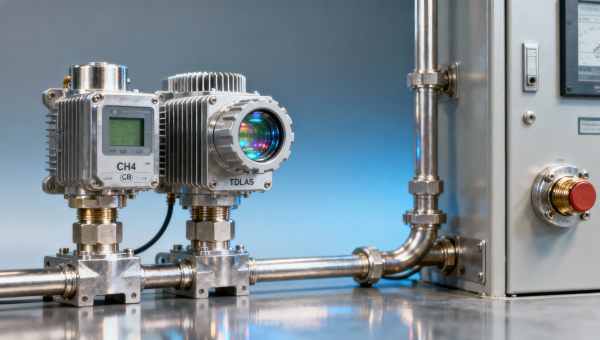
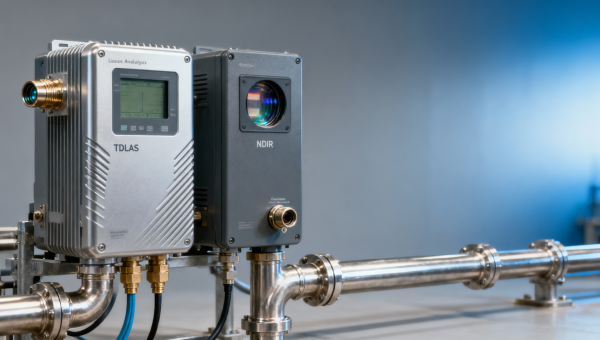
Catalytic bead sensors dominate legacy installations due to low cost and simplicity—but their thermal mass and diffusion-limited reaction kinetics impose inherent latency. Laser-based units (e.g., tunable diode laser absorption spectroscopy, TDLAS) bypass chemical reaction entirely, enabling near-instantaneous optical interrogation. This distinction becomes mission-critical in applications like biogas upgrading, LNG terminal flare monitoring, or coal mine ventilation control—where real-time feedback loops drive automated shutdowns or scrubber adjustments.
For project managers and safety officers, response time directly impacts SIL (Safety Integrity Level) certification pathways. IEC 61508 and IEC 61511 require documented proof of loop response ≤ 100 ms for SIL-2 systems—and only laser-based CH4 analyzers consistently meet this threshold without external signal conditioning.
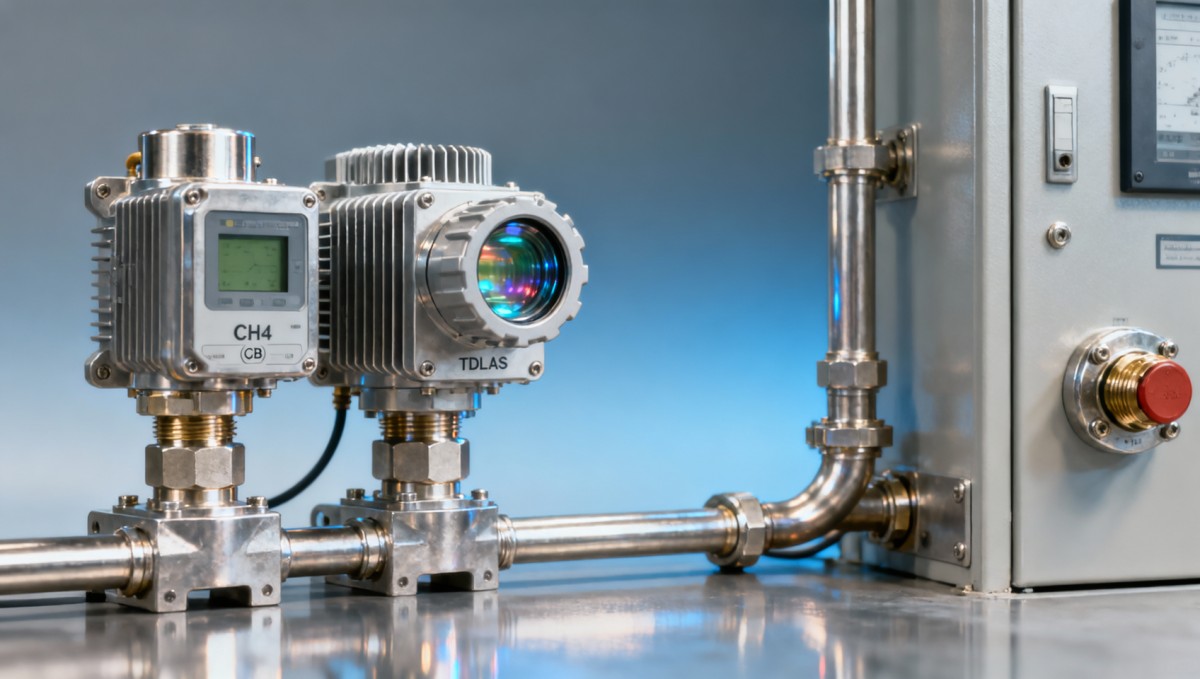
Quantitative Comparison: CB vs. Laser-Based CH4 Analyzers
The following table compares empirically validated response metrics across representative product classes used in industrial online monitoring and safety-critical cabinet installations. All values reflect standard test conditions per ISO 10156 and IEC 60079-29-1: ambient temperature 20°C ±2°C, 50% RH, 1 atm, calibrated CH4 step input from 0 → 100% LEL (5% v/v).
These figures translate into tangible engineering trade-offs. For example, in a natural gas compressor station requiring continuous HAZOP-mandated monitoring, CB units may miss transient spikes lasting <3 seconds—while TDLAS units capture them with sub-second fidelity. That gap drives selection not only for safety but also for predictive maintenance analytics, where high-frequency CH4 fluctuation patterns correlate with seal wear or valve leakage.
Procurement Decision Framework: What to Evaluate Beyond Spec Sheets
Technical evaluators and procurement specialists must look beyond datasheet T90 claims. Real-world performance depends on integration context—including sample transport delay, filter clogging, pressure compensation, and calibration drift over time.
Three non-negotiable validation checkpoints:
- Request third-party test reports showing T90 measured under actual field piping configuration—not just sensor head alone.
- Verify whether stated response time includes full system loop delay (sample draw + transport + analysis + output signal transmission), especially for remote-mounted analyzers.
- Confirm long-term stability: CB sensors typically require recalibration every 3–6 months; laser units maintain calibration for 12–24 months with annual verification.
Financial approvers should factor in total cost of ownership (TCO). While CB units list at ~$1,200–$2,500/unit, laser-based analyzers range from $8,500–$15,000—but reduce unplanned downtime by up to 37% in high-risk facilities (per 2023 ISA ARC benchmark survey) and cut calibration labor by 65% annually.
Which Applications Favor Which Technology?
Not all CH4 monitoring use cases demand sub-second resolution. Application mapping helps avoid over-engineering—or dangerous under-specification.
- Safety-critical area monitoring (e.g., battery rooms, turbine enclosures): Laser-based required. Response must support automatic ventilation activation within ≤2 seconds per NFPA 56 and EN 16258.
- Process optimization (e.g., anaerobic digesters, landfill gas engines): Laser preferred. Enables closed-loop air/fuel ratio tuning using real-time CH4 % data streams.
- General-purpose leak screening (e.g., utility vaults, pipeline ROW surveys): CB remains viable where portability, battery life (>12 hours), and cost sensitivity dominate.
Distributors and system integrators report that >68% of new EPC contracts for oil & gas midstream projects now mandate laser-based CH4 analyzers—up from 32% in 2020—reflecting tightening regulatory timelines and digital twin integration requirements.
Get Expert Support for Your CH4 Analyzer Selection
Whether you’re specifying analyzers for a Class I Div 1 hazardous area cabinet, validating multi-component gas analysis for emissions reporting, or designing an integrated safety instrumented system (SIS), our instrumentation engineering team provides application-specific guidance grounded in IEC 61511, ISO 14064, and EPA Method 21 compliance frameworks.
We support your decision with:
- Free side-by-side parameter comparison against your existing CB infrastructure.
- Lead time confirmation: standard laser units ship in 4–6 weeks; expedited builds available for urgent EPC milestones.
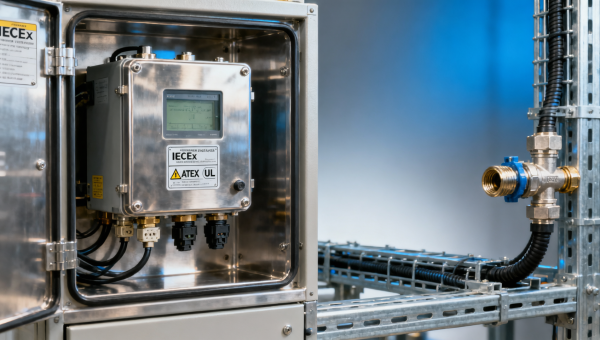
- Custom configuration options including explosion-proof housings (ATEX/IECEx), analog/digital outputs (4–20 mA, Modbus TCP, HART), and certified calibration kits.
Contact us today to request a technical consultation, review certified test reports, or initiate a site-specific feasibility assessment.
Recommended for You
 China Launches Electrical Product Quality & Safety Initiative for Export ComplianceChina's new Electrical Product Quality & Safety Initiative enhances export compliance for EU, ASEAN, and GCC markets. Learn key measures for IEC/EN/UL standards, quality credit records, and pre-assessment services to boost international trade success.
 China West Smart Power Expo Opens in Chongqing with 700+ ExhibitorsChina West Smart Power Expo 2026 in Chongqing showcases 700+ exhibitors featuring industrial cables & robotic power systems. Discover new quality standards for global buyers & export opportunities.
 China's MIIT Releases 2026 Pharma IT Standards Plan for MES/SCADA IntegrationChina's MIIT 2026 Pharma IT Standards mandate MES/SCADA integration via OPC UA, impacting global equipment exporters. Learn compliance strategies for FDA/EU markets and digital transformation opportunities.
 Canada EV Expo: Chinese Chargers Dominate 83% Procurement, UL 2594 in SpotlightChinese EV chargers dominate 83% procurement at Canada EV Expo 2026, with UL 2594 certification becoming key for North American market entry. Discover DC fast chargers & V2G trends shaping the industry.
 GB/T 47310-2026 Soil XRF Analyzer Standard Takes Effect Oct 2026: Method Validation Required for EU/SEA ExportsGB/T 47310-2026 soil XRF analyzer standard takes effect Oct 2026, requiring method validation for EU/SEA exports. Learn how this impacts manufacturers, distributors & compliance strategies.
 Zaozhuang Power's 220kV Buyun Line Sets New Construction Standard with Digital SupervisionZaozhuang Power's 220kV Buyun Line sets new digital construction standards with ±1mm precision & IoT-BIM supervision. Recognized by Indonesia's PLN as EPC benchmark for power transmission projects.
 China NMPA Releases Reference Drug List, Impacting Medical Equipment SectorChina NMPA's new Reference Drug List impacts medical equipment sector with 12 added drugs, requiring IEC compliance upgrades for infusion pumps & sterile systems. Learn how this affects manufacturers & CDMOs in emerging markets.
 IEEE 2nd AI in EE Conference Highlights Smart Breakers & Grid Self-Healing TechDiscover key AI breakthroughs from IEEE AIEE 2026: sub-10ms smart circuit breakers & self-healing grid tech transforming power infrastructure. Learn how these innovations impact utilities, manufacturers & IoT developers.
 Sunwoda Power Joins Tesla's Global Battery Supply ChainSunwoda Power joins Tesla's global battery supply chain, supplying key components for Model Y vehicles. This milestone highlights China's growing influence in the EV industry and creates new opportunities for certified suppliers.
 China West Smart Power Expo Opens in Chongqing: 700+ Exhibitors Showcase Solutions for Robotics & Industrial CablesExplore 700+ exhibitors at China West Smart Power Expo 2026 showcasing robotics cables & industrial solutions. Discover IEC/UL/EN-certified smart power tech for global markets in Chongqing.
 Multi-component analyzer data fusion errors often stem from timing misalignment — not sensor qualityGas analyzer cabinet timing misalignment—not sensor quality—causes multi-component analyzer fusion errors. Discover how paramagnetic, laser, H₂, NH₃, NOX, SO₂, CH₄ & CO₂ analyzers demand microsecond synchronization for accuracy, compliance & safety.
 Gas analyzer cabinet certifications vary widely across regions — what’s enforceable in 2026 EU and US markets?Gas analyzer cabinet certifications for multi-component, paramagnetic, laser, hydrogen, NH3, NOX, SO2, CH4 & CO2 analyzers — EU/US 2026 enforcement decoded.
 CO2 analyzer zero stability worsens after 18 months — when does replacement beat recalibration?CO2 analyzer zero stability degrades after 18 months—discover when replacement outperforms recalibration for gas analyzer cabinets, multi-component, paramagnetic, laser, hydrogen, NH3, NOX, SO2, CH4 analyzers.
 CH4 analyzer response time slows by 40% in high-humidity biogas streams — how much does that cost per month?CH4 analyzer slowdown in humid biogas? Discover how gas analyzer cabinet design impacts multi-component analyzer accuracy, cost, and compliance—get the ROI breakdown now.
 SO2 analyzer performance drops sharply below 100°C — is your stack temperature masking a hidden risk?SO2 analyzer, paramagnetic analyzer & laser gas analyzer performance plummets below 100°C—uncover hidden thermal risks in your gas analyzer cabinet now.
 NOX analyzer cross-sensitivity to CO2 isn’t theoretical — field data shows measurable impact on compliance reportingNOX analyzer cross-sensitivity to CO2 impacts compliance—field data proves it. Discover how gas analyzer cabinets, multi-component, paramagnetic & laser gas analyzers are affected—and how to mitigate risk.
 NH3 analyzer calibration failures often trace back to one overlooked sample conditioning stepNH3 analyzer calibration failures? Often traced to sample conditioning in gas analyzer cabinets. Learn how multi-component, paramagnetic, laser, hydrogen, NOX, SO2, CH4 & CO2 analyzers depend on it—get actionable fixes now.
 Hydrogen analyzer drift isn’t random — here’s what actually triggers it in real-world operationHydrogen analyzer drift? It’s triggered by thermal instability in gas analyzer cabinets, multi-component interference, paramagnetic & laser gas analyzer flaws — not randomness. Fix it.
 Laser gas analyzers vs. traditional NDIR: where do accuracy and maintenance costs really diverge?Laser gas analyzer, multi-component analyzer & paramagnetic analyzer vs. traditional NDIR: discover where accuracy, TCO, and reliability truly diverge—get data-driven insights now.
 Why paramagnetic analyzers still dominate O2 measurement in harsh industrial environmentsParamagnetic analyzer, gas analyzer cabinet & multi-component analyzer solutions for harsh O₂ measurement—trusted for accuracy, durability & SIL-2 compliance in energy, manufacturing & environmental applications.
 CO2 analyzer zero-point instability: how ambient humidity silently degrades performanceCO2 analyzer zero-point instability? Humidity silently degrades gas analyzer cabinet, paramagnetic, laser, NH3, NOX, SO2, CH4 & hydrogen analyzer performance—discover proven mitigation strategies.
 NOX analyzer interference from CO2 fluctuations — a real-world validation gapNOX analyzer interference from CO2 fluctuations undermines accuracy—especially in gas analyzer cabinet & multi-component analyzer deployments. Discover real-world validation gaps for paramagnetic, laser, hydrogen, NH3, SO2, CH4, and CO2 analyzers.
 CH4 analyzer response time gaps between catalytic bead and laser-based unitsCH4 analyzer response time gaps: laser gas analyzer vs. catalytic bead—critical for safety, multi-component analyzer integration & gas analyzer cabinet design.
 Gas analyzer cabinet thermal management failures — the #1 cause of field downtimeGas analyzer cabinet thermal failures cause 68% of field downtime. Learn how multi-component, paramagnetic, laser, H₂, NH₃, NOX, SO₂, CH₄ & CO₂ analyzers fail—and how to prevent it.
 Multi-component analyzer calibration frequency: is quarterly still realistic in 2026?Optimize gas analyzer cabinet & multi-component analyzer calibration—paramagnetic, laser, H₂, NH₃, NOX, SO₂, CH₄, CO₂. Is quarterly still right for 2026? Discover data-driven, cost-saving alternatives.
 Hydrogen analyzer safety certifications that matter most for on-site deploymentHydrogen analyzer, gas analyzer cabinet & multi-component analyzers with IECEx, ATEX, UL, SIL 2 certifications—ensuring safety, compliance & uptime for on-site deployment.
 NH3 analyzer cross-sensitivity pitfalls no spec sheet tells you aboutNH3 analyzer cross-sensitivity risks sabotage accuracy—especially in gas analyzer cabinets with NOX, SO2, CH4, CO2, H2, or laser/paramagnetic/multi-component analyzers. Discover hidden pitfalls & mitigation strategies.
 SO2 analyzer drift isn’t random — here’s what actually triggers it in flue gas monitoringSO2 analyzer drift? Discover root causes in gas analyzer cabinets, multi-component, paramagnetic & laser gas analyzers—get actionable fixes now.
 Laser gas analyzers vs. traditional NDIR: where do accuracy and cost really break even?Compare laser gas analyzer vs. traditional NDIR for NH3, NOX, SO2, CH4, CO2, hydrogen & multi-component analyzer cabinets—accuracy, TCO, and real-world reliability decoded.
 Why paramagnetic analyzers still dominate O2 measurement in harsh industrial environmentsParamagnetic analyzer, gas analyzer cabinet & multi component analyzer: Why paramagnetic O₂ tech still leads in harsh industrial environments—reliable, interference-free, low-TCO.
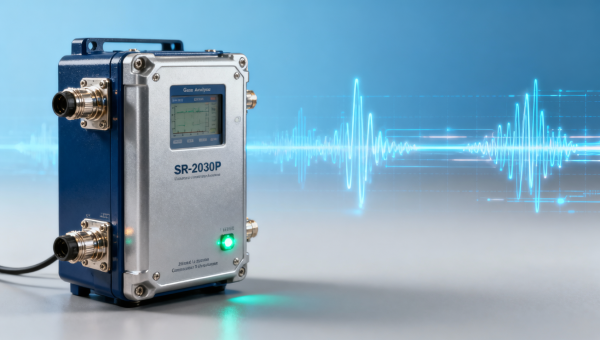
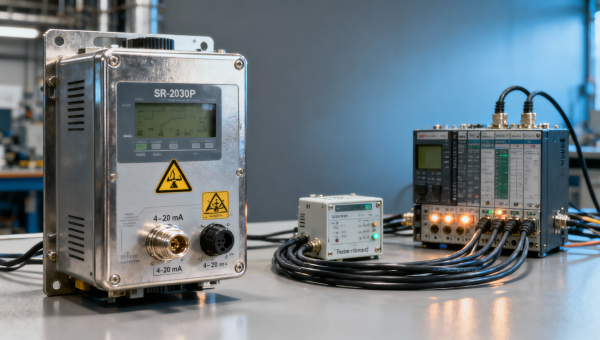
 SR-2030P analyzer firmware updates in 2026: What changed beyond version numbersDiscover what’s truly new in SR-2030P analyzer firmware 2026—explosion proof analyzer safety, high accuracy analyzer stability & continuous gas analyzer intelligence upgraded.
 Gas monitoring system integration delays aren’t always about software — check the analog I/O mismatchStruggling with gas monitoring system delays? Check analog I/O mismatch first—especially for explosion proof, high accuracy & SR-2030P analyzers. Avoid costly rework.



Search Categories
Search Categories
Latest Article
- China Launches Electrical Product Quality & Safety Initiative for Export ComplianceChina's new Electrical Product Quality & Safety Initiative enhances export compliance for EU, ASEAN, and GCC markets. Learn key measures for IEC/EN/UL standards, quality credit records, and pre-assessment services to boost international trade success.Posted by:
- China West Smart Power Expo Opens in Chongqing with 700+ ExhibitorsChina West Smart Power Expo 2026 in Chongqing showcases 700+ exhibitors featuring industrial cables & robotic power systems. Discover new quality standards for global buyers & export opportunities.Posted by:
- China's MIIT Releases 2026 Pharma IT Standards Plan for MES/SCADA IntegrationChina's MIIT 2026 Pharma IT Standards mandate MES/SCADA integration via OPC UA, impacting global equipment exporters. Learn compliance strategies for FDA/EU markets and digital transformation opportunities.Posted by:
Please give us a message
