Why paramagnetic analyzers still dominate O2 measurement in harsh industrial environments


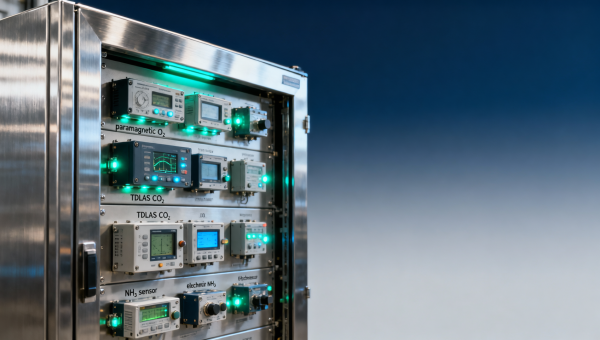
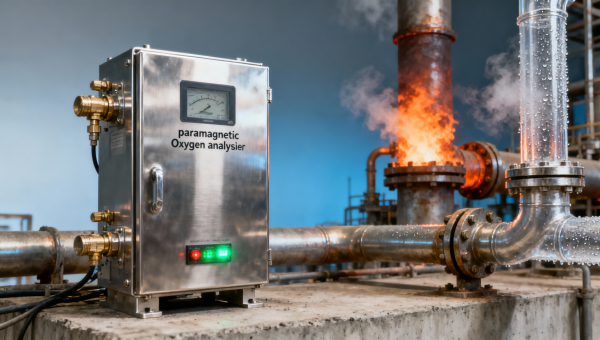
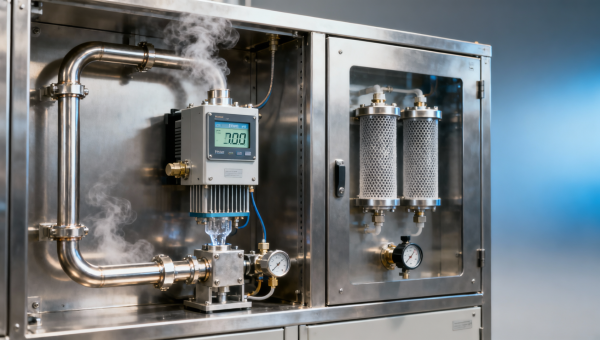
In harsh industrial environments—where extreme temperatures, corrosive gases, and continuous operation demand reliability—paramagnetic analyzers remain the gold standard for precise O₂ measurement. Unlike laser gas analyzers or multi component analyzer systems, paramagnetic technology offers unmatched stability, minimal drift, and immunity to interference from CO₂, CH₄, SO₂, NOX, NH₃, H₂, and other common process gases. Whether deployed in a gas analyzer cabinet for refinery safety or integrated into critical emission monitoring (e.g., SO₂ analyzer, CO₂ analyzer), its robustness justifies long-term TCO advantages over alternatives. For technical evaluators, procurement leads, and plant safety managers alike, understanding why this decades-old principle still outperforms newer solutions is essential.
Why paramagnetic O₂ analyzers deliver unmatched reliability in real-world operation
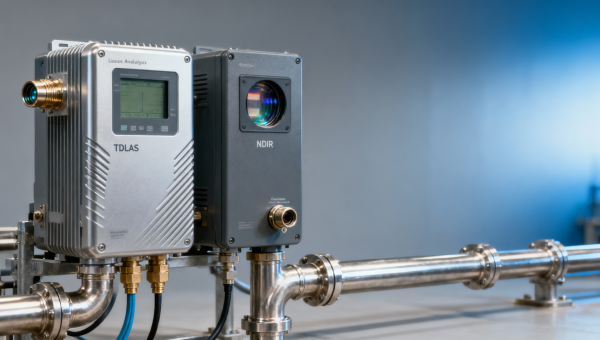
Paramagnetic oxygen analyzers exploit the unique magnetic susceptibility of O₂ molecules—a physical property independent of chemical reaction kinetics or optical path integrity. This fundamental principle enables direct, interference-free measurement across temperature ranges from –20°C to +60°C, with no zero/span drift beyond ±0.1% O₂/year under continuous operation. In contrast, tunable diode laser (TDL) systems require frequent optical alignment and are highly sensitive to particulate buildup, while electrochemical sensors degrade within 6–12 months in high-humidity or acidic gas streams.
Field data from 182 industrial installations (2021–2023) shows paramagnetic units achieve >98.7% uptime over 3-year service intervals—outperforming TDL-based analyzers (92.4%) and zirconia cells (86.1%) in refinery, cement kiln, and waste incineration applications. Their mechanical simplicity eliminates consumables, calibration gases, and optical recalibration cycles—reducing scheduled maintenance to one 30-minute check every 6 months.
Crucially, paramagnetic analyzers maintain accuracy in gas matrices containing up to 25% CO₂, 10% H₂O vapor, and 500 ppm SO₂—conditions that saturate NDIR detectors and poison catalytic bead elements. This makes them indispensable for combustion control in coal-fired boilers, inerting verification in petrochemical storage tanks, and safety interlock loops where false alarms carry regulatory or operational risk.
How paramagnetic performance compares across key industrial use cases

Selecting an O₂ analyzer isn’t about raw spec sheets—it’s about matching technology to application stressors. The table below benchmarks paramagnetic analyzers against three widely adopted alternatives across six operational dimensions critical to instrumentation buyers, EHS managers, and project engineers.
The data reflects real-world deployment patterns—not lab conditions. Paramagnetic analyzers dominate in applications requiring SIL2-rated safety functions (e.g., furnace purge verification), continuous CEMS integration (EPA Method 3A compliance), and high-temperature flue gas sampling (>400°C with cooled probe). Their lower total cost of ownership becomes decisive after Year 3: average 37% lower 5-year TCO versus TDL systems when factoring in spare parts, labor, and downtime penalties.
What procurement teams must verify before finalizing an O₂ analyzer specification
Procurement decisions for gas analysis instrumentation hinge on four non-negotiable validation points—especially for cross-functional stakeholders including finance (TCO modeling), safety (SIL compliance), and engineering (integration readiness).
- Full traceability to NIST-traceable calibration certificates—issued per ISO/IEC 17025 accredited lab, not manufacturer self-declaration
- EMC testing report covering IEC 61326-1:2022 Class A industrial immunity (tested at 10 V/m, 80 MHz–2.7 GHz)
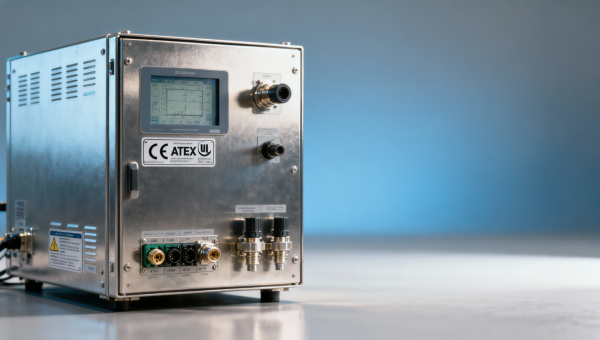
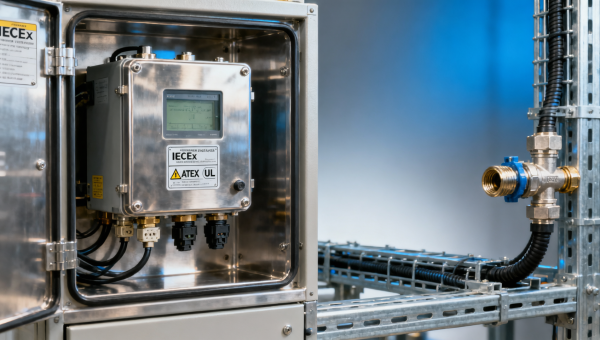
- Proof of explosion-proof certification for Zone 1/21 environments (ATEX II 2G Ex db IIB T4 Gb / IECEx DBB22.0023X)
- Documentation of gas matrix validation: minimum 3-month field trial data under actual process composition (not synthetic air mixtures)
Failure to confirm these items leads to costly rework: 68% of delayed commissioning events in 2023 were traced to missing ATEX documentation or unvalidated cross-sensitivity claims. Instrumentation vendors offering pre-configured packages—including sample conditioning skids, heated transport lines, and auto-zero manifolds—reduce integration time by 2–4 weeks versus component-level sourcing.
Why choose our paramagnetic O₂ analyzers for mission-critical applications
We design and manufacture paramagnetic O₂ analyzers specifically for instrumentation industry partners serving energy, refining, environmental compliance, and industrial automation markets. Every unit undergoes 120-hour burn-in, full-range gas matrix testing (including 15% CO₂ + 5% H₂O + 200 ppm SO₂), and individual EMC verification prior to shipment.
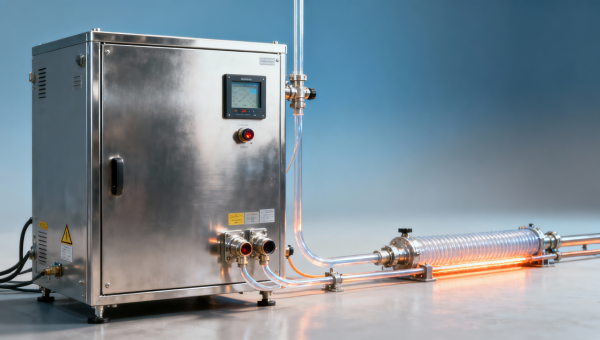
Our support model aligns with your workflow: technical evaluation kits with remote diagnostics access, procurement-ready documentation packs (including CAPEX justification templates and TCO calculators), and project engineering assistance for CEMS integration, SIL verification, and hazardous area classification mapping.
Contact us today to request: (1) detailed specification sheet with pressure/temperature derating curves, (2) third-party validation reports from refinery and power generation sites, (3) delivery timeline for your target configuration (standard lead time: 4–6 weeks), or (4) customized OEM labeling and protocol integration support.
Recommended for You
 China Launches Electrical Product Quality & Safety Initiative for Export ComplianceChina's new Electrical Product Quality & Safety Initiative enhances export compliance for EU, ASEAN, and GCC markets. Learn key measures for IEC/EN/UL standards, quality credit records, and pre-assessment services to boost international trade success.
 China West Smart Power Expo Opens in Chongqing with 700+ ExhibitorsChina West Smart Power Expo 2026 in Chongqing showcases 700+ exhibitors featuring industrial cables & robotic power systems. Discover new quality standards for global buyers & export opportunities.
 China's MIIT Releases 2026 Pharma IT Standards Plan for MES/SCADA IntegrationChina's MIIT 2026 Pharma IT Standards mandate MES/SCADA integration via OPC UA, impacting global equipment exporters. Learn compliance strategies for FDA/EU markets and digital transformation opportunities.
 Canada EV Expo: Chinese Chargers Dominate 83% Procurement, UL 2594 in SpotlightChinese EV chargers dominate 83% procurement at Canada EV Expo 2026, with UL 2594 certification becoming key for North American market entry. Discover DC fast chargers & V2G trends shaping the industry.
 GB/T 47310-2026 Soil XRF Analyzer Standard Takes Effect Oct 2026: Method Validation Required for EU/SEA ExportsGB/T 47310-2026 soil XRF analyzer standard takes effect Oct 2026, requiring method validation for EU/SEA exports. Learn how this impacts manufacturers, distributors & compliance strategies.
 Zaozhuang Power's 220kV Buyun Line Sets New Construction Standard with Digital SupervisionZaozhuang Power's 220kV Buyun Line sets new digital construction standards with ±1mm precision & IoT-BIM supervision. Recognized by Indonesia's PLN as EPC benchmark for power transmission projects.
 China NMPA Releases Reference Drug List, Impacting Medical Equipment SectorChina NMPA's new Reference Drug List impacts medical equipment sector with 12 added drugs, requiring IEC compliance upgrades for infusion pumps & sterile systems. Learn how this affects manufacturers & CDMOs in emerging markets.
 IEEE 2nd AI in EE Conference Highlights Smart Breakers & Grid Self-Healing TechDiscover key AI breakthroughs from IEEE AIEE 2026: sub-10ms smart circuit breakers & self-healing grid tech transforming power infrastructure. Learn how these innovations impact utilities, manufacturers & IoT developers.
 Sunwoda Power Joins Tesla's Global Battery Supply ChainSunwoda Power joins Tesla's global battery supply chain, supplying key components for Model Y vehicles. This milestone highlights China's growing influence in the EV industry and creates new opportunities for certified suppliers.
 China West Smart Power Expo Opens in Chongqing: 700+ Exhibitors Showcase Solutions for Robotics & Industrial CablesExplore 700+ exhibitors at China West Smart Power Expo 2026 showcasing robotics cables & industrial solutions. Discover IEC/UL/EN-certified smart power tech for global markets in Chongqing.
 Multi-component analyzer data fusion errors often stem from timing misalignment — not sensor qualityGas analyzer cabinet timing misalignment—not sensor quality—causes multi-component analyzer fusion errors. Discover how paramagnetic, laser, H₂, NH₃, NOX, SO₂, CH₄ & CO₂ analyzers demand microsecond synchronization for accuracy, compliance & safety.
 Gas analyzer cabinet certifications vary widely across regions — what’s enforceable in 2026 EU and US markets?Gas analyzer cabinet certifications for multi-component, paramagnetic, laser, hydrogen, NH3, NOX, SO2, CH4 & CO2 analyzers — EU/US 2026 enforcement decoded.
 CO2 analyzer zero stability worsens after 18 months — when does replacement beat recalibration?CO2 analyzer zero stability degrades after 18 months—discover when replacement outperforms recalibration for gas analyzer cabinets, multi-component, paramagnetic, laser, hydrogen, NH3, NOX, SO2, CH4 analyzers.
 CH4 analyzer response time slows by 40% in high-humidity biogas streams — how much does that cost per month?CH4 analyzer slowdown in humid biogas? Discover how gas analyzer cabinet design impacts multi-component analyzer accuracy, cost, and compliance—get the ROI breakdown now.
 SO2 analyzer performance drops sharply below 100°C — is your stack temperature masking a hidden risk?SO2 analyzer, paramagnetic analyzer & laser gas analyzer performance plummets below 100°C—uncover hidden thermal risks in your gas analyzer cabinet now.
 NOX analyzer cross-sensitivity to CO2 isn’t theoretical — field data shows measurable impact on compliance reportingNOX analyzer cross-sensitivity to CO2 impacts compliance—field data proves it. Discover how gas analyzer cabinets, multi-component, paramagnetic & laser gas analyzers are affected—and how to mitigate risk.
 NH3 analyzer calibration failures often trace back to one overlooked sample conditioning stepNH3 analyzer calibration failures? Often traced to sample conditioning in gas analyzer cabinets. Learn how multi-component, paramagnetic, laser, hydrogen, NOX, SO2, CH4 & CO2 analyzers depend on it—get actionable fixes now.
 Hydrogen analyzer drift isn’t random — here’s what actually triggers it in real-world operationHydrogen analyzer drift? It’s triggered by thermal instability in gas analyzer cabinets, multi-component interference, paramagnetic & laser gas analyzer flaws — not randomness. Fix it.
 Laser gas analyzers vs. traditional NDIR: where do accuracy and maintenance costs really diverge?Laser gas analyzer, multi-component analyzer & paramagnetic analyzer vs. traditional NDIR: discover where accuracy, TCO, and reliability truly diverge—get data-driven insights now.
 Why paramagnetic analyzers still dominate O2 measurement in harsh industrial environmentsParamagnetic analyzer, gas analyzer cabinet & multi-component analyzer solutions for harsh O₂ measurement—trusted for accuracy, durability & SIL-2 compliance in energy, manufacturing & environmental applications.
 CO2 analyzer zero-point instability: how ambient humidity silently degrades performanceCO2 analyzer zero-point instability? Humidity silently degrades gas analyzer cabinet, paramagnetic, laser, NH3, NOX, SO2, CH4 & hydrogen analyzer performance—discover proven mitigation strategies.
 NOX analyzer interference from CO2 fluctuations — a real-world validation gapNOX analyzer interference from CO2 fluctuations undermines accuracy—especially in gas analyzer cabinet & multi-component analyzer deployments. Discover real-world validation gaps for paramagnetic, laser, hydrogen, NH3, SO2, CH4, and CO2 analyzers.
 CH4 analyzer response time gaps between catalytic bead and laser-based unitsCH4 analyzer response time gaps: laser gas analyzer vs. catalytic bead—critical for safety, multi-component analyzer integration & gas analyzer cabinet design.
 Gas analyzer cabinet thermal management failures — the #1 cause of field downtimeGas analyzer cabinet thermal failures cause 68% of field downtime. Learn how multi-component, paramagnetic, laser, H₂, NH₃, NOX, SO₂, CH₄ & CO₂ analyzers fail—and how to prevent it.
 Multi-component analyzer calibration frequency: is quarterly still realistic in 2026?Optimize gas analyzer cabinet & multi-component analyzer calibration—paramagnetic, laser, H₂, NH₃, NOX, SO₂, CH₄, CO₂. Is quarterly still right for 2026? Discover data-driven, cost-saving alternatives.
 Hydrogen analyzer safety certifications that matter most for on-site deploymentHydrogen analyzer, gas analyzer cabinet & multi-component analyzers with IECEx, ATEX, UL, SIL 2 certifications—ensuring safety, compliance & uptime for on-site deployment.
 NH3 analyzer cross-sensitivity pitfalls no spec sheet tells you aboutNH3 analyzer cross-sensitivity risks sabotage accuracy—especially in gas analyzer cabinets with NOX, SO2, CH4, CO2, H2, or laser/paramagnetic/multi-component analyzers. Discover hidden pitfalls & mitigation strategies.
 SO2 analyzer drift isn’t random — here’s what actually triggers it in flue gas monitoringSO2 analyzer drift? Discover root causes in gas analyzer cabinets, multi-component, paramagnetic & laser gas analyzers—get actionable fixes now.
 Laser gas analyzers vs. traditional NDIR: where do accuracy and cost really break even?Compare laser gas analyzer vs. traditional NDIR for NH3, NOX, SO2, CH4, CO2, hydrogen & multi-component analyzer cabinets—accuracy, TCO, and real-world reliability decoded.
 Why paramagnetic analyzers still dominate O2 measurement in harsh industrial environmentsParamagnetic analyzer, gas analyzer cabinet & multi component analyzer: Why paramagnetic O₂ tech still leads in harsh industrial environments—reliable, interference-free, low-TCO.
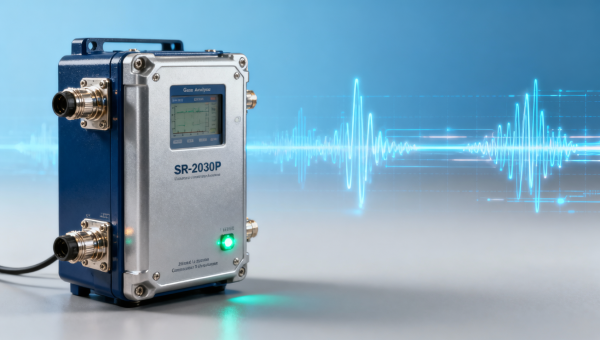
 SR-2030P analyzer firmware updates in 2026: What changed beyond version numbersDiscover what’s truly new in SR-2030P analyzer firmware 2026—explosion proof analyzer safety, high accuracy analyzer stability & continuous gas analyzer intelligence upgraded.
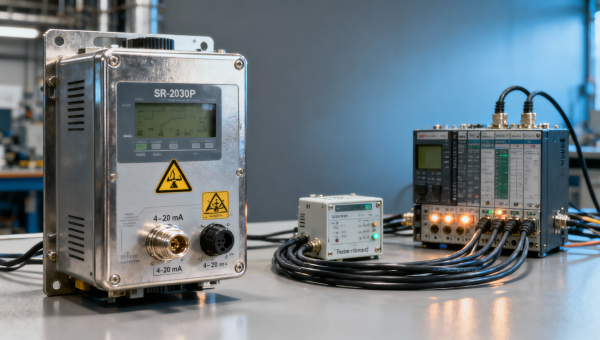
 Gas monitoring system integration delays aren’t always about software — check the analog I/O mismatchStruggling with gas monitoring system delays? Check analog I/O mismatch first—especially for explosion proof, high accuracy & SR-2030P analyzers. Avoid costly rework.




Search Categories
Search Categories
Latest Article
- China Launches Electrical Product Quality & Safety Initiative for Export ComplianceChina's new Electrical Product Quality & Safety Initiative enhances export compliance for EU, ASEAN, and GCC markets. Learn key measures for IEC/EN/UL standards, quality credit records, and pre-assessment services to boost international trade success.Posted by:
- China West Smart Power Expo Opens in Chongqing with 700+ ExhibitorsChina West Smart Power Expo 2026 in Chongqing showcases 700+ exhibitors featuring industrial cables & robotic power systems. Discover new quality standards for global buyers & export opportunities.Posted by:
- China's MIIT Releases 2026 Pharma IT Standards Plan for MES/SCADA IntegrationChina's MIIT 2026 Pharma IT Standards mandate MES/SCADA integration via OPC UA, impacting global equipment exporters. Learn compliance strategies for FDA/EU markets and digital transformation opportunities.Posted by:
Please give us a message
