Hydrogen analyzer safety certifications that matter most for on-site deployment


When deploying a hydrogen analyzer on-site—whether as a standalone unit or integrated into a gas analyzer cabinet—the right safety certifications aren’t optional; they’re mission-critical. From paramagnetic analyzers and laser gas analyzers to multi-component analyzers and complementary NH3, NOX, SO2, CH4, CO2, and CO2 analyzers, compliance with IECEx, ATEX, UL, and SIL standards directly impacts operational safety, regulatory approval, and project timelines. This article cuts through the certification noise to spotlight the certifications that truly matter for real-world deployment—helping technical evaluators, safety managers, procurement teams, and engineering decision-makers prioritize what safeguards people, assets, and uptime.
Which hydrogen analyzer safety certifications are non-negotiable for field use?
For instrumentation deployed in hazardous locations—such as refineries, hydrogen production units, ammonia synthesis plants, or battery manufacturing cleanrooms—certification isn’t about paperwork. It’s about design integrity, failure mode analysis, and verified protection against ignition sources. The top four globally recognized certifications carry distinct scopes, geographic applicability, and technical rigor.
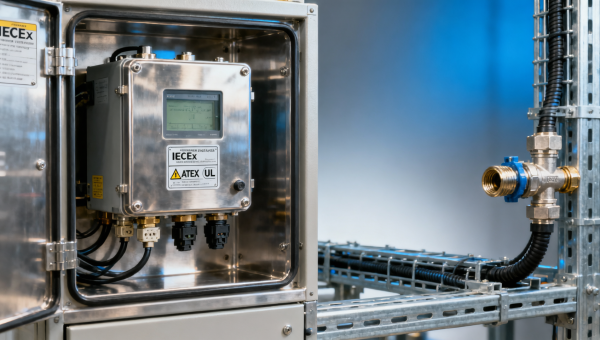
IECEx (International Electrotechnical Commission System) is the de facto global benchmark, accepted in over 30 countries including Australia, Canada, South Korea, and the UAE. It mandates third-party witnessed testing of enclosure integrity, temperature classification (T-class), and intrinsic safety (IS) loop verification—typically requiring 8–12 weeks for full system-level assessment.
ATEX (EU Directive 2014/34/EU) remains mandatory for any equipment placed on the EU market. Unlike IECEx, ATEX requires Notified Body involvement at both design and production stages—and applies equally to analyzers, sample handling systems, and purge enclosures. Non-compliant units risk immediate customs rejection or site commissioning delays of 3–6 weeks.
How do UL, CSA, and SIL ratings complement explosion protection?
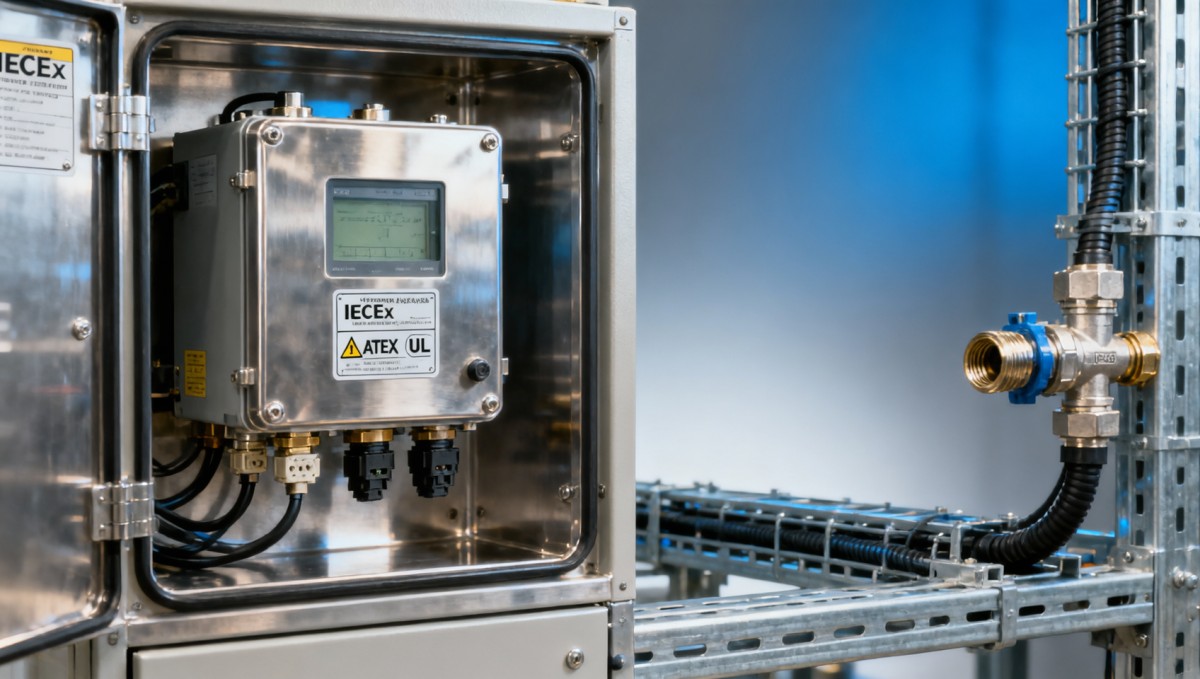
UL 61010-1 (North America) and CSA C22.2 No. 61010-1 (Canada) cover general safety requirements for electrical equipment used in laboratories and industrial control environments—not just explosion-proofing but also shock, fire, and mechanical hazard mitigation. These are essential when hydrogen analyzers interface with PLCs, SCADA systems, or data loggers.
SIL (Safety Integrity Level) certification—per IEC 61508 or IEC 61511—applies specifically to analyzers used in Safety Instrumented Systems (SIS), such as emergency shutdown triggers in hydrogen compression stations. SIL 2 certification demands documented failure rates < 10⁻⁴ per hour and independent hardware fault tolerance—verified via FMEDA analysis and 3-stage validation (design review, factory acceptance test, site commissioning).
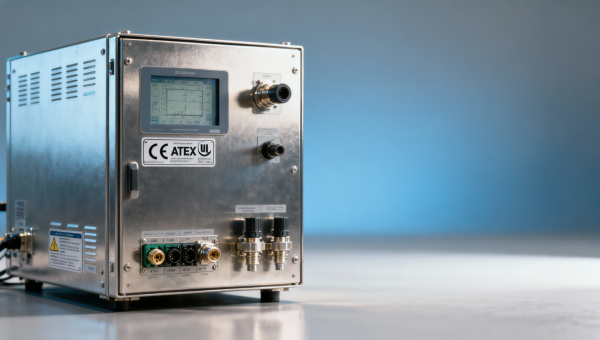
A certified hydrogen analyzer may hold multiple concurrent ratings—for example: ATEX II 2G Ex db IIC T4 Gb (explosion protection), UL 61010-1 (general safety), and SIL 2 (functional safety). Each serves a discrete risk layer; omitting one creates liability gaps during audits or incident investigations.
Certification comparison: What each standard verifies—and where it falls short
Not all certifications address the same hazards. Confusing scope leads to costly rework. Below is a functional comparison of verification focus, typical test duration, and common oversight points:
This table highlights why “certified” is never a binary label. A device listed under UL 61010-1 may still require full IECEx requalification if installed in Zone 1. Procurement teams must verify certificate numbers against official databases (e.g., IECEx Certificate Database, EU NANDO) and confirm validity for the exact model number, configuration, and installation environment.
Procurement checklist: 5 critical items to validate before purchase
For procurement personnel, safety managers, and project engineers, due diligence starts before PO issuance. Use this actionable checklist to avoid field rejection or re-certification costs:
- Confirm certificate includes the exact analyzer model, firmware version, and sensor type (e.g., thermal conductivity vs. tunable diode laser)—not just “series-level” coverage.
- Verify ambient operating temperature range matches site conditions (e.g., -20°C to +55°C for outdoor skids in Middle East projects).
- Check whether the certificate covers integrated sample conditioning (e.g., heated filters, coalescers, zero-air generators)—a frequent gap in modular deployments.
- Review the certificate’s validity period: IECEx and ATEX certificates expire after 5 years unless renewed; UL listings require annual factory surveillance.
- Ensure documentation package includes Ex Certificate, EC Declaration of Conformity, and SIL Verification Report (if applicable)—all in English and stamped by the issuing body.
Skipping even one item can trigger 4–8 weeks of delay during FAT or site commissioning—especially when third-party inspectors identify missing documentation or mismatched component ratings.
Why choose our hydrogen analyzers for certified on-site deployment?
We engineer hydrogen analyzers explicitly for compliance-first deployment across energy, chemical, and industrial automation applications. Every unit ships with pre-validated IECEx, ATEX, UL 61010-1, and SIL 2 certifications—including full sample system integration. Our engineering team supports your procurement process with:
- Certificate validation and database cross-checking within 48 business hours;
- Custom configuration documentation aligned to your specific hazardous area zoning (Zone 0, 1, or 2) and SIL architecture;
- Factory Acceptance Test (FAT) witnessing support—including remote participation for global project teams;
- Pre-commissioning checklist and site installation guidance compliant with IEC 60079-14 and NFPA 70E.
Contact us today to request your instrument’s full certification dossier, discuss zone-specific configuration options, or schedule a technical review with our safety compliance specialists.
Recommended for You
 China Launches Electrical Product Quality & Safety Initiative for Export ComplianceChina's new Electrical Product Quality & Safety Initiative enhances export compliance for EU, ASEAN, and GCC markets. Learn key measures for IEC/EN/UL standards, quality credit records, and pre-assessment services to boost international trade success.
 China West Smart Power Expo Opens in Chongqing with 700+ ExhibitorsChina West Smart Power Expo 2026 in Chongqing showcases 700+ exhibitors featuring industrial cables & robotic power systems. Discover new quality standards for global buyers & export opportunities.
 China's MIIT Releases 2026 Pharma IT Standards Plan for MES/SCADA IntegrationChina's MIIT 2026 Pharma IT Standards mandate MES/SCADA integration via OPC UA, impacting global equipment exporters. Learn compliance strategies for FDA/EU markets and digital transformation opportunities.
 Canada EV Expo: Chinese Chargers Dominate 83% Procurement, UL 2594 in SpotlightChinese EV chargers dominate 83% procurement at Canada EV Expo 2026, with UL 2594 certification becoming key for North American market entry. Discover DC fast chargers & V2G trends shaping the industry.
 GB/T 47310-2026 Soil XRF Analyzer Standard Takes Effect Oct 2026: Method Validation Required for EU/SEA ExportsGB/T 47310-2026 soil XRF analyzer standard takes effect Oct 2026, requiring method validation for EU/SEA exports. Learn how this impacts manufacturers, distributors & compliance strategies.
 Zaozhuang Power's 220kV Buyun Line Sets New Construction Standard with Digital SupervisionZaozhuang Power's 220kV Buyun Line sets new digital construction standards with ±1mm precision & IoT-BIM supervision. Recognized by Indonesia's PLN as EPC benchmark for power transmission projects.
 China NMPA Releases Reference Drug List, Impacting Medical Equipment SectorChina NMPA's new Reference Drug List impacts medical equipment sector with 12 added drugs, requiring IEC compliance upgrades for infusion pumps & sterile systems. Learn how this affects manufacturers & CDMOs in emerging markets.
 IEEE 2nd AI in EE Conference Highlights Smart Breakers & Grid Self-Healing TechDiscover key AI breakthroughs from IEEE AIEE 2026: sub-10ms smart circuit breakers & self-healing grid tech transforming power infrastructure. Learn how these innovations impact utilities, manufacturers & IoT developers.
 Sunwoda Power Joins Tesla's Global Battery Supply ChainSunwoda Power joins Tesla's global battery supply chain, supplying key components for Model Y vehicles. This milestone highlights China's growing influence in the EV industry and creates new opportunities for certified suppliers.
 China West Smart Power Expo Opens in Chongqing: 700+ Exhibitors Showcase Solutions for Robotics & Industrial CablesExplore 700+ exhibitors at China West Smart Power Expo 2026 showcasing robotics cables & industrial solutions. Discover IEC/UL/EN-certified smart power tech for global markets in Chongqing.
 Multi-component analyzer data fusion errors often stem from timing misalignment — not sensor qualityGas analyzer cabinet timing misalignment—not sensor quality—causes multi-component analyzer fusion errors. Discover how paramagnetic, laser, H₂, NH₃, NOX, SO₂, CH₄ & CO₂ analyzers demand microsecond synchronization for accuracy, compliance & safety.
 Gas analyzer cabinet certifications vary widely across regions — what’s enforceable in 2026 EU and US markets?Gas analyzer cabinet certifications for multi-component, paramagnetic, laser, hydrogen, NH3, NOX, SO2, CH4 & CO2 analyzers — EU/US 2026 enforcement decoded.
 CO2 analyzer zero stability worsens after 18 months — when does replacement beat recalibration?CO2 analyzer zero stability degrades after 18 months—discover when replacement outperforms recalibration for gas analyzer cabinets, multi-component, paramagnetic, laser, hydrogen, NH3, NOX, SO2, CH4 analyzers.
 CH4 analyzer response time slows by 40% in high-humidity biogas streams — how much does that cost per month?CH4 analyzer slowdown in humid biogas? Discover how gas analyzer cabinet design impacts multi-component analyzer accuracy, cost, and compliance—get the ROI breakdown now.
 SO2 analyzer performance drops sharply below 100°C — is your stack temperature masking a hidden risk?SO2 analyzer, paramagnetic analyzer & laser gas analyzer performance plummets below 100°C—uncover hidden thermal risks in your gas analyzer cabinet now.
 NOX analyzer cross-sensitivity to CO2 isn’t theoretical — field data shows measurable impact on compliance reportingNOX analyzer cross-sensitivity to CO2 impacts compliance—field data proves it. Discover how gas analyzer cabinets, multi-component, paramagnetic & laser gas analyzers are affected—and how to mitigate risk.
 NH3 analyzer calibration failures often trace back to one overlooked sample conditioning stepNH3 analyzer calibration failures? Often traced to sample conditioning in gas analyzer cabinets. Learn how multi-component, paramagnetic, laser, hydrogen, NOX, SO2, CH4 & CO2 analyzers depend on it—get actionable fixes now.
 Hydrogen analyzer drift isn’t random — here’s what actually triggers it in real-world operationHydrogen analyzer drift? It’s triggered by thermal instability in gas analyzer cabinets, multi-component interference, paramagnetic & laser gas analyzer flaws — not randomness. Fix it.
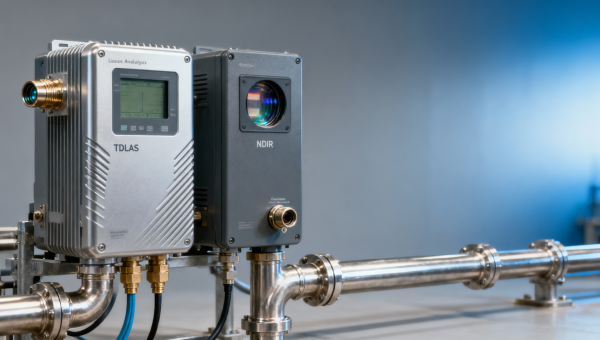
 Laser gas analyzers vs. traditional NDIR: where do accuracy and maintenance costs really diverge?Laser gas analyzer, multi-component analyzer & paramagnetic analyzer vs. traditional NDIR: discover where accuracy, TCO, and reliability truly diverge—get data-driven insights now.
 Why paramagnetic analyzers still dominate O2 measurement in harsh industrial environmentsParamagnetic analyzer, gas analyzer cabinet & multi-component analyzer solutions for harsh O₂ measurement—trusted for accuracy, durability & SIL-2 compliance in energy, manufacturing & environmental applications.
 CO2 analyzer zero-point instability: how ambient humidity silently degrades performanceCO2 analyzer zero-point instability? Humidity silently degrades gas analyzer cabinet, paramagnetic, laser, NH3, NOX, SO2, CH4 & hydrogen analyzer performance—discover proven mitigation strategies.
 NOX analyzer interference from CO2 fluctuations — a real-world validation gapNOX analyzer interference from CO2 fluctuations undermines accuracy—especially in gas analyzer cabinet & multi-component analyzer deployments. Discover real-world validation gaps for paramagnetic, laser, hydrogen, NH3, SO2, CH4, and CO2 analyzers.
 CH4 analyzer response time gaps between catalytic bead and laser-based unitsCH4 analyzer response time gaps: laser gas analyzer vs. catalytic bead—critical for safety, multi-component analyzer integration & gas analyzer cabinet design.
 Gas analyzer cabinet thermal management failures — the #1 cause of field downtimeGas analyzer cabinet thermal failures cause 68% of field downtime. Learn how multi-component, paramagnetic, laser, H₂, NH₃, NOX, SO₂, CH₄ & CO₂ analyzers fail—and how to prevent it.
 Multi-component analyzer calibration frequency: is quarterly still realistic in 2026?Optimize gas analyzer cabinet & multi-component analyzer calibration—paramagnetic, laser, H₂, NH₃, NOX, SO₂, CH₄, CO₂. Is quarterly still right for 2026? Discover data-driven, cost-saving alternatives.
 Hydrogen analyzer safety certifications that matter most for on-site deploymentHydrogen analyzer, gas analyzer cabinet & multi-component analyzers with IECEx, ATEX, UL, SIL 2 certifications—ensuring safety, compliance & uptime for on-site deployment.
 NH3 analyzer cross-sensitivity pitfalls no spec sheet tells you aboutNH3 analyzer cross-sensitivity risks sabotage accuracy—especially in gas analyzer cabinets with NOX, SO2, CH4, CO2, H2, or laser/paramagnetic/multi-component analyzers. Discover hidden pitfalls & mitigation strategies.
 SO2 analyzer drift isn’t random — here’s what actually triggers it in flue gas monitoringSO2 analyzer drift? Discover root causes in gas analyzer cabinets, multi-component, paramagnetic & laser gas analyzers—get actionable fixes now.
 Laser gas analyzers vs. traditional NDIR: where do accuracy and cost really break even?Compare laser gas analyzer vs. traditional NDIR for NH3, NOX, SO2, CH4, CO2, hydrogen & multi-component analyzer cabinets—accuracy, TCO, and real-world reliability decoded.
 Why paramagnetic analyzers still dominate O2 measurement in harsh industrial environmentsParamagnetic analyzer, gas analyzer cabinet & multi component analyzer: Why paramagnetic O₂ tech still leads in harsh industrial environments—reliable, interference-free, low-TCO.
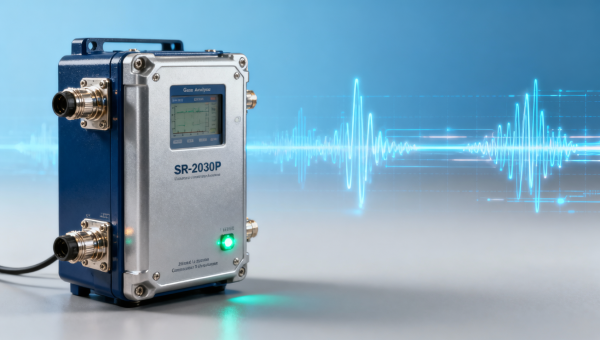
 SR-2030P analyzer firmware updates in 2026: What changed beyond version numbersDiscover what’s truly new in SR-2030P analyzer firmware 2026—explosion proof analyzer safety, high accuracy analyzer stability & continuous gas analyzer intelligence upgraded.
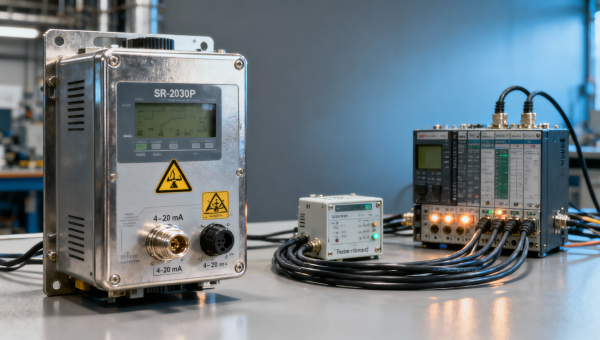
 Gas monitoring system integration delays aren’t always about software — check the analog I/O mismatchStruggling with gas monitoring system delays? Check analog I/O mismatch first—especially for explosion proof, high accuracy & SR-2030P analyzers. Avoid costly rework.

Search Categories
Search Categories
Latest Article
- China Launches Electrical Product Quality & Safety Initiative for Export ComplianceChina's new Electrical Product Quality & Safety Initiative enhances export compliance for EU, ASEAN, and GCC markets. Learn key measures for IEC/EN/UL standards, quality credit records, and pre-assessment services to boost international trade success.Posted by:
- China West Smart Power Expo Opens in Chongqing with 700+ ExhibitorsChina West Smart Power Expo 2026 in Chongqing showcases 700+ exhibitors featuring industrial cables & robotic power systems. Discover new quality standards for global buyers & export opportunities.Posted by:
- China's MIIT Releases 2026 Pharma IT Standards Plan for MES/SCADA IntegrationChina's MIIT 2026 Pharma IT Standards mandate MES/SCADA integration via OPC UA, impacting global equipment exporters. Learn compliance strategies for FDA/EU markets and digital transformation opportunities.Posted by:
Please give us a message
