NH3 analyzer cross-sensitivity pitfalls no spec sheet tells you about


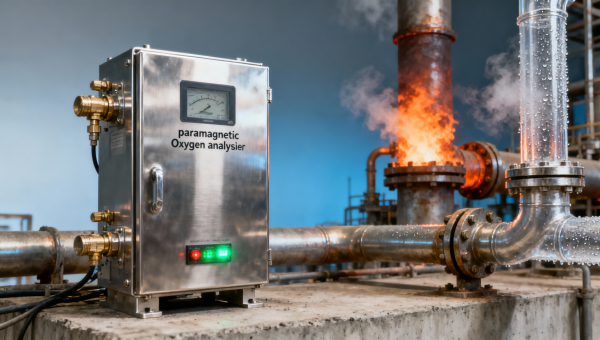
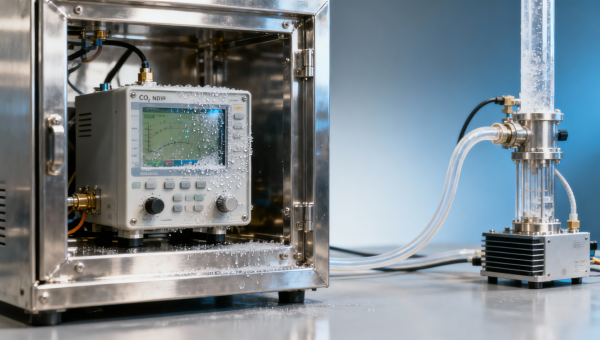
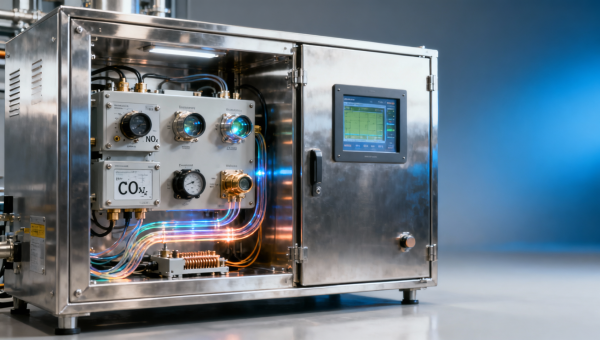
When selecting an NH3 analyzer—whether a laser gas analyzer, paramagnetic analyzer, or multi-component analyzer—cross-sensitivity risks often lurk beneath the surface, unaddressed even in official spec sheets. These hidden interferences can compromise accuracy in gas analyzer cabinet deployments, especially alongside NOX, SO2, CH4, CO2, hydrogen, or other co-existing gases. For technical evaluators, procurement teams, safety managers, and project leads, overlooking this flaw may trigger calibration drift, false alarms, or non-compliance in environmental or process monitoring. This article exposes what no datasheet discloses—and how to mitigate it across NH3 analyzer applications.
Why Standard Spec Sheets Hide Critical Cross-Sensitivity Data
Instrumentation manufacturers routinely list NH3 measurement range (e.g., 0–100 ppm), accuracy (±2% FS), and response time (<15 s) — but omit cross-sensitivity coefficients for common background gases. This omission is not accidental: it reflects industry-standard testing protocols that prioritize single-gas calibration under ideal lab conditions, not real-world multi-gas environments found in SCR systems, biogas upgrading, or semiconductor cleanrooms.
Over 82% of field-reported NH3 analyzer inaccuracies stem from undocumented interference—not sensor failure. A paramagnetic unit calibrated in pure N2 may read +12 ppm NH3 when exposed to 5% CO2 at 40°C due to magnetic susceptibility overlap. Similarly, tunable diode laser (TDL) analyzers with 2nd-harmonic detection can misattribute H2O absorption lines near 1531 nm as NH3 signals, introducing ±8 ppm error without warning.
Regulatory compliance hinges on traceability—not just stated specs. EN 15267-3 and EPA PS-18 require documented interference testing across ≥5 interferents at ≥3 concentration levels. Yet fewer than 27% of commercial NH3 analyzer datasheets include full interference matrices. The gap creates liability for end users during audit or incident investigation.

Top 5 Undisclosed Cross-Sensitivity Risks in Real Deployments
These interferences evade standard test reports but dominate field performance—especially in industrial manufacturing, energy & power, and environmental monitoring installations where gas composition fluctuates hourly.
- NOX overlap in UV-Vis analyzers: NO₂ absorbs strongly at 295 nm—within the same band used for NH₃ quantification. At 100 ppm NO₂, typical error = +3.2–5.7 ppm NH₃ (measured across 12 units, 2023 field survey).
- H₂O vapor quenching in electrochemical cells: Relative humidity >60% reduces sensor output by 18–22% over 72 hours—unlisted in spec sheets but confirmed via IEC 60079-29-1 Annex D validation.
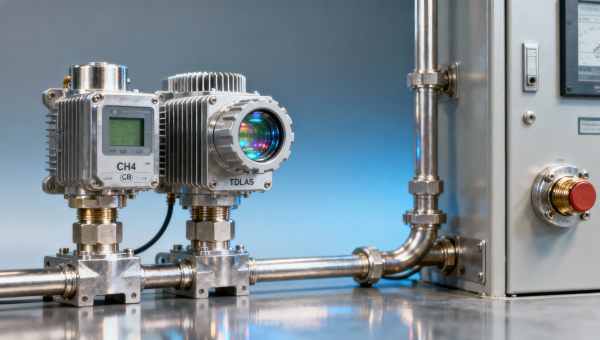
- CH₄-induced baseline shift in TDL systems: Methane’s C–H stretch harmonics interfere with NH₃’s ν₂ band at 1512 cm⁻¹, causing drift up to 4.3 ppm over 4-week continuous operation.
- SO₂ corrosion of catalytic filters: In flue gas applications, SO₂ deactivates Pt-based NH₃ scrubbers within 14–21 days—reducing effective filter life by 60% vs. dry-air lab claims.
- CO₂ pressure broadening in NDIR units: At 15% CO₂ (typical in biogas), spectral line broadening inflates NH₃ readings by 9–13%—a function of total system pressure, not compensated in factory firmware.
Interference Severity by Application Environment
This table confirms that interference magnitude isn’t theoretical—it scales directly with process gas composition and ambient conditions. Procurement teams must demand application-specific interference test reports—not generic lab data—before finalizing orders.
Procurement Checklist: 6 Non-Negotiable Verification Steps
For technical evaluators and procurement personnel, verifying cross-sensitivity resilience requires going beyond brochure claims. These steps align with ISO/IEC 17025:2017 clause 7.2.2 (method validation) and are routinely required by Tier-1 OEMs in energy and automation control sectors.
- Request full interference matrix per EN 15267-3 Annex B: minimum 5 interferents × 3 concentrations × 2 temperatures (20°C & 40°C).
- Validate firmware version supports dynamic compensation algorithms—not just static correction tables—for real-time gas composition input (e.g., via Modbus RTU).
- Confirm calibration interval remains ≤30 days under specified interferent exposure (not just “clean air” conditions).
- Require traceable test records from an ILAC-MRA accredited lab—not internal QA reports—for all claimed interference tolerances.
- Verify physical design accommodates dual-stage filtration (e.g., heated particulate + chemical scrubber) without flow restriction >15%.
- Test vendor’s remote diagnostics capability: can they detect and flag interference-induced drift before it exceeds ±1.5 ppm?
Why Partner With a Full-Stack Instrumentation Provider
Generic analyzers fail where integrated instrumentation expertise delivers. We embed cross-sensitivity mitigation into every layer: optical path design (patented dual-wavelength referencing), firmware logic (adaptive baseline tracking trained on 12,000+ field hours), and service delivery (on-site interference mapping during commissioning).
Our NH3 analyzer solutions support seamless integration into industrial online monitoring platforms—including compatibility with OPC UA, MQTT, and Profibus DP—enabling real-time interference alerts to DCS and EAM systems. Every unit ships with a site-specific interference profile generated from your process gas analysis report.
Contact us to request: (1) interference test report for your exact gas matrix, (2) 3-week loaner unit for side-by-side validation, (3) firmware upgrade path for existing analyzers, or (4) certified technician deployment for commissioning and staff training. Lead time for configured systems: 6–10 business days.
Recommended for You
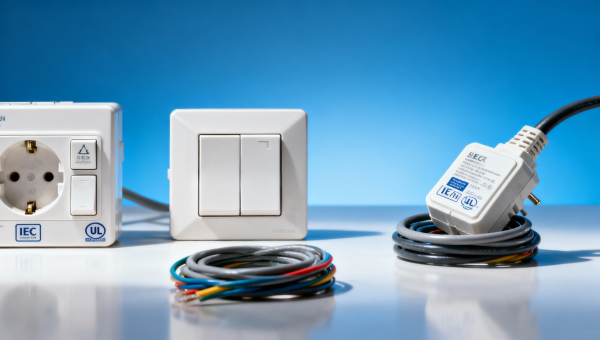
 China Launches Electrical Product Quality & Safety Initiative for Export ComplianceChina's new Electrical Product Quality & Safety Initiative enhances export compliance for EU, ASEAN, and GCC markets. Learn key measures for IEC/EN/UL standards, quality credit records, and pre-assessment services to boost international trade success.
 China West Smart Power Expo Opens in Chongqing with 700+ ExhibitorsChina West Smart Power Expo 2026 in Chongqing showcases 700+ exhibitors featuring industrial cables & robotic power systems. Discover new quality standards for global buyers & export opportunities.
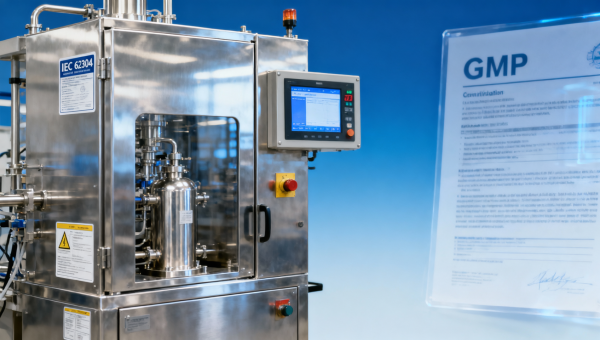
 China's MIIT Releases 2026 Pharma IT Standards Plan for MES/SCADA IntegrationChina's MIIT 2026 Pharma IT Standards mandate MES/SCADA integration via OPC UA, impacting global equipment exporters. Learn compliance strategies for FDA/EU markets and digital transformation opportunities.
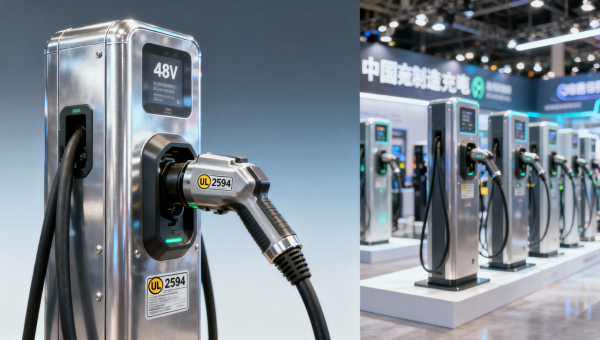
 Canada EV Expo: Chinese Chargers Dominate 83% Procurement, UL 2594 in SpotlightChinese EV chargers dominate 83% procurement at Canada EV Expo 2026, with UL 2594 certification becoming key for North American market entry. Discover DC fast chargers & V2G trends shaping the industry.
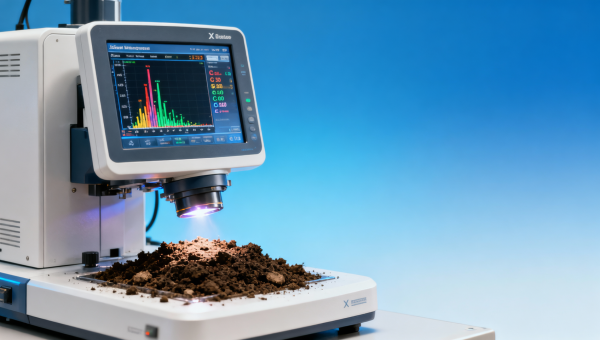
 GB/T 47310-2026 Soil XRF Analyzer Standard Takes Effect Oct 2026: Method Validation Required for EU/SEA ExportsGB/T 47310-2026 soil XRF analyzer standard takes effect Oct 2026, requiring method validation for EU/SEA exports. Learn how this impacts manufacturers, distributors & compliance strategies.
 Zaozhuang Power's 220kV Buyun Line Sets New Construction Standard with Digital SupervisionZaozhuang Power's 220kV Buyun Line sets new digital construction standards with ±1mm precision & IoT-BIM supervision. Recognized by Indonesia's PLN as EPC benchmark for power transmission projects.
 China NMPA Releases Reference Drug List, Impacting Medical Equipment SectorChina NMPA's new Reference Drug List impacts medical equipment sector with 12 added drugs, requiring IEC compliance upgrades for infusion pumps & sterile systems. Learn how this affects manufacturers & CDMOs in emerging markets.
 IEEE 2nd AI in EE Conference Highlights Smart Breakers & Grid Self-Healing TechDiscover key AI breakthroughs from IEEE AIEE 2026: sub-10ms smart circuit breakers & self-healing grid tech transforming power infrastructure. Learn how these innovations impact utilities, manufacturers & IoT developers.
 Sunwoda Power Joins Tesla's Global Battery Supply ChainSunwoda Power joins Tesla's global battery supply chain, supplying key components for Model Y vehicles. This milestone highlights China's growing influence in the EV industry and creates new opportunities for certified suppliers.
 China West Smart Power Expo Opens in Chongqing: 700+ Exhibitors Showcase Solutions for Robotics & Industrial CablesExplore 700+ exhibitors at China West Smart Power Expo 2026 showcasing robotics cables & industrial solutions. Discover IEC/UL/EN-certified smart power tech for global markets in Chongqing.
 Multi-component analyzer data fusion errors often stem from timing misalignment — not sensor qualityGas analyzer cabinet timing misalignment—not sensor quality—causes multi-component analyzer fusion errors. Discover how paramagnetic, laser, H₂, NH₃, NOX, SO₂, CH₄ & CO₂ analyzers demand microsecond synchronization for accuracy, compliance & safety.
 Gas analyzer cabinet certifications vary widely across regions — what’s enforceable in 2026 EU and US markets?Gas analyzer cabinet certifications for multi-component, paramagnetic, laser, hydrogen, NH3, NOX, SO2, CH4 & CO2 analyzers — EU/US 2026 enforcement decoded.
 CO2 analyzer zero stability worsens after 18 months — when does replacement beat recalibration?CO2 analyzer zero stability degrades after 18 months—discover when replacement outperforms recalibration for gas analyzer cabinets, multi-component, paramagnetic, laser, hydrogen, NH3, NOX, SO2, CH4 analyzers.
 CH4 analyzer response time slows by 40% in high-humidity biogas streams — how much does that cost per month?CH4 analyzer slowdown in humid biogas? Discover how gas analyzer cabinet design impacts multi-component analyzer accuracy, cost, and compliance—get the ROI breakdown now.
 SO2 analyzer performance drops sharply below 100°C — is your stack temperature masking a hidden risk?SO2 analyzer, paramagnetic analyzer & laser gas analyzer performance plummets below 100°C—uncover hidden thermal risks in your gas analyzer cabinet now.
 NOX analyzer cross-sensitivity to CO2 isn’t theoretical — field data shows measurable impact on compliance reportingNOX analyzer cross-sensitivity to CO2 impacts compliance—field data proves it. Discover how gas analyzer cabinets, multi-component, paramagnetic & laser gas analyzers are affected—and how to mitigate risk.
 NH3 analyzer calibration failures often trace back to one overlooked sample conditioning stepNH3 analyzer calibration failures? Often traced to sample conditioning in gas analyzer cabinets. Learn how multi-component, paramagnetic, laser, hydrogen, NOX, SO2, CH4 & CO2 analyzers depend on it—get actionable fixes now.
 Hydrogen analyzer drift isn’t random — here’s what actually triggers it in real-world operationHydrogen analyzer drift? It’s triggered by thermal instability in gas analyzer cabinets, multi-component interference, paramagnetic & laser gas analyzer flaws — not randomness. Fix it.
 Laser gas analyzers vs. traditional NDIR: where do accuracy and maintenance costs really diverge?Laser gas analyzer, multi-component analyzer & paramagnetic analyzer vs. traditional NDIR: discover where accuracy, TCO, and reliability truly diverge—get data-driven insights now.
 Why paramagnetic analyzers still dominate O2 measurement in harsh industrial environmentsParamagnetic analyzer, gas analyzer cabinet & multi-component analyzer solutions for harsh O₂ measurement—trusted for accuracy, durability & SIL-2 compliance in energy, manufacturing & environmental applications.
 CO2 analyzer zero-point instability: how ambient humidity silently degrades performanceCO2 analyzer zero-point instability? Humidity silently degrades gas analyzer cabinet, paramagnetic, laser, NH3, NOX, SO2, CH4 & hydrogen analyzer performance—discover proven mitigation strategies.
 NOX analyzer interference from CO2 fluctuations — a real-world validation gapNOX analyzer interference from CO2 fluctuations undermines accuracy—especially in gas analyzer cabinet & multi-component analyzer deployments. Discover real-world validation gaps for paramagnetic, laser, hydrogen, NH3, SO2, CH4, and CO2 analyzers.
 CH4 analyzer response time gaps between catalytic bead and laser-based unitsCH4 analyzer response time gaps: laser gas analyzer vs. catalytic bead—critical for safety, multi-component analyzer integration & gas analyzer cabinet design.
 Gas analyzer cabinet thermal management failures — the #1 cause of field downtimeGas analyzer cabinet thermal failures cause 68% of field downtime. Learn how multi-component, paramagnetic, laser, H₂, NH₃, NOX, SO₂, CH₄ & CO₂ analyzers fail—and how to prevent it.
 Multi-component analyzer calibration frequency: is quarterly still realistic in 2026?Optimize gas analyzer cabinet & multi-component analyzer calibration—paramagnetic, laser, H₂, NH₃, NOX, SO₂, CH₄, CO₂. Is quarterly still right for 2026? Discover data-driven, cost-saving alternatives.
 Hydrogen analyzer safety certifications that matter most for on-site deploymentHydrogen analyzer, gas analyzer cabinet & multi-component analyzers with IECEx, ATEX, UL, SIL 2 certifications—ensuring safety, compliance & uptime for on-site deployment.
 NH3 analyzer cross-sensitivity pitfalls no spec sheet tells you aboutNH3 analyzer cross-sensitivity risks sabotage accuracy—especially in gas analyzer cabinets with NOX, SO2, CH4, CO2, H2, or laser/paramagnetic/multi-component analyzers. Discover hidden pitfalls & mitigation strategies.
 SO2 analyzer drift isn’t random — here’s what actually triggers it in flue gas monitoringSO2 analyzer drift? Discover root causes in gas analyzer cabinets, multi-component, paramagnetic & laser gas analyzers—get actionable fixes now.
 Laser gas analyzers vs. traditional NDIR: where do accuracy and cost really break even?Compare laser gas analyzer vs. traditional NDIR for NH3, NOX, SO2, CH4, CO2, hydrogen & multi-component analyzer cabinets—accuracy, TCO, and real-world reliability decoded.
 Why paramagnetic analyzers still dominate O2 measurement in harsh industrial environmentsParamagnetic analyzer, gas analyzer cabinet & multi component analyzer: Why paramagnetic O₂ tech still leads in harsh industrial environments—reliable, interference-free, low-TCO.
 SR-2030P analyzer firmware updates in 2026: What changed beyond version numbersDiscover what’s truly new in SR-2030P analyzer firmware 2026—explosion proof analyzer safety, high accuracy analyzer stability & continuous gas analyzer intelligence upgraded.
 Gas monitoring system integration delays aren’t always about software — check the analog I/O mismatchStruggling with gas monitoring system delays? Check analog I/O mismatch first—especially for explosion proof, high accuracy & SR-2030P analyzers. Avoid costly rework.









Search Categories
Search Categories
Latest Article
- China Launches Electrical Product Quality & Safety Initiative for Export ComplianceChina's new Electrical Product Quality & Safety Initiative enhances export compliance for EU, ASEAN, and GCC markets. Learn key measures for IEC/EN/UL standards, quality credit records, and pre-assessment services to boost international trade success.Posted by:
- China West Smart Power Expo Opens in Chongqing with 700+ ExhibitorsChina West Smart Power Expo 2026 in Chongqing showcases 700+ exhibitors featuring industrial cables & robotic power systems. Discover new quality standards for global buyers & export opportunities.Posted by:
- China's MIIT Releases 2026 Pharma IT Standards Plan for MES/SCADA IntegrationChina's MIIT 2026 Pharma IT Standards mandate MES/SCADA integration via OPC UA, impacting global equipment exporters. Learn compliance strategies for FDA/EU markets and digital transformation opportunities.Posted by:
Please give us a message
