He Concentration Analyzer Applications Beyond Leak Detection


Beyond Leak Detection: The Expanding Role of Helium Analyzers
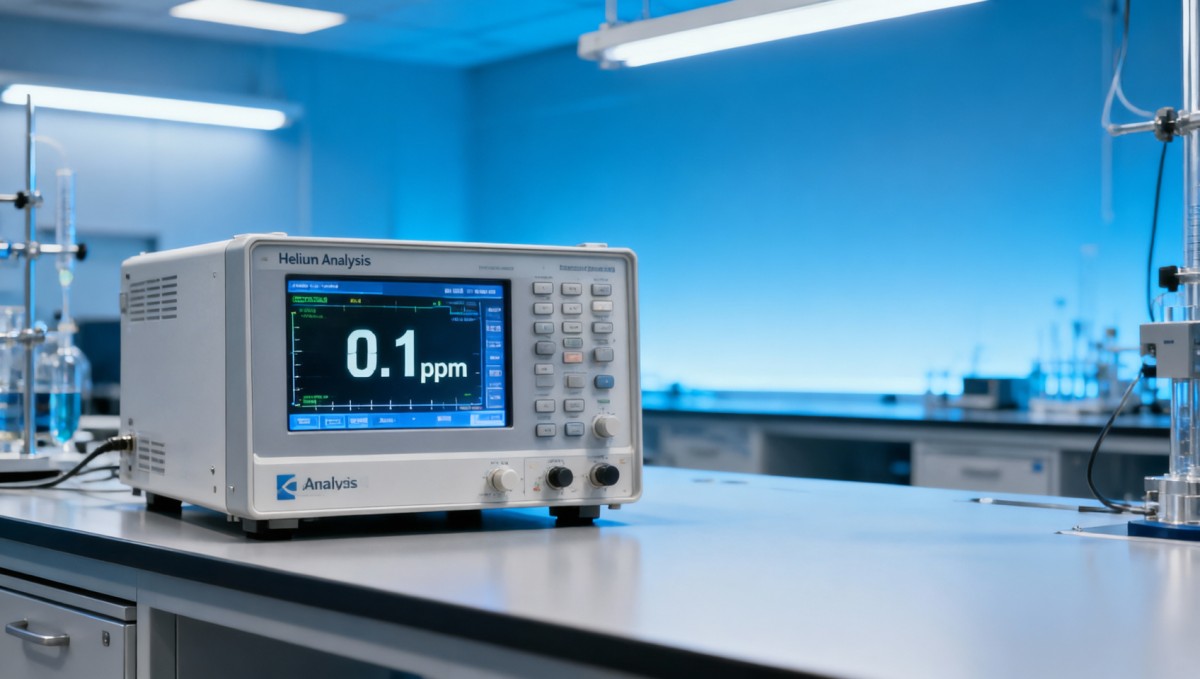
While helium (He) concentration analyzers are indispensable for leak detection in pipelines, vacuum systems, and pressurized containers, their precision measurement capabilities serve critical functions across multiple industries. Modern He analyzers with detection thresholds below 1 ppm now enable applications ranging from semiconductor fabrication purity control to medical MRI cooling system monitoring.
Key Industries Leveraging Helium Analysis
The following table outlines major sectors utilizing He analyzers alongside complementary gas detection instruments:
This cross-industry adoption demonstrates how 0.1-10ppm sensitivity analyzers address both safety and process optimization needs. For instance, semiconductor fabs require continuous He monitoring during wafer etching to prevent gas cross-contamination that could impact yield rates by 15-30%.
Technical Specifications for Specialized Applications
Selecting the appropriate He analyzer requires matching instrument capabilities to operational parameters. The following criteria are essential for procurement teams:
- Detection Range: Medical applications typically require 0.1-100ppm, while industrial leak detection may need 1-10,000ppm
- Response Time: Critical for safety applications, with <3 seconds preferred for hazardous gas monitoring
- Interference Resistance: Ability to distinguish He from background gases like H2 or Ne in mixed environments
- Environmental Tolerance: Industrial units must withstand -20°C to 50°C operating temperatures
Performance Comparison: Industrial vs. Laboratory Grade
The table below contrasts typical specifications for different usage scenarios:
Laboratory-grade analyzers typically carry 30-50% higher acquisition costs but provide the precision needed for research applications, while industrial models prioritize durability with IP65-rated enclosures for harsh environments.
Integration with Comprehensive Gas Monitoring Systems
Modern facilities increasingly deploy He analyzers as part of integrated gas detection networks. These systems combine multiple sensors to monitor:
- Toxic Gas Detection: Simultaneous monitoring of H2S, HCl, and HCN with thresholds as low as 0.1ppm
- Combustible Gas Safety: Integration with methane (CH4) and hydrogen (H2) detectors
- Process Control: Coordination with flow meters and pressure transducers
A pharmaceutical cleanroom might combine He leak detection with continuous SF6 monitoring for equipment sterilization validation, achieving 99.9% containment assurance. Such integrated solutions reduce installation costs by 20-40% compared to standalone units.
Implementation Considerations
Successful deployment requires addressing these key factors:
- Sampling System Design: Proper probe placement to avoid dead zones in gas flow paths
- Maintenance Protocols: Quarterly sensor validation for critical applications
- Data Integration: Compatibility with SCADA or IIoT platforms for centralized monitoring
Frequently Asked Questions
How often should He analyzers be calibrated?
Calibration frequency depends on application criticality. Industrial leak detection systems typically require quarterly calibration, while semiconductor fabrication tools may need monthly verification using NIST-traceable standards with ±1% accuracy.
What maintenance is required for reliable operation?
Essential maintenance includes:
- Monthly filter replacement in dusty environments
- Annual pump diaphragm inspection
- Biannual sensor performance validation
Can existing gas monitoring systems be upgraded with He detection?
Most modern systems support modular additions, but compatibility checks should verify:
- Available communication protocols (Modbus, HART, etc.)
- Power supply capacity for additional sensors
- Control software version compatibility
Strategic Implementation for Maximum Value
To optimize your gas monitoring infrastructure, consider these implementation phases:
- Needs Assessment: Map all potential leak points and process monitoring requirements
- Technology Selection: Choose between mass spectrometry, thermal conductivity, or laser-based detection methods
- Pilot Testing: Validate performance with 2-4 week field trials
- Full Deployment: Phased installation with 3-6 month performance evaluation
For facilities handling multiple specialty gases, integrated systems combining He, F2, and Cl2 monitoring can achieve 360° process visibility while reducing maintenance labor by 25-35% compared to discrete solutions.
To discuss customized gas monitoring solutions for your specific operational requirements, contact our instrumentation specialists for a comprehensive system evaluation and ROI analysis.
Recommended for You
 China Launches Electrical Product Quality & Safety Initiative for Export ComplianceChina's new Electrical Product Quality & Safety Initiative enhances export compliance for EU, ASEAN, and GCC markets. Learn key measures for IEC/EN/UL standards, quality credit records, and pre-assessment services to boost international trade success.
 China West Smart Power Expo Opens in Chongqing with 700+ ExhibitorsChina West Smart Power Expo 2026 in Chongqing showcases 700+ exhibitors featuring industrial cables & robotic power systems. Discover new quality standards for global buyers & export opportunities.
 China's MIIT Releases 2026 Pharma IT Standards Plan for MES/SCADA IntegrationChina's MIIT 2026 Pharma IT Standards mandate MES/SCADA integration via OPC UA, impacting global equipment exporters. Learn compliance strategies for FDA/EU markets and digital transformation opportunities.
 Canada EV Expo: Chinese Chargers Dominate 83% Procurement, UL 2594 in SpotlightChinese EV chargers dominate 83% procurement at Canada EV Expo 2026, with UL 2594 certification becoming key for North American market entry. Discover DC fast chargers & V2G trends shaping the industry.
 GB/T 47310-2026 Soil XRF Analyzer Standard Takes Effect Oct 2026: Method Validation Required for EU/SEA ExportsGB/T 47310-2026 soil XRF analyzer standard takes effect Oct 2026, requiring method validation for EU/SEA exports. Learn how this impacts manufacturers, distributors & compliance strategies.
 Zaozhuang Power's 220kV Buyun Line Sets New Construction Standard with Digital SupervisionZaozhuang Power's 220kV Buyun Line sets new digital construction standards with ±1mm precision & IoT-BIM supervision. Recognized by Indonesia's PLN as EPC benchmark for power transmission projects.
 China NMPA Releases Reference Drug List, Impacting Medical Equipment SectorChina NMPA's new Reference Drug List impacts medical equipment sector with 12 added drugs, requiring IEC compliance upgrades for infusion pumps & sterile systems. Learn how this affects manufacturers & CDMOs in emerging markets.
 IEEE 2nd AI in EE Conference Highlights Smart Breakers & Grid Self-Healing TechDiscover key AI breakthroughs from IEEE AIEE 2026: sub-10ms smart circuit breakers & self-healing grid tech transforming power infrastructure. Learn how these innovations impact utilities, manufacturers & IoT developers.
 Sunwoda Power Joins Tesla's Global Battery Supply ChainSunwoda Power joins Tesla's global battery supply chain, supplying key components for Model Y vehicles. This milestone highlights China's growing influence in the EV industry and creates new opportunities for certified suppliers.
 China West Smart Power Expo Opens in Chongqing: 700+ Exhibitors Showcase Solutions for Robotics & Industrial CablesExplore 700+ exhibitors at China West Smart Power Expo 2026 showcasing robotics cables & industrial solutions. Discover IEC/UL/EN-certified smart power tech for global markets in Chongqing.
 Multi-component analyzer data fusion errors often stem from timing misalignment — not sensor qualityGas analyzer cabinet timing misalignment—not sensor quality—causes multi-component analyzer fusion errors. Discover how paramagnetic, laser, H₂, NH₃, NOX, SO₂, CH₄ & CO₂ analyzers demand microsecond synchronization for accuracy, compliance & safety.
 Gas analyzer cabinet certifications vary widely across regions — what’s enforceable in 2026 EU and US markets?Gas analyzer cabinet certifications for multi-component, paramagnetic, laser, hydrogen, NH3, NOX, SO2, CH4 & CO2 analyzers — EU/US 2026 enforcement decoded.
 CO2 analyzer zero stability worsens after 18 months — when does replacement beat recalibration?CO2 analyzer zero stability degrades after 18 months—discover when replacement outperforms recalibration for gas analyzer cabinets, multi-component, paramagnetic, laser, hydrogen, NH3, NOX, SO2, CH4 analyzers.
 CH4 analyzer response time slows by 40% in high-humidity biogas streams — how much does that cost per month?CH4 analyzer slowdown in humid biogas? Discover how gas analyzer cabinet design impacts multi-component analyzer accuracy, cost, and compliance—get the ROI breakdown now.
 SO2 analyzer performance drops sharply below 100°C — is your stack temperature masking a hidden risk?SO2 analyzer, paramagnetic analyzer & laser gas analyzer performance plummets below 100°C—uncover hidden thermal risks in your gas analyzer cabinet now.
 NOX analyzer cross-sensitivity to CO2 isn’t theoretical — field data shows measurable impact on compliance reportingNOX analyzer cross-sensitivity to CO2 impacts compliance—field data proves it. Discover how gas analyzer cabinets, multi-component, paramagnetic & laser gas analyzers are affected—and how to mitigate risk.
 NH3 analyzer calibration failures often trace back to one overlooked sample conditioning stepNH3 analyzer calibration failures? Often traced to sample conditioning in gas analyzer cabinets. Learn how multi-component, paramagnetic, laser, hydrogen, NOX, SO2, CH4 & CO2 analyzers depend on it—get actionable fixes now.
 Hydrogen analyzer drift isn’t random — here’s what actually triggers it in real-world operationHydrogen analyzer drift? It’s triggered by thermal instability in gas analyzer cabinets, multi-component interference, paramagnetic & laser gas analyzer flaws — not randomness. Fix it.
 Laser gas analyzers vs. traditional NDIR: where do accuracy and maintenance costs really diverge?Laser gas analyzer, multi-component analyzer & paramagnetic analyzer vs. traditional NDIR: discover where accuracy, TCO, and reliability truly diverge—get data-driven insights now.
 Why paramagnetic analyzers still dominate O2 measurement in harsh industrial environmentsParamagnetic analyzer, gas analyzer cabinet & multi-component analyzer solutions for harsh O₂ measurement—trusted for accuracy, durability & SIL-2 compliance in energy, manufacturing & environmental applications.
 CO2 analyzer zero-point instability: how ambient humidity silently degrades performanceCO2 analyzer zero-point instability? Humidity silently degrades gas analyzer cabinet, paramagnetic, laser, NH3, NOX, SO2, CH4 & hydrogen analyzer performance—discover proven mitigation strategies.
 NOX analyzer interference from CO2 fluctuations — a real-world validation gapNOX analyzer interference from CO2 fluctuations undermines accuracy—especially in gas analyzer cabinet & multi-component analyzer deployments. Discover real-world validation gaps for paramagnetic, laser, hydrogen, NH3, SO2, CH4, and CO2 analyzers.
 CH4 analyzer response time gaps between catalytic bead and laser-based unitsCH4 analyzer response time gaps: laser gas analyzer vs. catalytic bead—critical for safety, multi-component analyzer integration & gas analyzer cabinet design.
 Gas analyzer cabinet thermal management failures — the #1 cause of field downtimeGas analyzer cabinet thermal failures cause 68% of field downtime. Learn how multi-component, paramagnetic, laser, H₂, NH₃, NOX, SO₂, CH₄ & CO₂ analyzers fail—and how to prevent it.
 Multi-component analyzer calibration frequency: is quarterly still realistic in 2026?Optimize gas analyzer cabinet & multi-component analyzer calibration—paramagnetic, laser, H₂, NH₃, NOX, SO₂, CH₄, CO₂. Is quarterly still right for 2026? Discover data-driven, cost-saving alternatives.
 Hydrogen analyzer safety certifications that matter most for on-site deploymentHydrogen analyzer, gas analyzer cabinet & multi-component analyzers with IECEx, ATEX, UL, SIL 2 certifications—ensuring safety, compliance & uptime for on-site deployment.
 NH3 analyzer cross-sensitivity pitfalls no spec sheet tells you aboutNH3 analyzer cross-sensitivity risks sabotage accuracy—especially in gas analyzer cabinets with NOX, SO2, CH4, CO2, H2, or laser/paramagnetic/multi-component analyzers. Discover hidden pitfalls & mitigation strategies.
 SO2 analyzer drift isn’t random — here’s what actually triggers it in flue gas monitoringSO2 analyzer drift? Discover root causes in gas analyzer cabinets, multi-component, paramagnetic & laser gas analyzers—get actionable fixes now.
 Laser gas analyzers vs. traditional NDIR: where do accuracy and cost really break even?Compare laser gas analyzer vs. traditional NDIR for NH3, NOX, SO2, CH4, CO2, hydrogen & multi-component analyzer cabinets—accuracy, TCO, and real-world reliability decoded.
 Why paramagnetic analyzers still dominate O2 measurement in harsh industrial environmentsParamagnetic analyzer, gas analyzer cabinet & multi component analyzer: Why paramagnetic O₂ tech still leads in harsh industrial environments—reliable, interference-free, low-TCO.
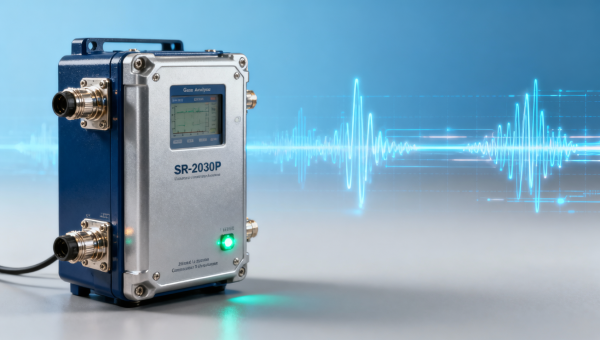
 SR-2030P analyzer firmware updates in 2026: What changed beyond version numbersDiscover what’s truly new in SR-2030P analyzer firmware 2026—explosion proof analyzer safety, high accuracy analyzer stability & continuous gas analyzer intelligence upgraded.
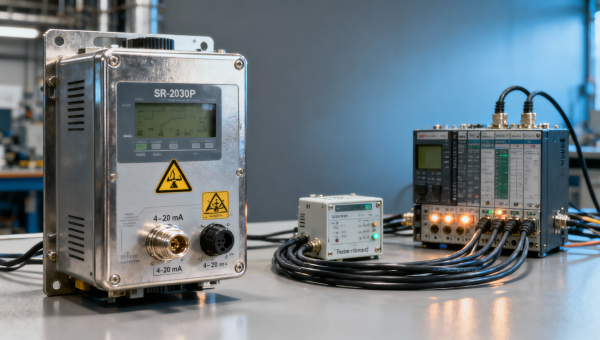
 Gas monitoring system integration delays aren’t always about software — check the analog I/O mismatchStruggling with gas monitoring system delays? Check analog I/O mismatch first—especially for explosion proof, high accuracy & SR-2030P analyzers. Avoid costly rework.



Search Categories
Search Categories
Latest Article
- China Launches Electrical Product Quality & Safety Initiative for Export ComplianceChina's new Electrical Product Quality & Safety Initiative enhances export compliance for EU, ASEAN, and GCC markets. Learn key measures for IEC/EN/UL standards, quality credit records, and pre-assessment services to boost international trade success.Posted by:
- China West Smart Power Expo Opens in Chongqing with 700+ ExhibitorsChina West Smart Power Expo 2026 in Chongqing showcases 700+ exhibitors featuring industrial cables & robotic power systems. Discover new quality standards for global buyers & export opportunities.Posted by:
- China's MIIT Releases 2026 Pharma IT Standards Plan for MES/SCADA IntegrationChina's MIIT 2026 Pharma IT Standards mandate MES/SCADA integration via OPC UA, impacting global equipment exporters. Learn compliance strategies for FDA/EU markets and digital transformation opportunities.Posted by:
Please give us a message
