
Temperature Measurement Instruments: Selection Mistakes That Raise Downtime


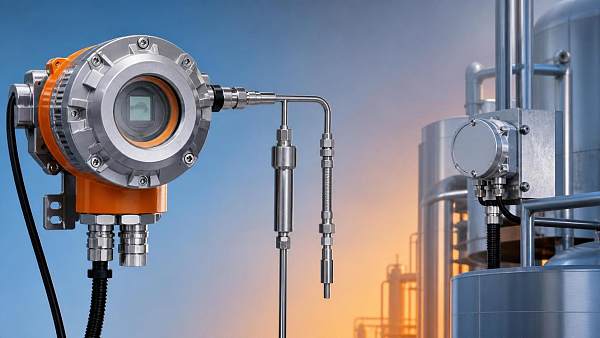
Choosing the wrong temperature measurement instruments can quietly increase downtime, create unstable control loops, and push maintenance costs higher. In modern industry, that risk is growing. Production lines run faster, energy systems face tighter efficiency targets, and compliance demands more traceable data. A sensor that seemed acceptable in a basic application may now fail under real operating conditions. Understanding where selection mistakes happen is becoming a practical reliability issue, not just a technical detail.
Why temperature measurement instruments are under more pressure than before
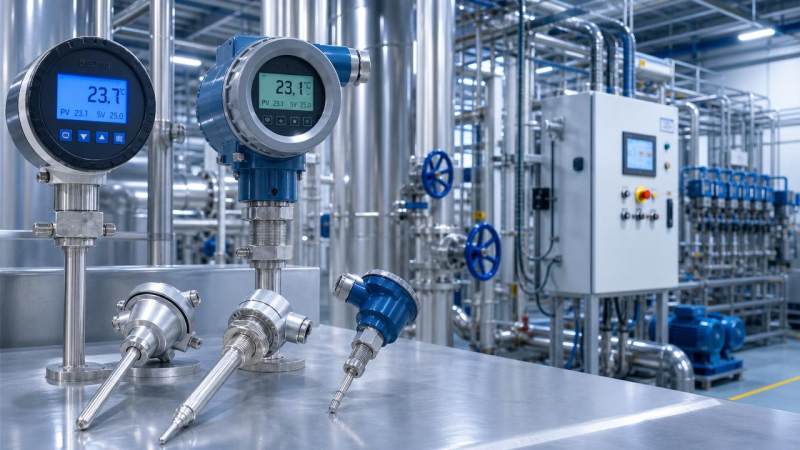
Across manufacturing, power, laboratory testing, environmental systems, and automated equipment, operating windows are narrowing. Small temperature errors now affect quality, safety, and energy use more directly than in the past.
Digitalization has also changed expectations. Control systems collect more data, compare more variables, and react faster. That means temperature measurement instruments must deliver stable signals, not just occasional readings.
The result is a clear trend: selection decisions are moving away from simple range matching. Users now need to consider response speed, media compatibility, installation geometry, vibration, drift, calibration intervals, and communication needs.
The biggest shift is from “can measure” to “can measure reliably over time”
Many downtime events do not come from complete sensor failure. They begin with slow response, unstable output, hidden drift, or poor placement. Those issues can mislead operators long before alarms appear.
This is why temperature measurement instruments are increasingly judged by lifecycle performance. Reliability under process stress matters more than catalog specifications viewed in isolation.
Common signals that selection quality is falling behind process demands
- Frequent temperature fluctuation alarms without actual process change
- Control loops that overshoot during heating or cooling cycles
- Repeated sensor replacement in high-vibration or corrosive locations
- Differences between field readings and laboratory verification data
- Long restart times after maintenance because readings stabilize slowly
The main drivers behind selection mistakes are becoming easier to identify
Selection mistakes usually come from incomplete application review rather than poor intent. In many cases, the process changed, but the original sensor concept did not.
Several selection mistakes repeatedly raise downtime across industries
Mistake 1: Choosing by temperature range alone
A sensor may survive the process temperature and still perform badly. If the thermal mass is too high, the reading lags behind the process. That delay can distort control decisions.
For fast cycling equipment, compact and responsive temperature measurement instruments often outperform heavier designs, even when both meet the same range requirement.
Mistake 2: Ignoring the process medium and mechanical stress
Steam, slurry, corrosive liquids, compressed gas, and abrasive flow all affect sensor life. Vibration from pumps, turbines, or motors can also shorten service life dramatically.
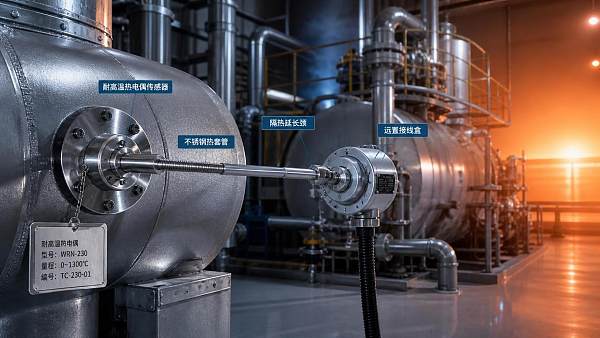
When sheath material, thermowell design, or mounting protection is wrong, temperature measurement instruments can fail far earlier than expected.
Mistake 3: Confusing sensor accuracy with measurement accuracy
A good sensor does not guarantee a good system result. Transmitters, wiring, signal conversion, grounding, and installation error all affect the final value seen by the control system.
This matters in calibration, laboratory processes, thermal treatment, and energy monitoring, where small deviations can trigger rework or nonconformance.
Mistake 4: Underestimating installation location
Poor insertion depth, dead zones, external heat influence, and weak thermal contact can all create misleading readings. The instrument is not always wrong; the installation may be.
Well-selected temperature measurement instruments still need proper placement to represent true process conditions.
Mistake 5: Forgetting serviceability
An accurate sensor that is difficult to inspect, calibrate, or replace can increase downtime during routine maintenance. Access planning is part of selection quality.
The impact of poor temperature measurement instruments now spreads beyond one sensor point
In integrated operations, one bad temperature signal can affect multiple business links. It may alter product consistency, increase energy consumption, slow batch release, or disrupt predictive maintenance models.
In power and energy applications, inaccurate readings can reduce thermal efficiency. In environmental systems, they may distort process balancing. In automated production, they can trigger false interlocks or missed warnings.
- Production: unstable quality and extra process correction
- Maintenance: repeated troubleshooting and spare use
- Compliance: weak traceability and verification gaps
- Energy management: inefficient heating or cooling control
- Automation: noisy data affecting control reliability
What deserves closer attention when evaluating temperature measurement instruments
A better evaluation method starts with the full operating context. The goal is to match sensing performance with real process behavior, not just specification sheets.
Core checkpoints that reduce avoidable downtime
- Define normal, upset, startup, and cleaning temperature conditions
- Review required response speed for control and protection logic
- Check media compatibility with sensor and thermowell materials
- Confirm vibration, pressure, moisture, and contamination exposure
- Assess installation depth, location, and thermal contact quality
- Consider calibration strategy and replacement accessibility
- Verify signal output compatibility with monitoring and control systems
A more practical decision path is replacing one-time selection with ongoing validation
The strongest trend in instrumentation is continuous verification. Instead of treating selection as a single purchase event, operations are validating performance after installation and during actual use.
The next step is to review weak points before they become repeat failures
If downtime is rising, start by reviewing installed temperature measurement instruments at critical points. Look for slow response, frequent replacements, unstable trends, and installation limitations.
Then compare current application conditions with original assumptions. Many hidden problems appear after process intensification, automation upgrades, or maintenance changes.
A focused review of temperature measurement instruments often reveals practical improvement opportunities. Better fit, better placement, and better validation can reduce interruptions, improve safety, and support more stable industrial performance over time.
Recommended for You
 When does process gas monitoring need continuous measurement?Process gas monitoring needs continuous measurement when rapid changes threaten safety, quality, compliance, or uptime. Learn how to specify reliable, actionable monitoring systems.
 How to prevent false alarms in power plant instrumentationPower plant instrumentation guide: prevent false alarms with reliable signal checks, smarter alarm settings, mode-based control, and actionable operator responses.
 How fixed gas detectors help prevent leaks in enclosed workspacesFixed gas detectors provide continuous leak monitoring in enclosed workspaces, enabling faster alarms, safer responses, and stronger protection for people and processes.
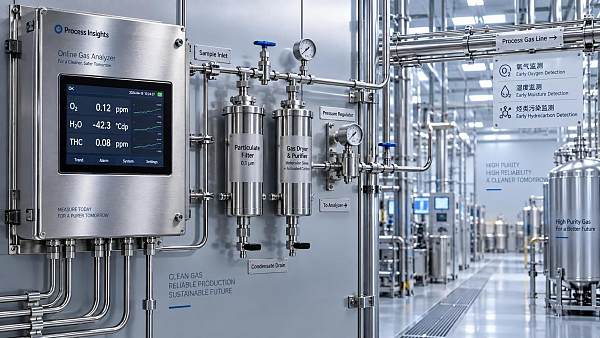
 How industrial gas analysis helps detect process contamination earlyIndustrial Gas Analysis helps detect oxygen, moisture, and hydrocarbon contamination early, enabling faster fault isolation, safer operations, and stronger process control.
 What drives environmental compliance continuous monitoring setup cost?Environmental compliance continuous monitoring setup cost: uncover hidden expenses, compare bids accurately, and build a reliable, audit-ready system.
 How to select gas analysis equipment for continuous emissions monitoringGas analysis equipment selection guide for reliable continuous emissions monitoring—compare technologies, sampling, calibration, compliance, and maintenance needs.
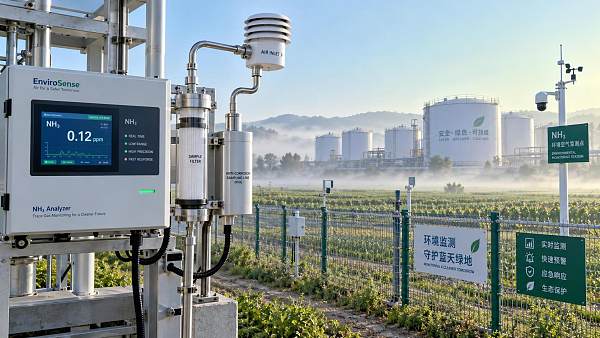
 What detection limit is needed for NH3 environmental monitoring?High accuracy NH3 analyzer for environmental monitoring: learn how to set the right detection limit, improve sampling reliability, and make defensible decisions.
 How to select a NOX analyzer for power plant emissions complianceNOX analyzer for power plant emissions: learn how to select a compliant, reliable CEMS solution with the right range, sample handling, calibration, and data integrity.
 How to evaluate a laser gas analyzer manufacturer in GermanyLaser gas analyzer manufacturer in Germany: compare accuracy, sample handling, interference control, calibration, and service to select a reliable solution.
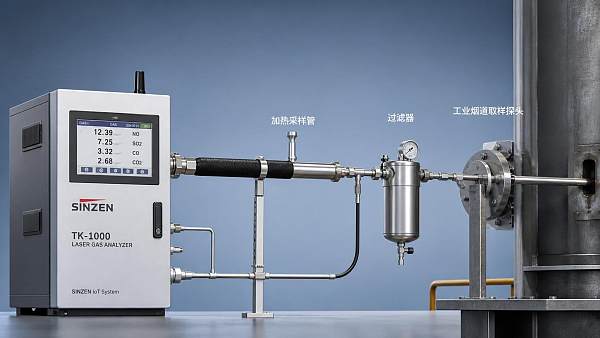
 How does a flue gas analyzer maintain accuracy in wet stack gas?Flue gas analyzer accuracy in wet stack gas depends on heated sampling, moisture correction, reliable sensors, and calibration. Explore key selection tips.
 What makes equipment suitable for a hazardous environment?Hazardous Environment equipment selection explained: certification, ignition control, materials, installation, and maintenance for safer operations.
 How Can Fugitive Emission Monitoring Results Be Validated?How to validate fugitive emission monitoring results: learn calibration, field documentation, data-quality checks, and compliance comparisons for credible, decision-ready reports.
 Do Stack Testing Instruments Need Heated Sample Lines?Do stack testing instruments need heated sample lines? Learn when heating protects sample integrity, prevents condensation, and improves reliable emissions measurements.
 What Are the Risks of Using Low-Cost Electrochemical Gas Analyzers?What are the risks of using low-cost electrochemical gas analyzers? Explore calibration drift, cross-sensitivity, safety, and compliance concerns before you buy.
 How Long Does It Take to Integrate a Custom Emission Monitoring Solution?How long does it take to integrate a custom emission monitoring solution? Explore timelines, site readiness, data integration, and validation factors.
 Is Industrial Safety Monitoring the Same as Emission Monitoring?is industrial safety monitoring the same as emission monitoring? Learn the key differences in purpose, alarms, compliance, and instrument selection for safer operations.
 What Monthly Maintenance Does a Wireless Measurement Node Need?What maintenance does a wireless measurement node need monthly? Explore practical checks for battery health, signal quality, sensor accuracy, enclosures, and reliable data.
 Can Measurement and Control Systems Handle Corrosive Flue Gas?Can measurement and control systems handle corrosive flue gas? Discover proven design strategies for reliable sensing, sampling, materials, and maintenance.
 How Can Data Logging Instruments Pass an Environmental Audit?Learn how to ensure data logging instruments pass environmental audit with proven calibration, data integrity, alarm control, and traceable compliance records.
 What Are the Common Pitfalls of Integrating Multiple Gas Analyzers?What are common pitfalls when integrating multiple gas analyzers? Discover how sampling, timing, calibration, and data integration risks affect reliable decisions.
 Is Predictive Analytics for Emission Control Useful or Just Hype?Is predictive analytics useful for emission control or just hype? Discover how reliable data, CEMS, and practical pilots can reduce risk and support compliance.
 How to select a hydrogen analyzer for petrochemical process safetyHydrogen analyzer for petrochemical industry selection guide: compare technologies, sample systems, response time, and safety certifications for reliable process protection.
 When does a thermal conductivity detector outperform an FID?Thermal conductivity detector vs. FID: discover when TCD is the smarter choice for permanent gases, bulk analysis, non-destructive detection, and reliable GC method design.
 What certification should you verify before buying an IECEx analyzer?IECEx analyzer buyers: verify the Certificate of Conformity, Ex marking, special conditions, and exact configuration before purchase. Avoid costly compliance risks.
 How oxygen analysis helps prevent incomplete combustionOxygen analysis helps prevent incomplete combustion by optimizing air-to-fuel balance, reducing fuel waste, improving burner safety, and supporting emissions control.
 How to size an industrial gas system for stable peak demandIndustrial gas system sizing guide for stable peak demand. Learn how to assess flow, pressure drop, buffer storage, purity, redundancy, and commissioning for reliable production.
 How to choose a process sensor for high-temperature applicationsProcess sensor selection for high-temperature applications: compare thermal limits, materials, accuracy, installation, and maintenance to secure reliable control data.
 When does continuous analysis improve industrial process control?Continuous analysis improves industrial process control with timely composition data that supports faster decisions, higher quality, safer operations, and less waste.
 How to choose emission control systems for variable industrial loadsEmission Control solutions for variable industrial loads: learn how to match technology, controls, monitoring, and lifecycle costs for reliable compliance.
 How continuous emissions monitoring supports reliable emission reductionEmission Reduction relies on reliable continuous emissions monitoring. Discover how accurate data, calibration, and process insights support compliance and smarter control.
 When does it make sense to automate a production line?Production Line automation makes sense when processes are stable, measurable, and repeatable. Learn the key signals, risks, and ROI triggers before you invest.
 What accuracy should a monitoring device deliver in power quality applicationsMonitoring Device accuracy in power quality applications affects compliance, troubleshooting, and decision confidence. Learn what specs, standards, and installation factors truly matter.




Search Categories
Search Categories
- Smart Meters & Power Quality
- Transformer Gas Analyzers
- BESS Thermal Runaway Detectors
- Energy, Power & Smart Grid Monitoring
- Optical Profilers & CMM
- Ultrasonic & X-Ray NDT
- Calibration Standards
- Precision Metrology & NDT
- Water Quality Analyzers
- CEMS & VOCs Monitors
- Price Trends
- Import & Export Updates
- Market Trends
- Industry News
- Industry Insights
Latest Article
- When does process gas monitoring need continuous measurement?Process gas monitoring needs continuous measurement when rapid changes threaten safety, quality, compliance, or uptime. Learn how to specify reliable, actionable monitoring systems.Posted by:
- How to prevent false alarms in power plant instrumentationPower plant instrumentation guide: prevent false alarms with reliable signal checks, smarter alarm settings, mode-based control, and actionable operator responses.Posted by:
- How fixed gas detectors help prevent leaks in enclosed workspacesFixed gas detectors provide continuous leak monitoring in enclosed workspaces, enabling faster alarms, safer responses, and stronger protection for people and processes.Posted by:
Please give us a message
