
Online Monitoring: Key Factors for Reliable System Selection


Selecting an online monitoring system is rarely a simple hardware decision. It shapes how reliably a site sees process change, detects abnormal conditions, and turns raw signals into trusted operational intelligence.
That matters across manufacturing, energy, environmental control, laboratories, medical testing, and infrastructure. When the monitoring layer is weak, visibility gaps grow quickly, and corrective action becomes slower, more expensive, and less precise.
A strong selection process looks beyond brochures. It tests whether an online monitoring platform can hold measurement integrity, fit plant architecture, meet compliance demands, and stay dependable through years of real operating stress.
Why online monitoring now carries more strategic weight
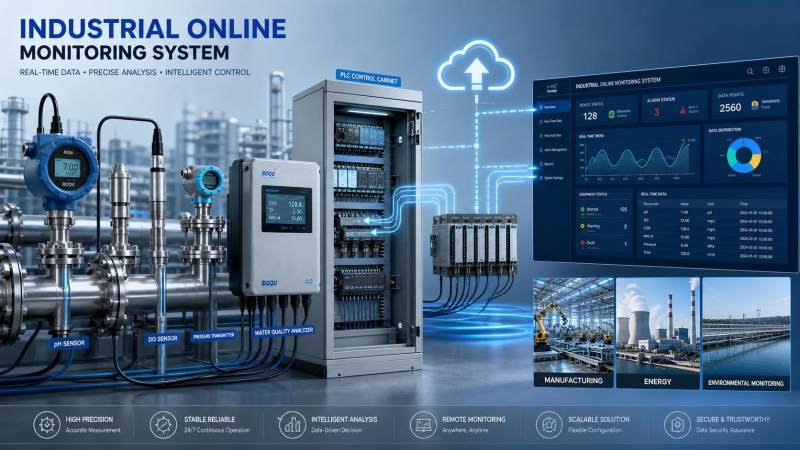
Digital transformation has changed the role of instrumentation. Monitoring is no longer only about alarms. It supports optimization, predictive maintenance, traceability, emissions control, and automated decision loops.
In this setting, online monitoring becomes part of the industrial nervous system. It connects field conditions with PLC, DCS, SCADA, historians, analytics tools, and increasingly with cloud-based diagnostics.
This is where Global Instrument Hub brings useful context. Its coverage of process control, laboratory systems, environmental analyzers, metrology, and smart energy shows how selection criteria vary by application, but reliability principles stay consistent.
A water quality analyzer, a CEMS installation, and a battery thermal warning system do different jobs. Even so, each depends on stable sensing, trustworthy data handling, and a supportable lifecycle.
What a reliable online monitoring system actually includes
Online monitoring refers to continuous or near-real-time observation of physical, chemical, electrical, or environmental parameters during operation. The system usually combines sensors, analyzers, signal conditioning, communications, software, and service routines.
The key point is continuity with context. A handheld reading may confirm a value. Online monitoring explains how that value changes over time, under load, during startups, or near failure conditions.
In practical terms, reliable selection depends on four linked layers:
- Measurement layer: sensor accuracy, drift behavior, response time, and environmental tolerance.
- Control layer: interfaces with PLC, DCS, edge devices, and alarm logic.
- Data layer: validation, storage, timestamping, diagnostics, and cybersecurity controls.
- Lifecycle layer: calibration, spare parts, training, service access, and vendor continuity.
A weak point in any layer can undermine the whole system. High nominal accuracy means little if the analyzer fouls easily, timestamps are inconsistent, or the supplier cannot support field recalibration.
The selection factors that deserve close scrutiny
Not every project needs the same specification depth, but several factors consistently separate robust online monitoring from expensive underperformance.
Measurement quality under real conditions
Datasheet accuracy should never be read in isolation. Process temperature swings, vibration, pressure pulsation, contamination, humidity, and sample conditioning often shape actual performance more than laboratory figures.
Check repeatability, detection limits, drift rate, warm-up behavior, and cross-sensitivity. In composition analysis, for example, interference effects may matter more than headline precision.
Integration without hidden engineering burden
A technically sound device can still be a poor system choice if integration is difficult. Signal formats, protocols, historian compatibility, edge computing support, and alarm mapping should be reviewed early.
Modbus, HART, OPC UA, Ethernet/IP, and proprietary stacks each affect commissioning effort. The more closed the architecture, the higher the long-term dependency risk.
Reliability, maintainability, and uptime logic
Online monitoring should reduce uncertainty, not introduce frequent service interruptions. Review mean time between failures, self-diagnostics, consumable needs, calibration intervals, and ease of replacement.
Systems deployed in remote substations, offshore assets, or hazardous process units need a different maintenance model than those inside a staffed laboratory.
Compliance and evidence quality
Compliance is not a side topic. It often defines whether monitoring data can be used for reporting, release decisions, audit trails, or legal defensibility.
Depending on the use case, this may involve ISO/IEC 17025 alignment, ATEX or IECEx suitability, FDA-related traceability, or environmental reporting standards. Evidence quality matters as much as sensor output.
How requirements shift by application
The most reliable online monitoring choices come from matching technical criteria to the actual decision being supported. The table below shows how priorities typically move by scenario.
This is why generalized vendor claims are rarely enough. Selection works best when the monitoring objective is explicit: control, compliance, safety, diagnostics, or optimization.
Common mistakes that distort system selection
Several errors appear repeatedly in online monitoring projects, especially when evaluation is rushed or fragmented across teams.
- Treating sensor accuracy as the whole decision, while ignoring sample handling and installation effects.
- Choosing a platform that fits current protocols but blocks future analytics or system expansion.
- Underestimating calibration labor, reagent consumption, or environmental hardening requirements.
- Assuming compliance claims are universal, without checking market-specific certifications.
- Accepting poor data governance, including weak audit trails, unclear timestamps, or limited cybersecurity controls.
These issues often remain hidden during pilot reviews. They become visible only after deployment, when maintenance load rises and confidence in data starts to erode.
A practical framework for comparing options
A useful comparison method is to score each online monitoring option against operational consequence, not just specification depth. That keeps evaluation grounded in business reality.
Questions worth asking early
- What decision will this signal trigger, and how fast must that decision happen?
- What process conditions are most likely to degrade measurement quality?
- How will the system be calibrated, verified, and documented over time?
- Which interfaces are mandatory today, and which will matter after expansion?
- Can the supplier demonstrate support depth across regions, spares, and compliance evidence?
This is also where market intelligence has value. GIH’s focus on supplier research, technical trend analysis, and standards interpretation can help narrow choices before expensive field validation begins.
The goal is not simply to buy an instrument. It is to establish a dependable measurement chain that supports automation, reporting, and safe operations with minimal ambiguity.
Where to go next with an online monitoring decision
A reliable decision usually starts with a tighter requirement map. Define the parameter, risk consequence, response time, compliance boundary, and ownership of maintenance before comparing brands or architectures.
Then review options through lifecycle evidence: field references, calibration model, integration burden, diagnostic depth, and regional service capacity. Those factors often predict success better than brochure performance alone.
For organizations moving deeper into intelligent automation, online monitoring should be assessed as infrastructure for trusted decisions. The stronger the measurement foundation, the more scalable every downstream control and analytics investment becomes.
Recommended for You
 When does process gas monitoring need continuous measurement?Process gas monitoring needs continuous measurement when rapid changes threaten safety, quality, compliance, or uptime. Learn how to specify reliable, actionable monitoring systems.
 How to prevent false alarms in power plant instrumentationPower plant instrumentation guide: prevent false alarms with reliable signal checks, smarter alarm settings, mode-based control, and actionable operator responses.
 How fixed gas detectors help prevent leaks in enclosed workspacesFixed gas detectors provide continuous leak monitoring in enclosed workspaces, enabling faster alarms, safer responses, and stronger protection for people and processes.
 How industrial gas analysis helps detect process contamination earlyIndustrial Gas Analysis helps detect oxygen, moisture, and hydrocarbon contamination early, enabling faster fault isolation, safer operations, and stronger process control.
 What drives environmental compliance continuous monitoring setup cost?Environmental compliance continuous monitoring setup cost: uncover hidden expenses, compare bids accurately, and build a reliable, audit-ready system.
 How to select gas analysis equipment for continuous emissions monitoringGas analysis equipment selection guide for reliable continuous emissions monitoring—compare technologies, sampling, calibration, compliance, and maintenance needs.
 What detection limit is needed for NH3 environmental monitoring?High accuracy NH3 analyzer for environmental monitoring: learn how to set the right detection limit, improve sampling reliability, and make defensible decisions.
 How to select a NOX analyzer for power plant emissions complianceNOX analyzer for power plant emissions: learn how to select a compliant, reliable CEMS solution with the right range, sample handling, calibration, and data integrity.
 How to evaluate a laser gas analyzer manufacturer in GermanyLaser gas analyzer manufacturer in Germany: compare accuracy, sample handling, interference control, calibration, and service to select a reliable solution.
 How does a flue gas analyzer maintain accuracy in wet stack gas?Flue gas analyzer accuracy in wet stack gas depends on heated sampling, moisture correction, reliable sensors, and calibration. Explore key selection tips.
 What makes equipment suitable for a hazardous environment?Hazardous Environment equipment selection explained: certification, ignition control, materials, installation, and maintenance for safer operations.
 How Can Fugitive Emission Monitoring Results Be Validated?How to validate fugitive emission monitoring results: learn calibration, field documentation, data-quality checks, and compliance comparisons for credible, decision-ready reports.
 Do Stack Testing Instruments Need Heated Sample Lines?Do stack testing instruments need heated sample lines? Learn when heating protects sample integrity, prevents condensation, and improves reliable emissions measurements.
 What Are the Risks of Using Low-Cost Electrochemical Gas Analyzers?What are the risks of using low-cost electrochemical gas analyzers? Explore calibration drift, cross-sensitivity, safety, and compliance concerns before you buy.
 How Long Does It Take to Integrate a Custom Emission Monitoring Solution?How long does it take to integrate a custom emission monitoring solution? Explore timelines, site readiness, data integration, and validation factors.
 Is Industrial Safety Monitoring the Same as Emission Monitoring?is industrial safety monitoring the same as emission monitoring? Learn the key differences in purpose, alarms, compliance, and instrument selection for safer operations.
 What Monthly Maintenance Does a Wireless Measurement Node Need?What maintenance does a wireless measurement node need monthly? Explore practical checks for battery health, signal quality, sensor accuracy, enclosures, and reliable data.
 Can Measurement and Control Systems Handle Corrosive Flue Gas?Can measurement and control systems handle corrosive flue gas? Discover proven design strategies for reliable sensing, sampling, materials, and maintenance.
 How Can Data Logging Instruments Pass an Environmental Audit?Learn how to ensure data logging instruments pass environmental audit with proven calibration, data integrity, alarm control, and traceable compliance records.
 What Are the Common Pitfalls of Integrating Multiple Gas Analyzers?What are common pitfalls when integrating multiple gas analyzers? Discover how sampling, timing, calibration, and data integration risks affect reliable decisions.
 Is Predictive Analytics for Emission Control Useful or Just Hype?Is predictive analytics useful for emission control or just hype? Discover how reliable data, CEMS, and practical pilots can reduce risk and support compliance.
 How to select a hydrogen analyzer for petrochemical process safetyHydrogen analyzer for petrochemical industry selection guide: compare technologies, sample systems, response time, and safety certifications for reliable process protection.
 When does a thermal conductivity detector outperform an FID?Thermal conductivity detector vs. FID: discover when TCD is the smarter choice for permanent gases, bulk analysis, non-destructive detection, and reliable GC method design.
 What certification should you verify before buying an IECEx analyzer?IECEx analyzer buyers: verify the Certificate of Conformity, Ex marking, special conditions, and exact configuration before purchase. Avoid costly compliance risks.
 How oxygen analysis helps prevent incomplete combustionOxygen analysis helps prevent incomplete combustion by optimizing air-to-fuel balance, reducing fuel waste, improving burner safety, and supporting emissions control.
 How to size an industrial gas system for stable peak demandIndustrial gas system sizing guide for stable peak demand. Learn how to assess flow, pressure drop, buffer storage, purity, redundancy, and commissioning for reliable production.
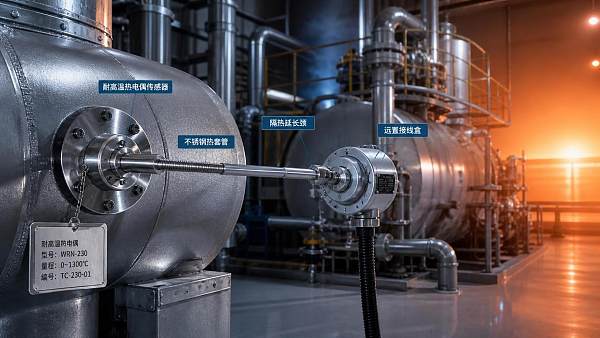
 How to choose a process sensor for high-temperature applicationsProcess sensor selection for high-temperature applications: compare thermal limits, materials, accuracy, installation, and maintenance to secure reliable control data.
 When does continuous analysis improve industrial process control?Continuous analysis improves industrial process control with timely composition data that supports faster decisions, higher quality, safer operations, and less waste.
 How to choose emission control systems for variable industrial loadsEmission Control solutions for variable industrial loads: learn how to match technology, controls, monitoring, and lifecycle costs for reliable compliance.
 How continuous emissions monitoring supports reliable emission reductionEmission Reduction relies on reliable continuous emissions monitoring. Discover how accurate data, calibration, and process insights support compliance and smarter control.
 When does it make sense to automate a production line?Production Line automation makes sense when processes are stable, measurable, and repeatable. Learn the key signals, risks, and ROI triggers before you invest.
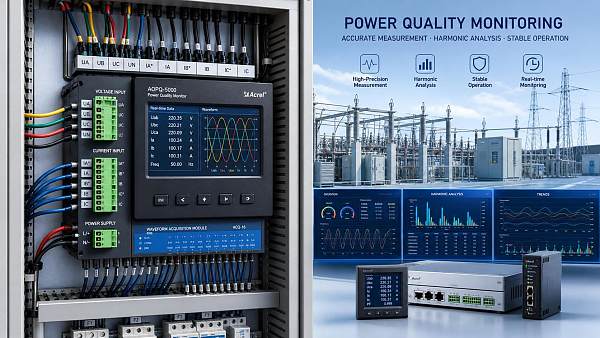
 What accuracy should a monitoring device deliver in power quality applicationsMonitoring Device accuracy in power quality applications affects compliance, troubleshooting, and decision confidence. Learn what specs, standards, and installation factors truly matter.









Search Categories
Search Categories
- Smart Meters & Power Quality
- Transformer Gas Analyzers
- BESS Thermal Runaway Detectors
- Energy, Power & Smart Grid Monitoring
- Optical Profilers & CMM
- Ultrasonic & X-Ray NDT
- Calibration Standards
- Precision Metrology & NDT
- Water Quality Analyzers
- CEMS & VOCs Monitors
- Price Trends
- Import & Export Updates
- Market Trends
- Industry News
- Industry Insights
Latest Article
- When does process gas monitoring need continuous measurement?Process gas monitoring needs continuous measurement when rapid changes threaten safety, quality, compliance, or uptime. Learn how to specify reliable, actionable monitoring systems.Posted by:
- How to prevent false alarms in power plant instrumentationPower plant instrumentation guide: prevent false alarms with reliable signal checks, smarter alarm settings, mode-based control, and actionable operator responses.Posted by:
- How fixed gas detectors help prevent leaks in enclosed workspacesFixed gas detectors provide continuous leak monitoring in enclosed workspaces, enabling faster alarms, safer responses, and stronger protection for people and processes.Posted by:
Please give us a message
