
Paramagnetic Oxygen Analyzers vs Zirconia Sensors


Selecting the right oxygen measurement technology can determine accuracy, safety, and lifecycle cost in an industrial analysis system.
For teams comparing paramagnetic oxygen analyzers with zirconia sensors, the decision is rarely about sensitivity alone.
It involves sample conditions, response time, maintenance burden, calibration stability, hazardous-area suitability, and total integration risk.
This article examines operating principles, performance trade-offs, and application boundaries to support a more confident specification decision.
Scenario Background: Why Oxygen Measurement Choice Changes by Process
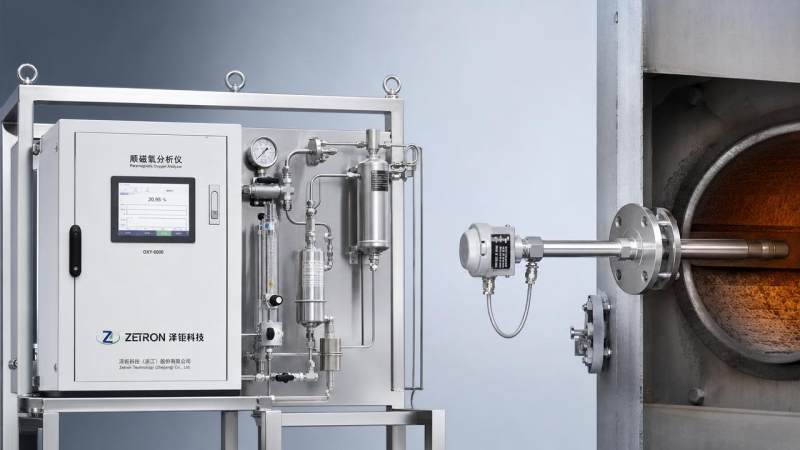
Oxygen measurement appears simple, but process context changes everything.
A furnace exhaust, nitrogen blanketing line, glovebox, fermentation vessel, and flue gas duct create very different measurement risks.
Paramagnetic oxygen analyzers measure oxygen through its magnetic susceptibility.
Because oxygen is strongly paramagnetic, these instruments can provide selective oxygen measurement without consuming the sample.
Zirconia sensors use a heated zirconium dioxide cell.
They generate voltage according to oxygen partial pressure difference between sample gas and reference gas.
Both methods are mature, but their best-fit scenarios differ sharply.
Paramagnetic oxygen analyzers often excel where high selectivity, fast response, and non-consumptive measurement are required.
Zirconia sensors are often strong in hot combustion streams, boiler control, and high-temperature oxygen trim applications.
Scenario 1: Combustion Control and Boiler Efficiency
Combustion control usually prioritizes ruggedness, fast trending, and tolerance of hot exhaust conditions.
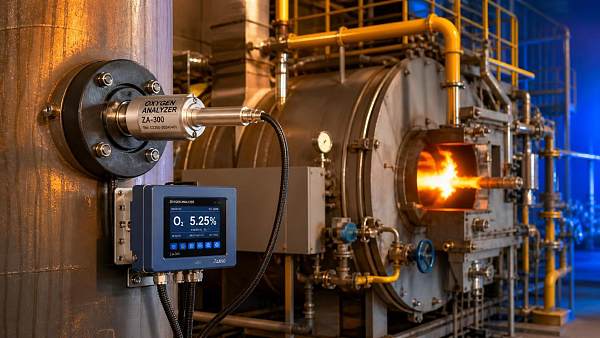
In many furnaces, kilns, heaters, and boilers, zirconia sensors are widely applied near the process.
Their heated cell can operate effectively in high-temperature environments when installation is engineered correctly.
However, reducing gases, combustibles, sulfur compounds, and dust loading can distort readings or shorten sensor life.
Paramagnetic oxygen analyzers become attractive when sample conditioning is already required for multi-gas analysis.
They can support precise stack analysis, emission compliance, and combustion diagnostics in extracted sample systems.
The key judgment is installation philosophy.
Use zirconia sensors for direct, rugged oxygen trim where gas chemistry is compatible.
Consider paramagnetic oxygen analyzers when an extractive analyzer cabinet, CEMS, or higher selectivity is needed.
Scenario 2: Inerting, Nitrogen Blanketing, and Safety Monitoring
Inerting and blanketing applications focus on preventing flammable atmospheres and protecting oxygen-sensitive materials.
Here, low oxygen levels, drift behavior, and calibration confidence become central decision points.
Paramagnetic oxygen analyzers are commonly specified for percent-level oxygen monitoring in nitrogen systems.
They offer fast response and strong selectivity when the sample is clean, dry, and pressure-controlled.
Zirconia sensors can measure low oxygen, but they require careful assessment of gas composition.
Combustibles or reducing atmospheres may react at the heated cell and create misleading oxygen values.
For solvent tanks, pharmaceutical vessels, and specialty chemical reactors, the safer choice often depends on sample hazards.
Paramagnetic oxygen analyzers may need proper sample handling, flame arrestors, or hazardous-area protection.
Zirconia sensors need confirmation that hot surfaces and sample chemistry do not increase ignition or measurement risk.
Scenario 3: Laboratory, Research, and High-Purity Gas Analysis
Laboratory and high-purity applications usually demand repeatability, low cross-sensitivity, and traceable calibration routines.
Typical cases include gas blending, catalyst studies, fermentation research, gloveboxes, and controlled atmosphere chambers.
Paramagnetic oxygen analyzers fit many laboratory platforms because they do not consume oxygen during measurement.
They also provide stable response for changing oxygen concentrations within properly conditioned sample flows.
Zirconia sensors may still be useful where high-temperature operation or compact embedded sensing is valuable.
Yet their heated element can complicate analysis when reactive gases, reducing gases, or volatile organic compounds are present.
For research environments, the decision should include data integrity and method validation.
Paramagnetic oxygen analyzers are often easier to justify where traceability, non-depletion, and broad analytical confidence matter.
Scenario 4: Environmental Monitoring and CEMS Integration
Environmental monitoring systems must balance accuracy, uptime, regulatory documentation, and sample conditioning complexity.
In CEMS applications, oxygen data may correct pollutant concentrations to a reference oxygen basis.
This makes oxygen stability more than an operational convenience.
It directly affects reported emissions performance.
Paramagnetic oxygen analyzers are widely used in extractive CEMS because they integrate well with conditioned sample streams.
Their selectivity supports reliable oxygen correction when moisture, particulates, and acid gases are properly removed.
Zirconia sensors can be effective for in-situ or close-coupled oxygen monitoring.
They are often selected when simple installation and high-temperature tolerance outweigh laboratory-grade analyzer cabinet design.
The scenario judgment should include calibration access, audit requirements, sample line heating, and maintenance capability.
Different Scenario Requirements: Practical Comparison Table
The table shows why no single technology dominates every oxygen measurement scenario.
Paramagnetic oxygen analyzers usually reward better sample system design.
Zirconia sensors usually reward correct placement and chemical compatibility.
Scenario Adaptation: How to Specify the Better Fit
A reliable specification should begin with process conditions, not catalog resolution.
The following decision steps reduce overspecification and hidden integration risk.
- Define oxygen range, alarm thresholds, and required uncertainty.
- Confirm sample temperature, moisture, pressure, dust, and corrosive components.
- Check whether combustibles or reducing gases can contact a heated cell.
- Decide between in-situ measurement and extractive sample conditioning.
- Review hazardous-area classification, purge requirements, and certification needs.
- Compare calibration gas access, validation frequency, and maintenance skill level.
Choose paramagnetic oxygen analyzers when analytical selectivity and stable oxygen trending are the dominant requirements.
They are especially suitable for extractive systems with controlled flow, pressure, and temperature.
Choose zirconia sensors when direct measurement in hot combustion gas simplifies installation and improves control response.
They are strongest where process chemistry does not compromise the heated sensing element.
Common Misjudgments That Increase Lifecycle Cost
Mistaking fast sensor response for fast system response
Analyzer response depends on the full system, not only the sensing principle.
Long sample lines, filters, condensate traps, and low flow rates can slow paramagnetic oxygen analyzers significantly.
Likewise, zirconia sensors installed in stagnant duct zones can report delayed or unrepresentative oxygen values.
Ignoring moisture and condensation
Condensation is a frequent cause of unreliable oxygen measurement.
Extractive systems need heated lines, coolers, drains, or dryers according to the measurement basis.
Paramagnetic oxygen analyzers require stable sample conditioning to prevent corrosion, flow disturbance, and calibration drift.
Underestimating gas chemistry
Zirconia technology can be vulnerable when reducing gases consume oxygen at the heated cell.
This can make the reading appear lower than the real bulk oxygen concentration.
Paramagnetic oxygen analyzers have different concerns, including pressure effects and magnetic background gases.
These issues should be reviewed before final instrument selection.
Treating calibration as a minor detail
Calibration strategy defines long-term confidence.
Span gas quality, zero gas purity, regulator materials, and validation intervals affect actual field performance.
Paramagnetic oxygen analyzers often support robust verification routines in analytical shelters and laboratory systems.
Zirconia sensors may require application-specific checks for cell aging and contamination.
Application Boundary: When Each Technology Becomes Risky
Paramagnetic oxygen analyzers are not ideal for dirty, wet, or highly variable process gas without conditioning.
They also need appropriate vibration control, pressure regulation, and flow stability.
If maintenance access is poor, an extractive analyzer system may become burdensome.
Zirconia sensors become risky when the sample contains high combustibles, reducing gases, silicon vapors, or poisoning contaminants.
They can also be unsuitable where a heated sensor element conflicts with hazardous-area strategy.
The strongest specification documents these boundaries explicitly.
That prevents a technically correct instrument from becoming operationally unreliable.
Decision Matrix for Confident Technology Selection
Conclusion and Next Practical Step
The best oxygen technology is the one that matches the real scenario.
Paramagnetic oxygen analyzers generally fit analytical, extractive, laboratory, inerting, and compliance-oriented systems.
Zirconia sensors generally fit hot combustion control, oxygen trim, and rugged near-process monitoring.
Before selection, build a one-page oxygen measurement datasheet.
Include gas composition, temperature, pressure, moisture, hazardous-area needs, response target, calibration plan, and maintenance limits.
Global Instrument Hub supports evidence-based instrumentation decisions through technical intelligence, supplier research, and application-focused analysis.
For a safer specification, compare paramagnetic oxygen analyzers and zirconia sensors against the actual process envelope, not an ideal datasheet.
Recommended for You
 When does process gas monitoring need continuous measurement?Process gas monitoring needs continuous measurement when rapid changes threaten safety, quality, compliance, or uptime. Learn how to specify reliable, actionable monitoring systems.
 How to prevent false alarms in power plant instrumentationPower plant instrumentation guide: prevent false alarms with reliable signal checks, smarter alarm settings, mode-based control, and actionable operator responses.
 How fixed gas detectors help prevent leaks in enclosed workspacesFixed gas detectors provide continuous leak monitoring in enclosed workspaces, enabling faster alarms, safer responses, and stronger protection for people and processes.
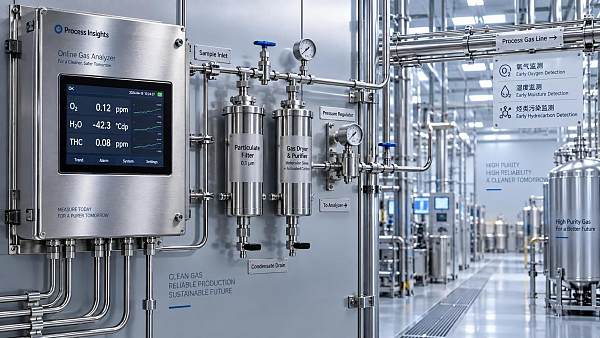
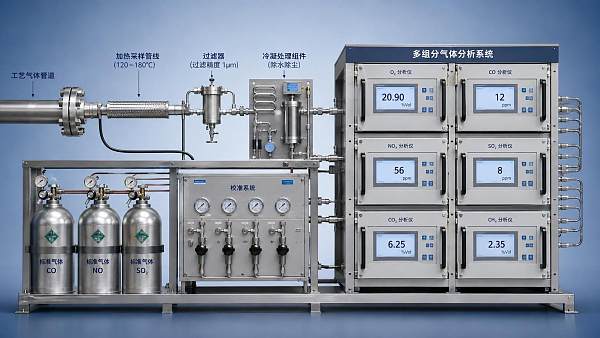
 How industrial gas analysis helps detect process contamination earlyIndustrial Gas Analysis helps detect oxygen, moisture, and hydrocarbon contamination early, enabling faster fault isolation, safer operations, and stronger process control.
 What drives environmental compliance continuous monitoring setup cost?Environmental compliance continuous monitoring setup cost: uncover hidden expenses, compare bids accurately, and build a reliable, audit-ready system.
 How to select gas analysis equipment for continuous emissions monitoringGas analysis equipment selection guide for reliable continuous emissions monitoring—compare technologies, sampling, calibration, compliance, and maintenance needs.
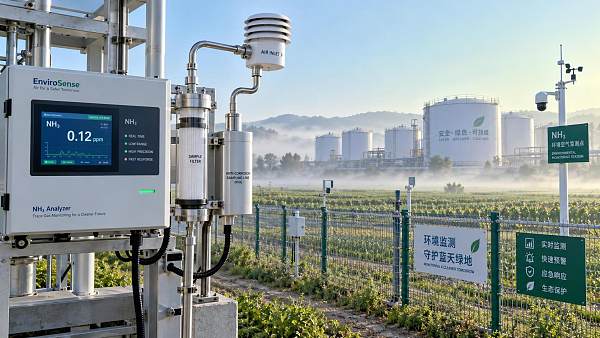
 What detection limit is needed for NH3 environmental monitoring?High accuracy NH3 analyzer for environmental monitoring: learn how to set the right detection limit, improve sampling reliability, and make defensible decisions.
 How to select a NOX analyzer for power plant emissions complianceNOX analyzer for power plant emissions: learn how to select a compliant, reliable CEMS solution with the right range, sample handling, calibration, and data integrity.
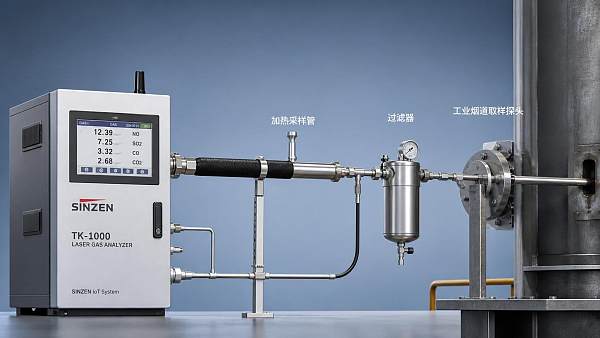
 How to evaluate a laser gas analyzer manufacturer in GermanyLaser gas analyzer manufacturer in Germany: compare accuracy, sample handling, interference control, calibration, and service to select a reliable solution.
 How does a flue gas analyzer maintain accuracy in wet stack gas?Flue gas analyzer accuracy in wet stack gas depends on heated sampling, moisture correction, reliable sensors, and calibration. Explore key selection tips.
 What makes equipment suitable for a hazardous environment?Hazardous Environment equipment selection explained: certification, ignition control, materials, installation, and maintenance for safer operations.
 How Can Fugitive Emission Monitoring Results Be Validated?How to validate fugitive emission monitoring results: learn calibration, field documentation, data-quality checks, and compliance comparisons for credible, decision-ready reports.
 Do Stack Testing Instruments Need Heated Sample Lines?Do stack testing instruments need heated sample lines? Learn when heating protects sample integrity, prevents condensation, and improves reliable emissions measurements.
 What Are the Risks of Using Low-Cost Electrochemical Gas Analyzers?What are the risks of using low-cost electrochemical gas analyzers? Explore calibration drift, cross-sensitivity, safety, and compliance concerns before you buy.
 How Long Does It Take to Integrate a Custom Emission Monitoring Solution?How long does it take to integrate a custom emission monitoring solution? Explore timelines, site readiness, data integration, and validation factors.
 Is Industrial Safety Monitoring the Same as Emission Monitoring?is industrial safety monitoring the same as emission monitoring? Learn the key differences in purpose, alarms, compliance, and instrument selection for safer operations.
 What Monthly Maintenance Does a Wireless Measurement Node Need?What maintenance does a wireless measurement node need monthly? Explore practical checks for battery health, signal quality, sensor accuracy, enclosures, and reliable data.
 Can Measurement and Control Systems Handle Corrosive Flue Gas?Can measurement and control systems handle corrosive flue gas? Discover proven design strategies for reliable sensing, sampling, materials, and maintenance.
 How Can Data Logging Instruments Pass an Environmental Audit?Learn how to ensure data logging instruments pass environmental audit with proven calibration, data integrity, alarm control, and traceable compliance records.
 What Are the Common Pitfalls of Integrating Multiple Gas Analyzers?What are common pitfalls when integrating multiple gas analyzers? Discover how sampling, timing, calibration, and data integration risks affect reliable decisions.
 Is Predictive Analytics for Emission Control Useful or Just Hype?Is predictive analytics useful for emission control or just hype? Discover how reliable data, CEMS, and practical pilots can reduce risk and support compliance.
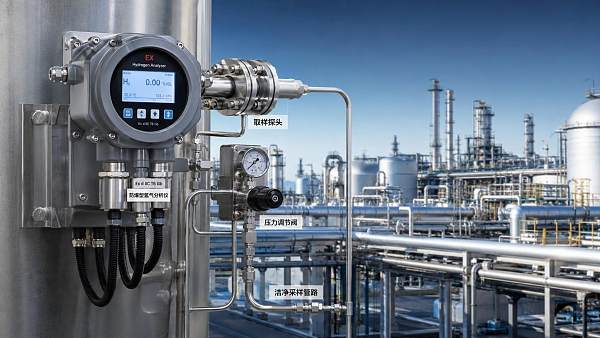
 How to select a hydrogen analyzer for petrochemical process safetyHydrogen analyzer for petrochemical industry selection guide: compare technologies, sample systems, response time, and safety certifications for reliable process protection.
 When does a thermal conductivity detector outperform an FID?Thermal conductivity detector vs. FID: discover when TCD is the smarter choice for permanent gases, bulk analysis, non-destructive detection, and reliable GC method design.
 What certification should you verify before buying an IECEx analyzer?IECEx analyzer buyers: verify the Certificate of Conformity, Ex marking, special conditions, and exact configuration before purchase. Avoid costly compliance risks.
 How oxygen analysis helps prevent incomplete combustionOxygen analysis helps prevent incomplete combustion by optimizing air-to-fuel balance, reducing fuel waste, improving burner safety, and supporting emissions control.
 How to size an industrial gas system for stable peak demandIndustrial gas system sizing guide for stable peak demand. Learn how to assess flow, pressure drop, buffer storage, purity, redundancy, and commissioning for reliable production.
 How to choose a process sensor for high-temperature applicationsProcess sensor selection for high-temperature applications: compare thermal limits, materials, accuracy, installation, and maintenance to secure reliable control data.
 When does continuous analysis improve industrial process control?Continuous analysis improves industrial process control with timely composition data that supports faster decisions, higher quality, safer operations, and less waste.
 How to choose emission control systems for variable industrial loadsEmission Control solutions for variable industrial loads: learn how to match technology, controls, monitoring, and lifecycle costs for reliable compliance.
 How continuous emissions monitoring supports reliable emission reductionEmission Reduction relies on reliable continuous emissions monitoring. Discover how accurate data, calibration, and process insights support compliance and smarter control.
 When does it make sense to automate a production line?Production Line automation makes sense when processes are stable, measurable, and repeatable. Learn the key signals, risks, and ROI triggers before you invest.
 What accuracy should a monitoring device deliver in power quality applicationsMonitoring Device accuracy in power quality applications affects compliance, troubleshooting, and decision confidence. Learn what specs, standards, and installation factors truly matter.




Search Categories
Search Categories
- Smart Meters & Power Quality
- Transformer Gas Analyzers
- BESS Thermal Runaway Detectors
- Energy, Power & Smart Grid Monitoring
- Optical Profilers & CMM
- Ultrasonic & X-Ray NDT
- Calibration Standards
- Precision Metrology & NDT
- Water Quality Analyzers
- CEMS & VOCs Monitors
- Price Trends
- Import & Export Updates
- Market Trends
- Industry News
- Industry Insights
Latest Article
- When does process gas monitoring need continuous measurement?Process gas monitoring needs continuous measurement when rapid changes threaten safety, quality, compliance, or uptime. Learn how to specify reliable, actionable monitoring systems.Posted by:
- How to prevent false alarms in power plant instrumentationPower plant instrumentation guide: prevent false alarms with reliable signal checks, smarter alarm settings, mode-based control, and actionable operator responses.Posted by:
- How fixed gas detectors help prevent leaks in enclosed workspacesFixed gas detectors provide continuous leak monitoring in enclosed workspaces, enabling faster alarms, safer responses, and stronger protection for people and processes.Posted by:
Please give us a message
