
Industrial Control System Risks in Analyzer Integration


Integrating process analyzers into an industrial control system can unlock faster decisions, tighter quality control, and safer operations—but it also introduces risks that project teams cannot overlook.
Cybersecurity exposure, data integrity gaps, protocol mismatches, hazardous-area compliance, and lifecycle burdens all deserve early review before connectivity becomes operational dependency.
Why an Industrial Control System Integration Checklist Matters
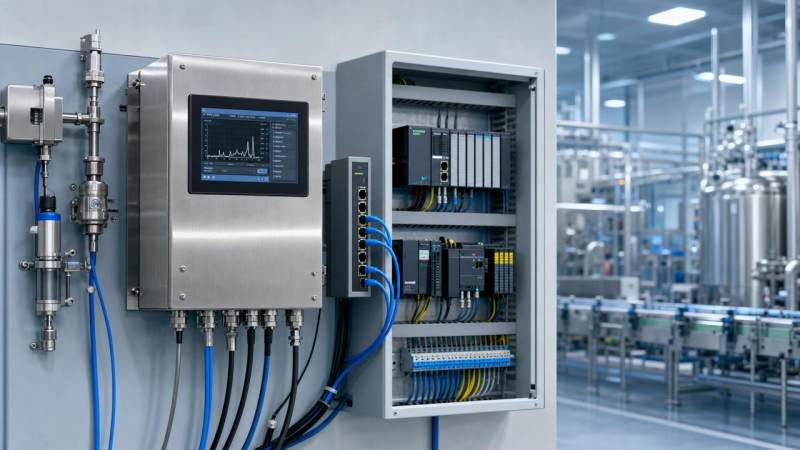
Analyzers now feed critical data into control loops, quality release decisions, emissions reports, and safety interlocks across chemical, energy, laboratory, and manufacturing environments.
When an analyzer is connected to an industrial control system without structured risk review, a small signal issue can become a production event.
A checklist turns vague concerns into verifiable actions, making design reviews more consistent across automation, instrumentation, safety, and maintenance disciplines.
It also creates a defensible record for audits, incident investigations, supplier qualification, and future modernization of the industrial control system architecture.
Core Industrial Control System Risk Checklist
Use the following checklist before finalizing analyzer scope, network topology, data handling, and maintenance responsibilities.
- Map every analyzer data path from sample point to industrial control system tag, including gateways, historians, remote access tools, and cloud connections.
- Verify protocol compatibility for Modbus, OPC UA, HART, Foundation Fieldbus, PROFINET, or Ethernet/IP before approving analyzer integration hardware.
- Define whether analyzer readings will inform monitoring, advisory control, closed-loop control, safety functions, or regulatory reporting obligations.
- Separate analyzer networks from core industrial control system segments using zones, conduits, firewalls, and least-privilege communication rules.
- Confirm hazardous-area ratings, including ATEX, IECEx, Class/Division, temperature class, enclosure protection, and purge system requirements.
- Validate sampling system response time, lag, conditioning stability, and calibration accessibility before relying on analyzer values for automation decisions.
- Specify data quality rules for bad values, frozen readings, maintenance mode, span drift, calibration failure, and communication loss.
- Review cybersecurity hardening, including default passwords, unused services, firmware levels, logging, backup files, and vendor remote sessions.
- Test alarm philosophy so analyzer diagnostics do not flood the industrial control system during startup, shutdown, or sample conditioning faults.
- Document ownership for calibration gases, reagents, sample filters, spare parts, firmware updates, and analyzer lifecycle support agreements.
- Confirm time synchronization between analyzer, PLC, DCS, historian, laboratory system, and reporting platform for traceable event reconstruction.
- Run failure-mode testing for power loss, blocked sample lines, network dropout, sensor fouling, analyzer warmup, and invalid concentration values.
Cybersecurity Risks in Analyzer Connectivity
Modern analyzers often include embedded operating systems, web interfaces, USB ports, Ethernet cards, and vendor diagnostic utilities.
These features improve serviceability, yet they may expand the attack surface of an industrial control system.
Risk increases when analyzer cabinets contain unmanaged switches, cellular routers, engineering laptops, or temporary access points used during commissioning.
A secure design should classify analyzer assets, restrict traffic, disable unused services, and log changes affecting control or reporting data.
Remote support also needs clear approval workflows, session recording, multi-factor authentication, and defined emergency access rules.
Data Integrity and Control Decision Risks
Analyzer values can appear precise while being operationally misleading if sampling, conditioning, or calibration conditions are unstable.
An industrial control system should never treat every numeric value as valid by default.
Tag design should include quality status, maintenance flags, diagnostic codes, rate-of-change limits, and substitution logic for unreliable readings.
Closed-loop applications require extra caution because analyzer delay can destabilize control if tuning ignores sample transport and measurement cycle time.
For quality release or environmental reporting, audit trails must preserve raw values, corrected values, calibration events, and operator interventions.
Protocol and Architecture Compatibility Risks
Integration problems often begin with assumptions about protocol support, register mapping, update rates, and diagnostic visibility.
A device may support Modbus TCP yet expose only limited diagnostics required by the industrial control system.
Another analyzer may publish rich data through OPC UA but require certificates, namespace mapping, and cybersecurity review.
Gateways should be treated as critical automation assets, not simple converters.
They need redundancy decisions, backup configuration, firmware control, environmental rating, and clear responsibility during troubleshooting.
Application Scenarios Requiring Extra Review
Chemical and Petrochemical Units
Gas chromatographs, oxygen analyzers, moisture analyzers, and pH systems may influence reactor control, blending, emissions, and flare management.
Here, industrial control system integration must consider hazardous-area compliance, sample disposal, shelter ventilation, and analyzer cycle delay.
Power and Energy Facilities
Water chemistry, hydrogen purity, transformer oil, and emissions analyzers support asset protection and environmental compliance.
Integration should protect the industrial control system from unnecessary network exposure while preserving reliable alarm routing and historian records.
Life Science and Laboratory Automation
Laboratory analyzers may connect to manufacturing execution systems, batch records, and quality databases rather than direct control loops.
Data governance, user permissions, timestamp accuracy, and electronic records become central risks alongside industrial control system security.
Environmental Monitoring Networks
CEMS and online water quality analyzers often produce legally sensitive data for emissions and discharge reporting.
The industrial control system must distinguish process alarms from compliance data workflows, calibration exceptions, and validated reporting outputs.
Commonly Overlooked Risks
Sample system reality: Many integration failures are not software problems. Blocked lines, condensation, contamination, or pressure variation can corrupt analyzer readings before data reaches control.
Maintenance mode logic: An industrial control system needs explicit behavior when analyzers are calibrated, purged, bypassed, or placed offline for service.
Alarm overload: Analyzer diagnostics can create excessive alarms if each minor warning is routed directly to operations without prioritization.
Firmware drift: Analyzer firmware changes may alter registers, certificates, diagnostics, or communication timing, affecting industrial control system reliability.
Spare parts dependency: Proprietary lamps, sensors, columns, reagents, and boards can create long outages if procurement plans ignore lifecycle availability.
Validation gaps: Factory acceptance testing may prove communication, but site acceptance testing must prove sample response, alarms, failover, and operator workflow.
Practical Execution Recommendations
- Create a single integration register covering analyzers, protocols, network zones, critical tags, diagnostics, certificates, backups, and maintenance owners.
- Hold a joint design review before purchase orders, so analyzer specifications match industrial control system security and data requirements.
- Require suppliers to provide register maps, cybersecurity documentation, hazardous-area certificates, calibration procedures, and lifecycle support statements.
- Build test scripts covering normal operation, calibration mode, fault states, network interruption, invalid data, and analyzer restart behavior.
- Define change control rules for firmware, network settings, tag names, alarm limits, sampling hardware, and remote access permissions.
- Review historian and reporting requirements early, especially where industrial control system data supports audits, emissions, or product quality decisions.
For complex projects, treat analyzer integration as a multidisciplinary work package rather than a late-stage instrument connection task.
Global Instrument Hub tracks instrumentation standards, automation trends, and supplier capabilities to support higher-confidence technical evaluation.
That intelligence is especially valuable when analyzer choices affect safety, uptime, compliance, and industrial control system modernization paths.
Summary and Next Action
Analyzer integration can strengthen process visibility, but it also changes the risk profile of an industrial control system.
The most reliable projects verify cybersecurity, data validity, hazardous-area compliance, protocol behavior, lifecycle support, and maintenance workflows before commissioning pressure begins.
Start with a documented checklist, then convert each risk into an owner, test case, acceptance criterion, and future change-control requirement.
This disciplined approach helps protect uptime, improve audit readiness, and ensure analyzer data strengthens the industrial control system instead of weakening it.
Recommended for You
 When does process gas monitoring need continuous measurement?Process gas monitoring needs continuous measurement when rapid changes threaten safety, quality, compliance, or uptime. Learn how to specify reliable, actionable monitoring systems.
 How to prevent false alarms in power plant instrumentationPower plant instrumentation guide: prevent false alarms with reliable signal checks, smarter alarm settings, mode-based control, and actionable operator responses.
 How fixed gas detectors help prevent leaks in enclosed workspacesFixed gas detectors provide continuous leak monitoring in enclosed workspaces, enabling faster alarms, safer responses, and stronger protection for people and processes.
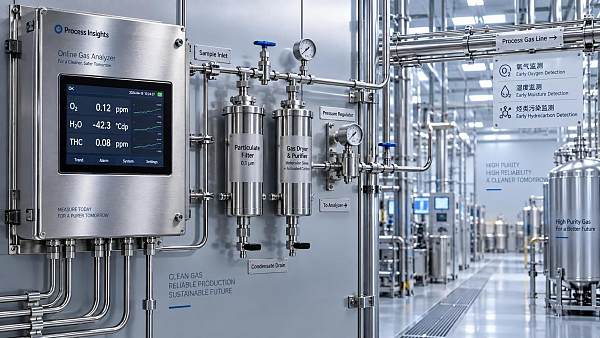
 How industrial gas analysis helps detect process contamination earlyIndustrial Gas Analysis helps detect oxygen, moisture, and hydrocarbon contamination early, enabling faster fault isolation, safer operations, and stronger process control.
 What drives environmental compliance continuous monitoring setup cost?Environmental compliance continuous monitoring setup cost: uncover hidden expenses, compare bids accurately, and build a reliable, audit-ready system.
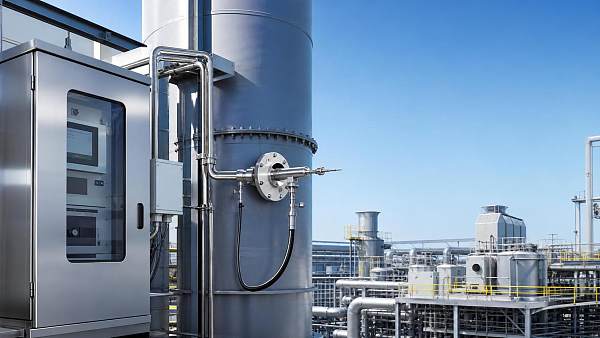
 How to select gas analysis equipment for continuous emissions monitoringGas analysis equipment selection guide for reliable continuous emissions monitoring—compare technologies, sampling, calibration, compliance, and maintenance needs.
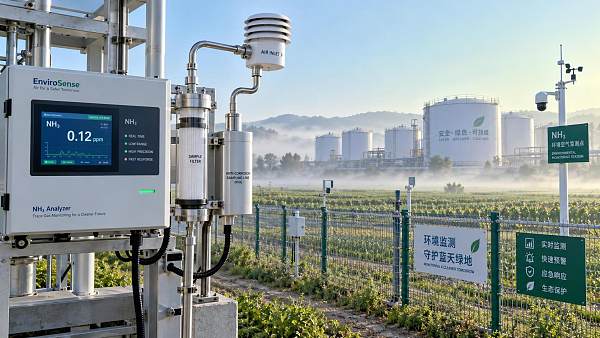
 What detection limit is needed for NH3 environmental monitoring?High accuracy NH3 analyzer for environmental monitoring: learn how to set the right detection limit, improve sampling reliability, and make defensible decisions.
 How to select a NOX analyzer for power plant emissions complianceNOX analyzer for power plant emissions: learn how to select a compliant, reliable CEMS solution with the right range, sample handling, calibration, and data integrity.
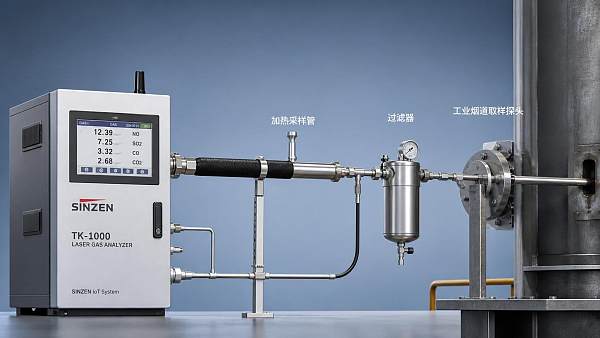
 How to evaluate a laser gas analyzer manufacturer in GermanyLaser gas analyzer manufacturer in Germany: compare accuracy, sample handling, interference control, calibration, and service to select a reliable solution.
 How does a flue gas analyzer maintain accuracy in wet stack gas?Flue gas analyzer accuracy in wet stack gas depends on heated sampling, moisture correction, reliable sensors, and calibration. Explore key selection tips.
 What makes equipment suitable for a hazardous environment?Hazardous Environment equipment selection explained: certification, ignition control, materials, installation, and maintenance for safer operations.
 How Can Fugitive Emission Monitoring Results Be Validated?How to validate fugitive emission monitoring results: learn calibration, field documentation, data-quality checks, and compliance comparisons for credible, decision-ready reports.
 Do Stack Testing Instruments Need Heated Sample Lines?Do stack testing instruments need heated sample lines? Learn when heating protects sample integrity, prevents condensation, and improves reliable emissions measurements.
 What Are the Risks of Using Low-Cost Electrochemical Gas Analyzers?What are the risks of using low-cost electrochemical gas analyzers? Explore calibration drift, cross-sensitivity, safety, and compliance concerns before you buy.
 How Long Does It Take to Integrate a Custom Emission Monitoring Solution?How long does it take to integrate a custom emission monitoring solution? Explore timelines, site readiness, data integration, and validation factors.
 Is Industrial Safety Monitoring the Same as Emission Monitoring?is industrial safety monitoring the same as emission monitoring? Learn the key differences in purpose, alarms, compliance, and instrument selection for safer operations.
 What Monthly Maintenance Does a Wireless Measurement Node Need?What maintenance does a wireless measurement node need monthly? Explore practical checks for battery health, signal quality, sensor accuracy, enclosures, and reliable data.
 Can Measurement and Control Systems Handle Corrosive Flue Gas?Can measurement and control systems handle corrosive flue gas? Discover proven design strategies for reliable sensing, sampling, materials, and maintenance.
 How Can Data Logging Instruments Pass an Environmental Audit?Learn how to ensure data logging instruments pass environmental audit with proven calibration, data integrity, alarm control, and traceable compliance records.
 What Are the Common Pitfalls of Integrating Multiple Gas Analyzers?What are common pitfalls when integrating multiple gas analyzers? Discover how sampling, timing, calibration, and data integration risks affect reliable decisions.
 Is Predictive Analytics for Emission Control Useful or Just Hype?Is predictive analytics useful for emission control or just hype? Discover how reliable data, CEMS, and practical pilots can reduce risk and support compliance.
 How to select a hydrogen analyzer for petrochemical process safetyHydrogen analyzer for petrochemical industry selection guide: compare technologies, sample systems, response time, and safety certifications for reliable process protection.
 When does a thermal conductivity detector outperform an FID?Thermal conductivity detector vs. FID: discover when TCD is the smarter choice for permanent gases, bulk analysis, non-destructive detection, and reliable GC method design.
 What certification should you verify before buying an IECEx analyzer?IECEx analyzer buyers: verify the Certificate of Conformity, Ex marking, special conditions, and exact configuration before purchase. Avoid costly compliance risks.
 How oxygen analysis helps prevent incomplete combustionOxygen analysis helps prevent incomplete combustion by optimizing air-to-fuel balance, reducing fuel waste, improving burner safety, and supporting emissions control.
 How to size an industrial gas system for stable peak demandIndustrial gas system sizing guide for stable peak demand. Learn how to assess flow, pressure drop, buffer storage, purity, redundancy, and commissioning for reliable production.
 How to choose a process sensor for high-temperature applicationsProcess sensor selection for high-temperature applications: compare thermal limits, materials, accuracy, installation, and maintenance to secure reliable control data.
 When does continuous analysis improve industrial process control?Continuous analysis improves industrial process control with timely composition data that supports faster decisions, higher quality, safer operations, and less waste.
 How to choose emission control systems for variable industrial loadsEmission Control solutions for variable industrial loads: learn how to match technology, controls, monitoring, and lifecycle costs for reliable compliance.
 How continuous emissions monitoring supports reliable emission reductionEmission Reduction relies on reliable continuous emissions monitoring. Discover how accurate data, calibration, and process insights support compliance and smarter control.
 When does it make sense to automate a production line?Production Line automation makes sense when processes are stable, measurable, and repeatable. Learn the key signals, risks, and ROI triggers before you invest.
 What accuracy should a monitoring device deliver in power quality applicationsMonitoring Device accuracy in power quality applications affects compliance, troubleshooting, and decision confidence. Learn what specs, standards, and installation factors truly matter.




Search Categories
Search Categories
- Smart Meters & Power Quality
- Transformer Gas Analyzers
- BESS Thermal Runaway Detectors
- Energy, Power & Smart Grid Monitoring
- Optical Profilers & CMM
- Ultrasonic & X-Ray NDT
- Calibration Standards
- Precision Metrology & NDT
- Water Quality Analyzers
- CEMS & VOCs Monitors
- Price Trends
- Import & Export Updates
- Market Trends
- Industry News
- Industry Insights
Latest Article
- When does process gas monitoring need continuous measurement?Process gas monitoring needs continuous measurement when rapid changes threaten safety, quality, compliance, or uptime. Learn how to specify reliable, actionable monitoring systems.Posted by:
- How to prevent false alarms in power plant instrumentationPower plant instrumentation guide: prevent false alarms with reliable signal checks, smarter alarm settings, mode-based control, and actionable operator responses.Posted by:
- How fixed gas detectors help prevent leaks in enclosed workspacesFixed gas detectors provide continuous leak monitoring in enclosed workspaces, enabling faster alarms, safer responses, and stronger protection for people and processes.Posted by:
Please give us a message
