
Level Measurement Instruments for Tanks: What Affects Reliability


Reliable level measurement instruments have become more important as tank operations grow more automated, data-driven, and compliance-sensitive across industries.
In manufacturing, energy, water treatment, chemicals, food processing, and storage, accurate tank level data affects safety, continuity, traceability, and product integrity.
Small errors can trigger overfill events, false alarms, material loss, unstable batching, or unexpected shutdowns.
That is why understanding what shapes the reliability of level measurement instruments is now a strategic operational issue, not only a maintenance concern.
Why reliability standards for level measurement instruments are rising
 The operating context for level measurement instruments is changing fast.
Plants increasingly connect tanks to PLC, SCADA, DCS, cloud dashboards, and predictive analytics systems.
As a result, one weak signal can spread through inventory planning, quality records, alarm logic, and production scheduling.
At the same time, tanks are handling more diverse media, from clean liquids to viscous slurries, corrosive chemicals, powders, and foaming products.
This diversity means level measurement instruments must perform reliably under wider process variations than before.
Another trend is tighter safety and environmental control.
Overfill prevention, emissions reduction, and documented process control are pushing facilities to reassess instrument reliability, not only nominal accuracy.
The main signals behind this shift in tank monitoring expectations
Several forces are driving higher expectations for level measurement instruments in tank applications.
- Digital integration increases the business impact of every measurement point.
- Mixed process media make one-size-fits-all level measurement instruments less effective.
- Compliance pressure requires more traceable and stable tank measurement records.
- Remote operation raises the need for dependable signals with fewer manual checks.
- Maintenance teams face tighter staffing, so resilient instruments are more valuable.
What most often affects the reliability of level measurement instruments
Reliability depends on more than the instrument model.
It is shaped by the interaction between technology, process conditions, installation quality, and lifecycle management.
1. Process media characteristics
The product inside the tank strongly influences level measurement instruments.
Density changes can affect hydrostatic methods.
Low dielectric materials may challenge some radar devices if setup is poor.
Foam, condensation, buildup, turbulence, viscosity, and dust can distort readings across multiple technologies.
2. Tank geometry and internal structures
Nozzle length, narrow spaces, agitators, heating coils, ladders, and internal supports can create reflection noise or dead zones.
Even high-quality level measurement instruments may appear unreliable when the tank layout is ignored.
3. Installation position and mechanical fit
Incorrect mounting angles, unstable supports, poor sealing, and unsuitable process connections reduce performance over time.
Many reliability complaints originate from installation mismatch rather than sensor failure.
4. Environmental and electrical conditions
Temperature swings, humidity, vibration, electromagnetic interference, and power instability can all degrade signal consistency.
Outdoor tanks and hazardous areas need level measurement instruments designed for those realities.
5. Calibration, configuration, and diagnostics
Wrong empty or full references, poor damping settings, and unreviewed echo maps often create persistent measurement drift or nuisance alarms.
Reliable level measurement instruments still need correct commissioning and periodic verification.
How these reliability issues affect operations across the industry
The effects of unreliable level measurement instruments extend far beyond one tank.
They influence production control, quality assurance, inventory visibility, environmental performance, and safety response.
- In batch operations, false levels can distort dosing and recipe consistency.
- In storage terminals, poor tank data weakens stock accuracy and transfer planning.
- In wastewater or chemical systems, missed high-level alarms increase spill risk.
- In food or pharmaceutical environments, contamination or cleaning errors may go unnoticed longer.
- In utility applications, remote monitoring becomes less trustworthy, forcing manual intervention.
Because the instrumentation industry supports broad industrial modernization, dependable tank data is now part of operational resilience.
What deserves closer attention when evaluating level measurement instruments
A stronger evaluation approach focuses on real operating conditions instead of brochure specifications alone.
- Match the sensing principle to the actual media behavior, not only the tank size.
- Review process pressure, temperature, vapor, foam, and buildup risks early.
- Check nozzle dimensions, obstructions, and mounting accessibility before final selection.
- Confirm output compatibility with control and asset monitoring systems.
- Prioritize diagnostics, proof testing support, and maintenance visibility.
- Assess total lifecycle stability, not just initial purchase cost.
A practical response strategy for improving tank measurement reliability
The most effective response combines technology choice, installation discipline, and ongoing performance review.
Where future decisions on level measurement instruments are heading
The direction is clear.
Level measurement instruments are being judged less by isolated sensor performance and more by sustained reliability in connected operations.
Decision-making is shifting toward instruments that support diagnostics, remote validation, easier integration, and adaptation to changing media conditions.
This trend favors solutions that reduce uncertainty across the full tank management process.
The next step is to review weak points before they become failures
A useful next move is to audit current tank applications where alarms are unstable, manual checks are frequent, or readings conflict with material balance.
Those cases often reveal whether the issue comes from media effects, installation limits, configuration gaps, or aging level measurement instruments.
By reviewing those weak points early, operations can improve reliability, reduce risk, and make future instrumentation upgrades far more effective.
Recommended for You
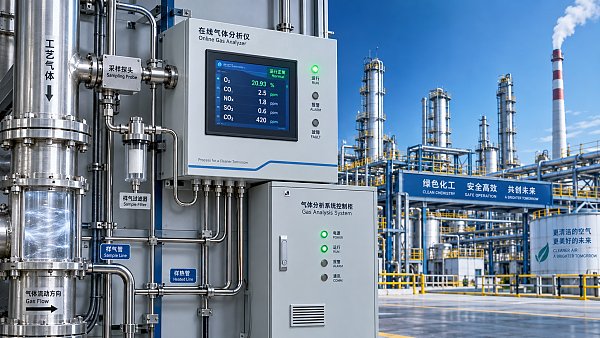
 When does process gas monitoring need continuous measurement?Process gas monitoring needs continuous measurement when rapid changes threaten safety, quality, compliance, or uptime. Learn how to specify reliable, actionable monitoring systems.
 How to prevent false alarms in power plant instrumentationPower plant instrumentation guide: prevent false alarms with reliable signal checks, smarter alarm settings, mode-based control, and actionable operator responses.
 How fixed gas detectors help prevent leaks in enclosed workspacesFixed gas detectors provide continuous leak monitoring in enclosed workspaces, enabling faster alarms, safer responses, and stronger protection for people and processes.
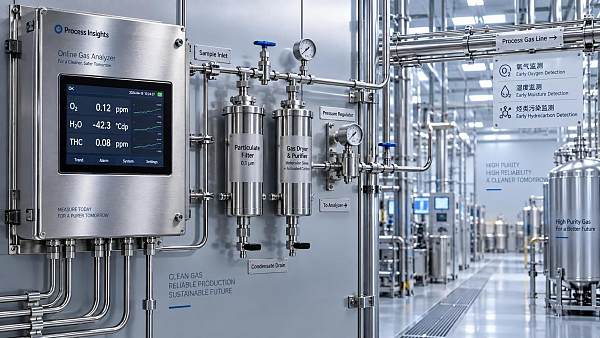
 How industrial gas analysis helps detect process contamination earlyIndustrial Gas Analysis helps detect oxygen, moisture, and hydrocarbon contamination early, enabling faster fault isolation, safer operations, and stronger process control.
 What drives environmental compliance continuous monitoring setup cost?Environmental compliance continuous monitoring setup cost: uncover hidden expenses, compare bids accurately, and build a reliable, audit-ready system.
 How to select gas analysis equipment for continuous emissions monitoringGas analysis equipment selection guide for reliable continuous emissions monitoring—compare technologies, sampling, calibration, compliance, and maintenance needs.
 What detection limit is needed for NH3 environmental monitoring?High accuracy NH3 analyzer for environmental monitoring: learn how to set the right detection limit, improve sampling reliability, and make defensible decisions.
 How to select a NOX analyzer for power plant emissions complianceNOX analyzer for power plant emissions: learn how to select a compliant, reliable CEMS solution with the right range, sample handling, calibration, and data integrity.
 How to evaluate a laser gas analyzer manufacturer in GermanyLaser gas analyzer manufacturer in Germany: compare accuracy, sample handling, interference control, calibration, and service to select a reliable solution.
 How does a flue gas analyzer maintain accuracy in wet stack gas?Flue gas analyzer accuracy in wet stack gas depends on heated sampling, moisture correction, reliable sensors, and calibration. Explore key selection tips.
 What makes equipment suitable for a hazardous environment?Hazardous Environment equipment selection explained: certification, ignition control, materials, installation, and maintenance for safer operations.
 How Can Fugitive Emission Monitoring Results Be Validated?How to validate fugitive emission monitoring results: learn calibration, field documentation, data-quality checks, and compliance comparisons for credible, decision-ready reports.
 Do Stack Testing Instruments Need Heated Sample Lines?Do stack testing instruments need heated sample lines? Learn when heating protects sample integrity, prevents condensation, and improves reliable emissions measurements.
 What Are the Risks of Using Low-Cost Electrochemical Gas Analyzers?What are the risks of using low-cost electrochemical gas analyzers? Explore calibration drift, cross-sensitivity, safety, and compliance concerns before you buy.
 How Long Does It Take to Integrate a Custom Emission Monitoring Solution?How long does it take to integrate a custom emission monitoring solution? Explore timelines, site readiness, data integration, and validation factors.
 Is Industrial Safety Monitoring the Same as Emission Monitoring?is industrial safety monitoring the same as emission monitoring? Learn the key differences in purpose, alarms, compliance, and instrument selection for safer operations.
 What Monthly Maintenance Does a Wireless Measurement Node Need?What maintenance does a wireless measurement node need monthly? Explore practical checks for battery health, signal quality, sensor accuracy, enclosures, and reliable data.
 Can Measurement and Control Systems Handle Corrosive Flue Gas?Can measurement and control systems handle corrosive flue gas? Discover proven design strategies for reliable sensing, sampling, materials, and maintenance.
 How Can Data Logging Instruments Pass an Environmental Audit?Learn how to ensure data logging instruments pass environmental audit with proven calibration, data integrity, alarm control, and traceable compliance records.
 What Are the Common Pitfalls of Integrating Multiple Gas Analyzers?What are common pitfalls when integrating multiple gas analyzers? Discover how sampling, timing, calibration, and data integration risks affect reliable decisions.
 Is Predictive Analytics for Emission Control Useful or Just Hype?Is predictive analytics useful for emission control or just hype? Discover how reliable data, CEMS, and practical pilots can reduce risk and support compliance.
 How to select a hydrogen analyzer for petrochemical process safetyHydrogen analyzer for petrochemical industry selection guide: compare technologies, sample systems, response time, and safety certifications for reliable process protection.
 When does a thermal conductivity detector outperform an FID?Thermal conductivity detector vs. FID: discover when TCD is the smarter choice for permanent gases, bulk analysis, non-destructive detection, and reliable GC method design.
 What certification should you verify before buying an IECEx analyzer?IECEx analyzer buyers: verify the Certificate of Conformity, Ex marking, special conditions, and exact configuration before purchase. Avoid costly compliance risks.
 How oxygen analysis helps prevent incomplete combustionOxygen analysis helps prevent incomplete combustion by optimizing air-to-fuel balance, reducing fuel waste, improving burner safety, and supporting emissions control.
 How to size an industrial gas system for stable peak demandIndustrial gas system sizing guide for stable peak demand. Learn how to assess flow, pressure drop, buffer storage, purity, redundancy, and commissioning for reliable production.
 How to choose a process sensor for high-temperature applicationsProcess sensor selection for high-temperature applications: compare thermal limits, materials, accuracy, installation, and maintenance to secure reliable control data.
 When does continuous analysis improve industrial process control?Continuous analysis improves industrial process control with timely composition data that supports faster decisions, higher quality, safer operations, and less waste.
 How to choose emission control systems for variable industrial loadsEmission Control solutions for variable industrial loads: learn how to match technology, controls, monitoring, and lifecycle costs for reliable compliance.
 How continuous emissions monitoring supports reliable emission reductionEmission Reduction relies on reliable continuous emissions monitoring. Discover how accurate data, calibration, and process insights support compliance and smarter control.
 When does it make sense to automate a production line?Production Line automation makes sense when processes are stable, measurable, and repeatable. Learn the key signals, risks, and ROI triggers before you invest.
 What accuracy should a monitoring device deliver in power quality applicationsMonitoring Device accuracy in power quality applications affects compliance, troubleshooting, and decision confidence. Learn what specs, standards, and installation factors truly matter.




Search Categories
Search Categories
- Smart Meters & Power Quality
- Transformer Gas Analyzers
- BESS Thermal Runaway Detectors
- Energy, Power & Smart Grid Monitoring
- Optical Profilers & CMM
- Ultrasonic & X-Ray NDT
- Calibration Standards
- Precision Metrology & NDT
- Water Quality Analyzers
- CEMS & VOCs Monitors
- Price Trends
- Import & Export Updates
- Market Trends
- Industry News
- Industry Insights
Latest Article
- When does process gas monitoring need continuous measurement?Process gas monitoring needs continuous measurement when rapid changes threaten safety, quality, compliance, or uptime. Learn how to specify reliable, actionable monitoring systems.Posted by:
- How to prevent false alarms in power plant instrumentationPower plant instrumentation guide: prevent false alarms with reliable signal checks, smarter alarm settings, mode-based control, and actionable operator responses.Posted by:
- How fixed gas detectors help prevent leaks in enclosed workspacesFixed gas detectors provide continuous leak monitoring in enclosed workspaces, enabling faster alarms, safer responses, and stronger protection for people and processes.Posted by:
Please give us a message
