
How to select a percent range analyzer for process measurements


How to Select a Percent Range Analyzer for Process Measurements
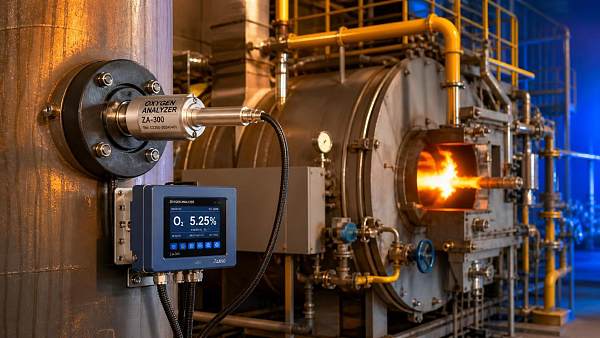
Selecting a percent range analyzer for process measurements requires more judgment than comparing a few datasheet values. A unit that performs well during a clean-gas factory test may become unreliable when exposed to condensate, pressure swings, dust, corrosive vapors, or an unstable sample stream. For technical evaluators, the central question is not simply whether an analyzer can read a concentration expressed in percent. It is whether that reading remains representative, stable, traceable, and available when the process needs it most.
Percent-range analysis is common in combustion control, inerting systems, gas blending, fermentation, chemical processing, emissions-related monitoring, heat treatment, industrial gas production, and many laboratory-to-process scale-up applications. Depending on the measured component and process matrix, the instrument may use paramagnetic, electrochemical, infrared, thermal conductivity, zirconia, laser-based, or other sensing principles. The correct technology follows the measurement problem; it should not be chosen because a familiar analyzer model happens to be readily available.
A sound evaluation begins by defining the decision that the measurement supports. Is the analyzer feeding a control loop, proving an inert atmosphere before a safety-critical operation, optimizing fuel use, verifying product composition, or providing operational visibility to a supervisory system? The consequence of a wrong value determines how much accuracy, redundancy, diagnostics, validation, and maintenance capacity the project should require.
Start With the Measurement Boundary, Not the Instrument
The term “percent range” can obscure an important distinction: a measurement span is not the same as a process specification. A process may normally operate around 15% concentration but experience startup, purge, upset, or batch-transition conditions far beyond that point. Selecting a narrow analyzer range around normal operation can improve usable resolution, but only if excursions outside the range do not create a safety, quality, or diagnostic blind spot.
Define at least four values before asking suppliers for proposals: the normal operating band, the control band, the alarm or interlock thresholds, and the credible full excursion range. Also establish whether the concentration is reported as volume percent, mole percent, dry basis, wet basis, or another defined basis. A number without that context can lead to serious misunderstanding, especially where moisture content changes significantly.
The analyzer’s stated range should cover the required process range with enough headroom for real operating variability. However, unnecessary span is not harmless. If a system measures a small change within a very wide range, the resulting resolution and uncertainty may be inadequate for the actual control objective. Ask the supplier to state performance at the intended operating point, not only as a favorable percentage of full scale.
Accuracy, Repeatability, and Response Time Answer Different Questions
Analyzer specifications are often read as though “accuracy” settles the matter. It does not. Accuracy describes closeness to a reference under defined conditions. Repeatability indicates whether the instrument produces consistent readings under the same conditions. Drift shows how the reading changes between calibrations. Response time indicates how quickly the complete system recognizes a process change.
For closed-loop process control, repeatability, signal stability, and transport delay may matter more than the most attractive laboratory accuracy figure. For custody-adjacent quality verification or compliance-related work, traceability and uncertainty documentation may carry greater weight. In safety-related applications, the relevant issue is whether the analyzer detects a hazardous condition within the required response window and whether failure is visible to the control system.
Request performance data in a form that can be compared fairly: stated range, reference conditions, linearity, repeatability, zero and span drift, warm-up requirement, response definition, and calibration interval. Clarify whether response time means sensor response only or includes sample transport, conditioning, filtering, and data averaging. In extractive systems, the sample path can dominate the total delay.
The Sample System Is Part of the Analyzer
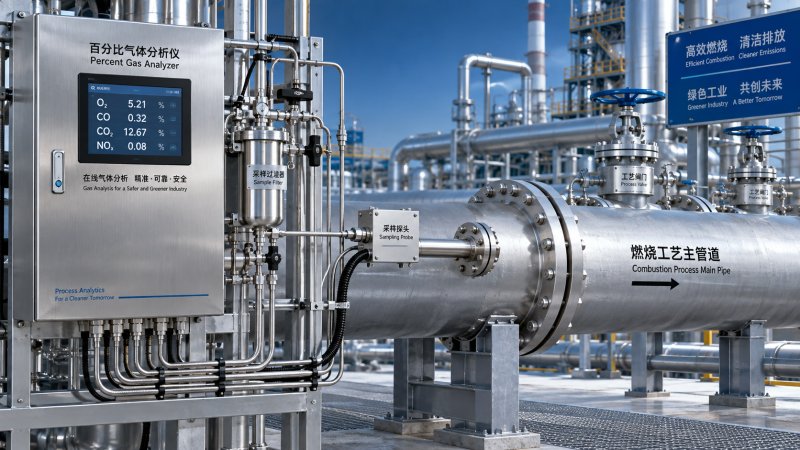
Many difficult analyzer projects fail at the interface between process and instrument rather than inside the sensing module. A percent range analyzer cannot compensate for a sample that is no longer chemically or physically representative. Condensation may remove water-soluble components; particulate matter can plug filters; long lines can delay the result; leaks can dilute the sample; and incompatible wetted materials can absorb or react with the component of interest.
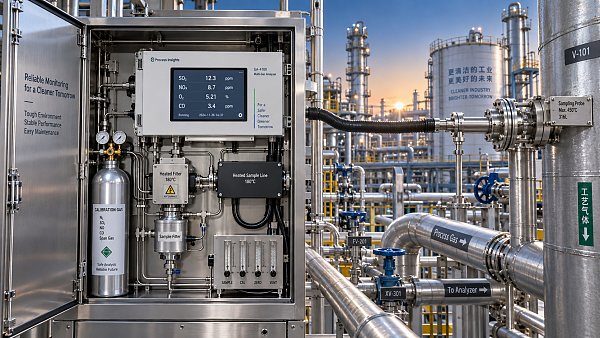
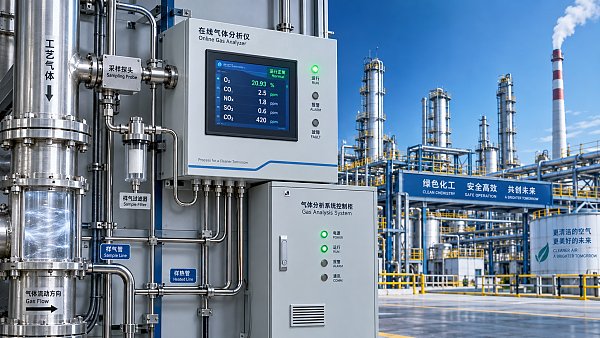
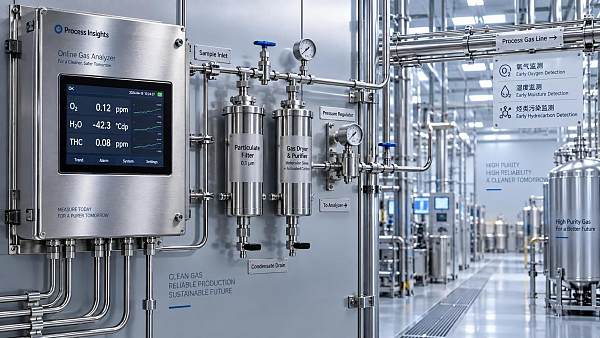
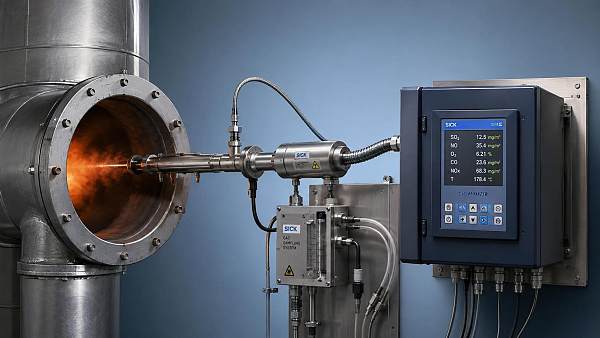
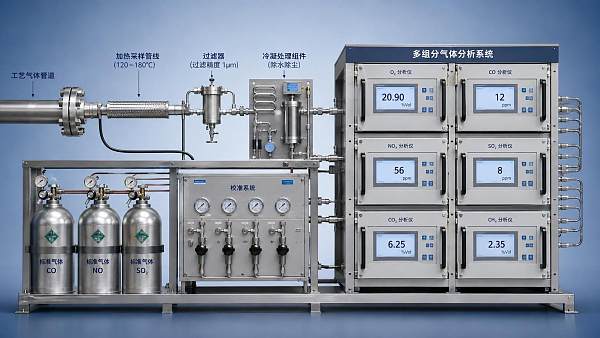
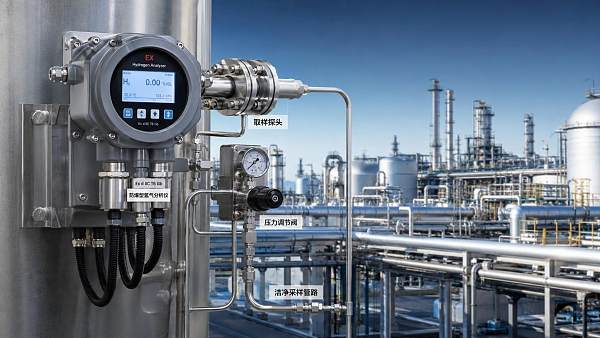
The first selection decision is therefore often in-situ versus extractive measurement. An in-situ arrangement avoids sample transport and can provide rapid indication, but sensor exposure, process temperature, pressure, fouling, and maintenance access must be acceptable. An extractive system can protect the analyzer and condition the sample, but it adds probes, heated lines where needed, filters, pumps, regulators, drains, and more maintenance points.
A practical sample-system review should address process pressure and temperature, dew point, aerosol loading, corrosive compounds, expected contaminants, flow stability, installation location, probe design, and the path from process takeoff to analyzer. If the measured gas is near saturation, simply cooling it may alter the reported concentration. If a pressure regulator is used, evaluators should understand whether pressure changes influence the sensor or the sample composition. These are project-specific engineering questions, not accessories to be resolved after purchase.
Match the Sensing Principle to the Gas Matrix
The target component alone does not define analyzer suitability. The balance gas, interfering species, humidity, pressure, temperature, and contamination profile matter just as much. An oxygen measurement in a relatively simple nitrogen-based stream is a different problem from oxygen measurement in a changing hydrocarbon, carbon dioxide, hydrogen, or solvent-vapor matrix. A technology that is selective in one matrix may need compensation or may be unsuitable in another.
For infrared-based measurement, confirm spectral cross-interference and the treatment of water vapor. For thermal conductivity approaches, assess variation in the background gas because the method responds to thermal properties of the overall mixture. Electrochemical sensors may be well suited to certain duties but should be evaluated for expected service life, exposure limits, and replacement planning. Zirconia oxygen analyzers can be effective at elevated temperature, yet process chemistry and installation conditions still determine whether the reading remains meaningful. These examples are not universal technology rankings; they illustrate why matrix review cannot be skipped.
Ask prospective manufacturers to identify known interferences, required compensations, unsuitable gases, pressure constraints, and the effect of ambient conditions. If the process composition changes through grades, batches, feedstocks, or operating modes, provide those scenarios during technical clarification. An analyzer validated only against a single “typical” gas composition may produce misleading confidence.
Treat Calibration as an Operating Design Requirement
Calibration is not merely an acceptance-test event. It establishes whether the measurement can remain trustworthy over its service life. The evaluation should include zero and span gas requirements, calibration-gas quality, cylinder handling, flow and pressure needs, automated versus manual calibration capability, access for technicians, and how calibration results are recorded.
Where documented measurement traceability is needed, teams should determine whether calibration procedures, reference materials, and service arrangements align with the site quality system. ISO/IEC 17025 may be relevant when calibration laboratory competence and traceability are part of the project requirement, but the applicable scope must be verified rather than assumed from a general certificate claim.
Avoid treating the longest quoted calibration interval as automatically preferable. A long interval is useful only when the sample conditions, analyzer drift behavior, risk level, and verification plan support it. A more maintainable system with accessible checks may be operationally stronger than a low-maintenance claim that is hard to validate in the field.
Integration, Alarms, and Hazardous-Area Constraints
A reliable measurement can still be ineffective if it arrives at the PLC, DCS, historian, or safety system in the wrong form. Confirm the required analog and digital interfaces, signal scaling, update frequency, alarm handling, fault indication, time synchronization, and cybersecurity expectations where networked communication is involved. Diagnostic states should be distinguishable from a genuine low or high process value. A failed sample pump or expired sensor should not appear as a believable concentration reading.
Hazardous-area requirements must be determined from the site classification and installation concept. Depending on the jurisdiction and project, ATEX, IECEx, or other local requirements may apply. It is essential to verify the exact protection marking, temperature class, gas group, installation limitations, cable-gland requirements, and whether the certification covers the complete analyzer package rather than only one component. A certified transmitter does not automatically make an entire sample-conditioning enclosure compliant.
For analyzers that influence shutdowns, permissives, or protective actions, involve functional safety and control specialists early. The required architecture, proof testing, bypass management, and failure response depend on the plant’s hazard analysis. No analyzer datasheet can substitute for that work.
Compare Lifecycle Fit, Not Just Purchase Price
The initial instrument price may be a small fraction of the true cost of ownership. Evaluate consumable sensors, calibration gas, filters, probes, pumps, heated components, spare parts, commissioning support, software access, service competence, and lead time for critical replacements. A technically sophisticated analyzer with no practical regional support can be a poor fit for a remote or continuously operated plant.
A useful comparison separates the analyzer cabinet from the whole measurement loop. Include civil and mechanical installation, utilities, shelters or enclosures, sample tubing, analyzer-house requirements, integration engineering, commissioning, operator training, and periodic verification. This approach also reveals whether a cheaper instrument shifts cost and risk into a more complex sample system.
Technical evaluators should request a clear document set: datasheets, general arrangement drawings, utility requirements, wiring information, calibration instructions, recommended spares, maintenance tasks, certificates applicable to the offered configuration, and a stated list of assumptions. Ambiguity at this stage becomes variation, delay, or performance disagreement later.
A More Defensible Selection Process
Before issuing an inquiry, build a concise measurement specification that describes the process purpose, target component, range philosophy, gas matrix, sample conditions, required response, uncertainty expectations, calibration approach, site classification, interfaces, and maintenance constraints. Then score candidate solutions against those requirements rather than relying on broad claims of accuracy or reliability.
When the application is unusual, request a documented feasibility review or, where practical, test evidence using representative conditions. The most valuable supplier questions are often specific: What happens if condensate reaches the probe? Which interfering gases are expected to affect the reading? What diagnostic appears when sample flow is lost? How is the instrument verified after a turnaround? What assumptions sit behind the published response time?
Global Instrument Hub approaches analyzer selection as a measurement-chain decision. Its industry research across process control, laboratory analysis, environmental monitoring, precision metrology, and energy systems helps teams compare not only instrument categories but also supplier documentation, technical boundaries, compliance considerations, and support readiness. That perspective is especially useful when procurement teams are evaluating unfamiliar manufacturers or cross-border supply options.
The right percent range analyzer is the one that delivers a decision-grade measurement under actual process conditions, with a calibration and maintenance burden the site can sustain. Define the process truth you need to capture first. The instrument choice becomes clearer once the sample, risk, integration path, and lifecycle responsibilities are made equally visible.
Recommended for You
 How to select a percent range analyzer for process measurementsPercent range analyzer selection made practical: compare accuracy, sample systems, calibration, gas matrix, integration, and lifecycle cost for reliable process measurements.
 How explosion proof analysis verifies safe equipment for hazardous areasExplosion proof analysis verifies hazardous-area equipment by matching certifications, temperature ratings, installation details, and inspection controls for safer compliance.
 When does fixed gas detection need point sensors instead of open-path monitoring?Fixed gas detection: discover when point sensors outperform open-path monitoring for predictable leaks, enclosed zones, local alarms, and safer design decisions.
 How to choose industrial metrology systems for tight-tolerance partsIndustrial metrology guide for tight-tolerance parts: compare CMMs, optical scanners, gauges, uncertainty, workflow, and traceable inspection strategies.
 How process metrology reduces measurement variation in productionProcess metrology reduces production measurement variation by improving traceability, uncertainty control, calibration, and reliable quality decisions.
 How to select an industrial monitoring analyzer for harsh environmentsIndustrial monitoring analyzer selection for harsh environments: evaluate sampling, durability, hazardous-area compliance, accuracy, maintenance, and data reliability.
 How calibration intervals affect test and measurement equipment accuracyTest and measurement equipment calibration intervals directly affect accuracy, risk, compliance, and uptime. Learn how to set evidence-based schedules that protect critical decisions.
 When does process gas monitoring need continuous measurement?Process gas monitoring needs continuous measurement when rapid changes threaten safety, quality, compliance, or uptime. Learn how to specify reliable, actionable monitoring systems.
 How to prevent false alarms in power plant instrumentationPower plant instrumentation guide: prevent false alarms with reliable signal checks, smarter alarm settings, mode-based control, and actionable operator responses.
 How fixed gas detectors help prevent leaks in enclosed workspacesFixed gas detectors provide continuous leak monitoring in enclosed workspaces, enabling faster alarms, safer responses, and stronger protection for people and processes.
 How industrial gas analysis helps detect process contamination earlyIndustrial Gas Analysis helps detect oxygen, moisture, and hydrocarbon contamination early, enabling faster fault isolation, safer operations, and stronger process control.
 What drives environmental compliance continuous monitoring setup cost?Environmental compliance continuous monitoring setup cost: uncover hidden expenses, compare bids accurately, and build a reliable, audit-ready system.
 How to select gas analysis equipment for continuous emissions monitoringGas analysis equipment selection guide for reliable continuous emissions monitoring—compare technologies, sampling, calibration, compliance, and maintenance needs.
 What detection limit is needed for NH3 environmental monitoring?High accuracy NH3 analyzer for environmental monitoring: learn how to set the right detection limit, improve sampling reliability, and make defensible decisions.
 How to select a NOX analyzer for power plant emissions complianceNOX analyzer for power plant emissions: learn how to select a compliant, reliable CEMS solution with the right range, sample handling, calibration, and data integrity.
 How to evaluate a laser gas analyzer manufacturer in GermanyLaser gas analyzer manufacturer in Germany: compare accuracy, sample handling, interference control, calibration, and service to select a reliable solution.
 How does a flue gas analyzer maintain accuracy in wet stack gas?Flue gas analyzer accuracy in wet stack gas depends on heated sampling, moisture correction, reliable sensors, and calibration. Explore key selection tips.
 What makes equipment suitable for a hazardous environment?Hazardous Environment equipment selection explained: certification, ignition control, materials, installation, and maintenance for safer operations.
 How Can Fugitive Emission Monitoring Results Be Validated?How to validate fugitive emission monitoring results: learn calibration, field documentation, data-quality checks, and compliance comparisons for credible, decision-ready reports.
 Do Stack Testing Instruments Need Heated Sample Lines?Do stack testing instruments need heated sample lines? Learn when heating protects sample integrity, prevents condensation, and improves reliable emissions measurements.
 What Are the Risks of Using Low-Cost Electrochemical Gas Analyzers?What are the risks of using low-cost electrochemical gas analyzers? Explore calibration drift, cross-sensitivity, safety, and compliance concerns before you buy.
 How Long Does It Take to Integrate a Custom Emission Monitoring Solution?How long does it take to integrate a custom emission monitoring solution? Explore timelines, site readiness, data integration, and validation factors.
 Is Industrial Safety Monitoring the Same as Emission Monitoring?is industrial safety monitoring the same as emission monitoring? Learn the key differences in purpose, alarms, compliance, and instrument selection for safer operations.
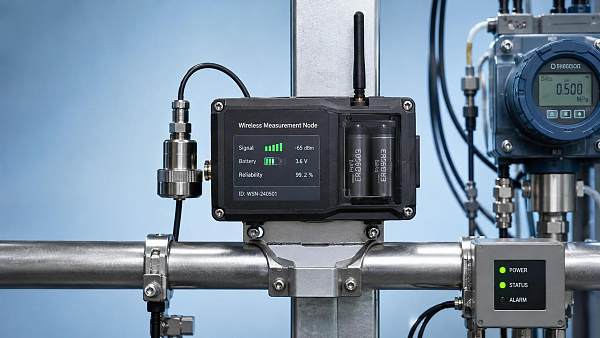
 What Monthly Maintenance Does a Wireless Measurement Node Need?What maintenance does a wireless measurement node need monthly? Explore practical checks for battery health, signal quality, sensor accuracy, enclosures, and reliable data.
 Can Measurement and Control Systems Handle Corrosive Flue Gas?Can measurement and control systems handle corrosive flue gas? Discover proven design strategies for reliable sensing, sampling, materials, and maintenance.
 How Can Data Logging Instruments Pass an Environmental Audit?Learn how to ensure data logging instruments pass environmental audit with proven calibration, data integrity, alarm control, and traceable compliance records.
 What Are the Common Pitfalls of Integrating Multiple Gas Analyzers?What are common pitfalls when integrating multiple gas analyzers? Discover how sampling, timing, calibration, and data integration risks affect reliable decisions.
 Is Predictive Analytics for Emission Control Useful or Just Hype?Is predictive analytics useful for emission control or just hype? Discover how reliable data, CEMS, and practical pilots can reduce risk and support compliance.
 How to select a hydrogen analyzer for petrochemical process safetyHydrogen analyzer for petrochemical industry selection guide: compare technologies, sample systems, response time, and safety certifications for reliable process protection.
 When does a thermal conductivity detector outperform an FID?Thermal conductivity detector vs. FID: discover when TCD is the smarter choice for permanent gases, bulk analysis, non-destructive detection, and reliable GC method design.
 What certification should you verify before buying an IECEx analyzer?IECEx analyzer buyers: verify the Certificate of Conformity, Ex marking, special conditions, and exact configuration before purchase. Avoid costly compliance risks.
 How oxygen analysis helps prevent incomplete combustionOxygen analysis helps prevent incomplete combustion by optimizing air-to-fuel balance, reducing fuel waste, improving burner safety, and supporting emissions control.




Search Categories
Search Categories
- Smart Meters & Power Quality
- Transformer Gas Analyzers
- BESS Thermal Runaway Detectors
- Energy, Power & Smart Grid Monitoring
- Optical Profilers & CMM
- Ultrasonic & X-Ray NDT
- Calibration Standards
- Precision Metrology & NDT
- Water Quality Analyzers
- CEMS & VOCs Monitors
- Price Trends
- Import & Export Updates
- Market Trends
- Industry News
- Industry Insights
Latest Article
- How to select a percent range analyzer for process measurementsPercent range analyzer selection made practical: compare accuracy, sample systems, calibration, gas matrix, integration, and lifecycle cost for reliable process measurements.Posted by:
- How explosion proof analysis verifies safe equipment for hazardous areasExplosion proof analysis verifies hazardous-area equipment by matching certifications, temperature ratings, installation details, and inspection controls for safer compliance.Posted by:
- When does fixed gas detection need point sensors instead of open-path monitoring?Fixed gas detection: discover when point sensors outperform open-path monitoring for predictable leaks, enclosed zones, local alarms, and safer design decisions.Posted by:
Please give us a message
