
How to select an industrial monitoring analyzer for harsh environments


An industrial monitoring analyzer installed in a harsh environment should be selected as a measurement system, not as an instrument with a favorable datasheet. The analyzer body, sample interface, enclosure, electrical installation, calibration method, and maintenance access all affect whether its reported value remains defensible over time.
The central selection question is not simply whether an analyzer can measure a target parameter. It is whether it can obtain a representative sample, survive the local environment, maintain its measurement performance between service intervals, and communicate trustworthy data to the control, safety, environmental, or quality system that depends on it. A technically capable analyzer can still become a poor choice when its sampling arrangement fouls, its optics condense, its sensor drifts faster than planned, or its certification does not match the installed area.
Define the measurement duty before comparing analyzer specifications
“Harsh environment” is too broad to serve as a design basis. High ambient temperature, corrosive vapors, salt spray, abrasive dust, vibration, pressure cycling, high humidity, washdown exposure, electromagnetic interference, and hazardous atmospheres create different failure mechanisms. A flue-gas analyzer on a stack platform, a dissolved oxygen analyzer in aeration basins, and a moisture analyzer near a compressor train may all be described as harsh-duty equipment, yet their engineering constraints are fundamentally different.
The measurement duty should be expressed in terms that can be verified against the proposed configuration:
- Measured component or property: concentration, pH, conductivity, turbidity, moisture, oxygen, hydrocarbons, sulfur compounds, particle loading, or another parameter.
- Process condition: pressure, temperature, phase, flow regime, composition range, solids content, moisture level, and chemical variability.
- Measurement purpose: process control, safety interlock support, emissions reporting, product quality release, equipment protection, or operational indication.
- Required measurement performance: range, resolution, accuracy, repeatability, response time, drift allowance, and allowable downtime.
- Installation reality: access space, mounting orientation, utility availability, cable routing, sample return path, maintenance isolation, and weather exposure.
These points establish the difference between an analyzer that is merely functional and one that is fit for service. For example, a process control loop may tolerate a modest absolute error if response is stable and fast. A compliance-oriented continuous emissions measurement application can demand traceable calibration, controlled sample conditioning, documented availability, and defined quality-assurance practices. The sensor technology may be similar, but the complete system requirement is not.
Start with the sample, not the analyzer cabinet
In demanding applications, poor sample quality is a more frequent source of unreliable readings than failure of the analytical module itself. The selected industrial monitoring analyzer must be compatible with the form in which the process reaches the sensing element: direct in-situ exposure, extractive sampling, bypass-loop measurement, or conditioned laboratory-style sampling.
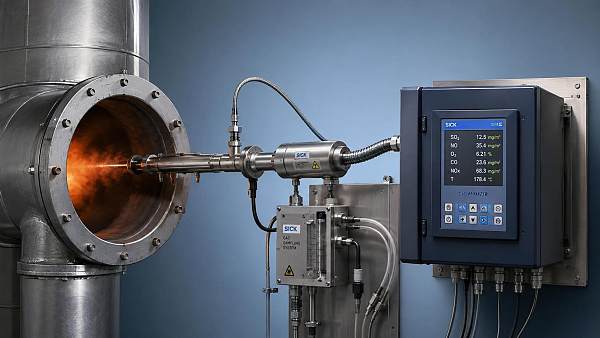
In-situ instruments avoid long sample lines and can provide rapid response, but they remain exposed to the process. Optical paths may be obscured by dust or deposits; electrochemical or optical sensors can be poisoned by incompatible chemicals; high temperatures can exceed sensor limits; and mounting geometry can create nonrepresentative readings. A probe located in a stagnant pocket or too close to a liquid carryover source may measure local conditions rather than the process condition that matters.
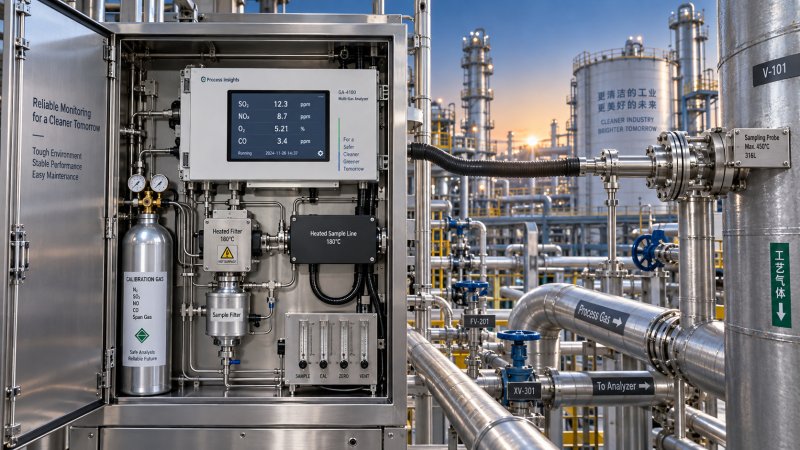
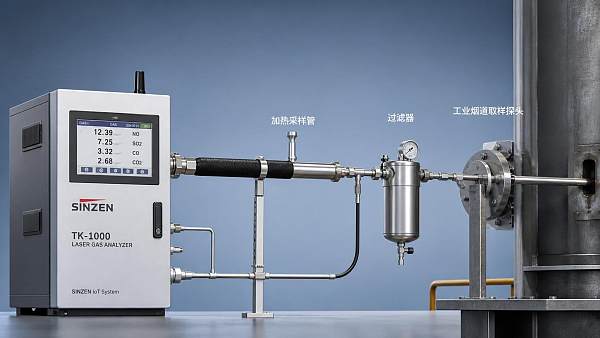
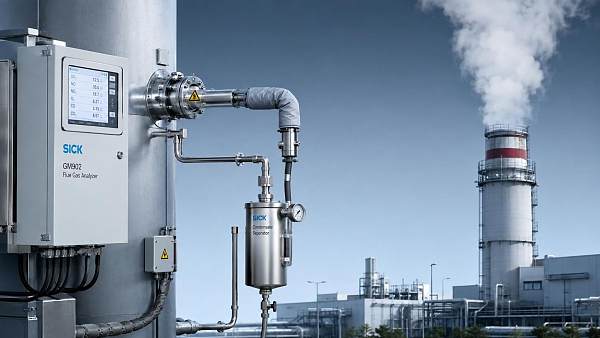
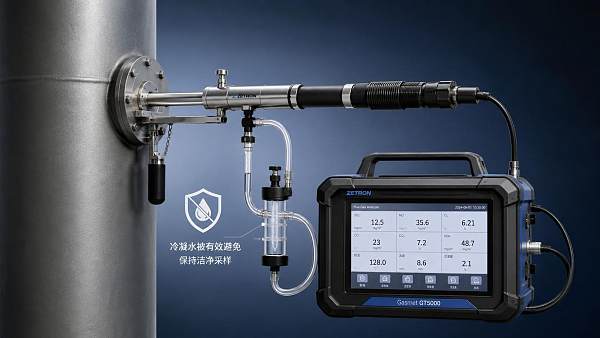
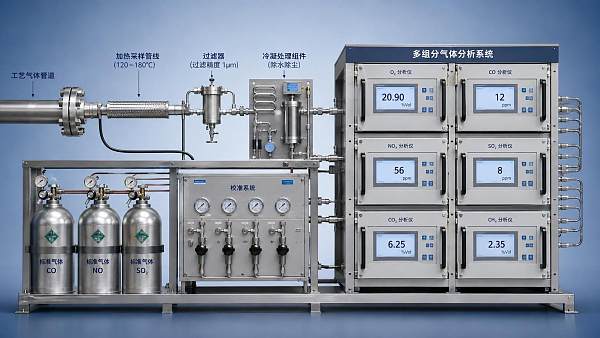
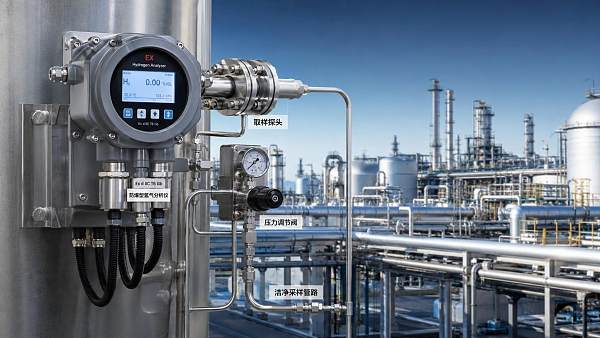
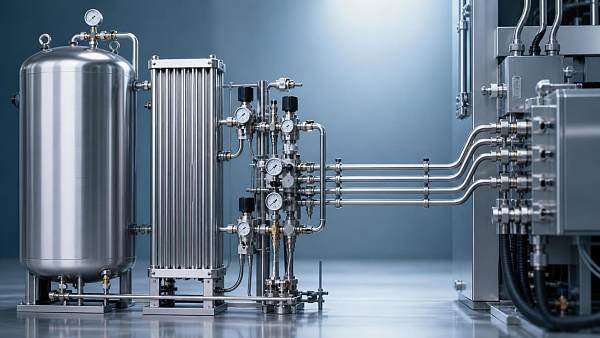
Extractive configurations protect the analyzer from the main process environment, but they transfer risk into the sampling system. A sample probe, heated line, filter, pressure regulator, cooler, pump, condensate management arrangement, and flow control device may be required. Each component can alter the sample. Condensation may dissolve water-soluble gases, adsorption can delay or suppress low-concentration species, particulate filters can plug, and pressure reduction can change vapor-liquid equilibrium. For gas measurements involving moisture-sensitive, reactive, or condensable components, the sample transport temperature and materials are analytical design variables, not minor installation details.
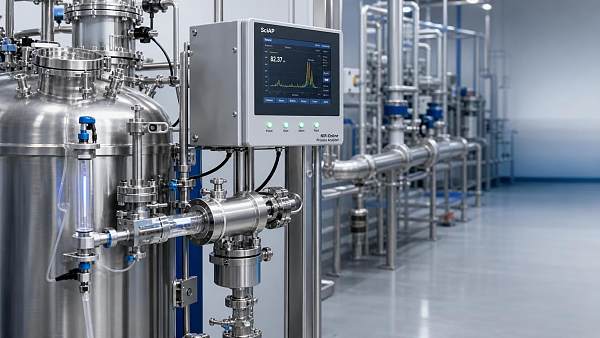
Liquid analyzers require the same discipline. A bypass loop should provide sufficient and stable flow without entrained bubbles, excessive pressure drop, or dead legs that allow solids accumulation. Slurries, biological growth, oil films, scale-forming water, and fibrous solids can compromise sensor surfaces and reference junctions. If cleaning requires shutdown, the system design should explicitly recognize the resulting measurement gap rather than assuming continuous availability.
Environmental ratings need to match the failure mechanism
An enclosure with a high ingress-protection rating is valuable, but it does not prove suitability for every severe location. IP ratings address the penetration of solids and water under defined test conditions. They do not, by themselves, establish resistance to ultraviolet exposure, corrosive gases, salt-laden air, solar heating, washdown chemicals, vibration, or internal condensation.
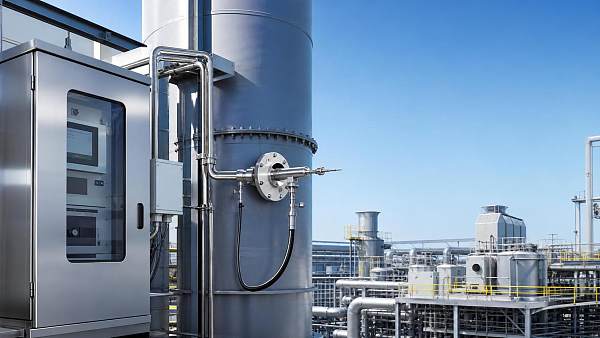
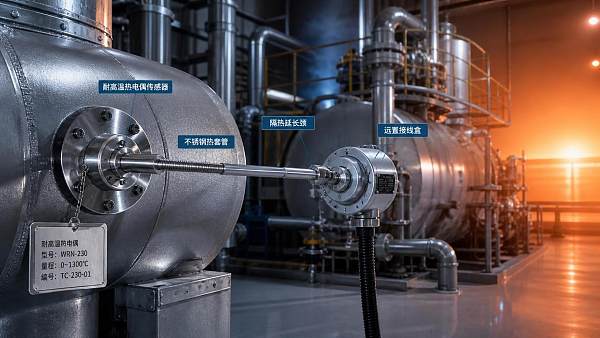
For outdoor installations, evaluate the entire assembly: enclosure seams, cable glands, display windows, breather devices, door latches, external fittings, sunshades, mounting brackets, and local junction boxes. An analyzer installed within its ambient air temperature rating can still overheat in direct sun if the enclosure absorbs radiant heat and has limited convection. Conversely, cold environments may impair displays, batteries, sample pumps, reagents, and drain paths even if the sensing principle itself remains viable.
Humidity deserves particular attention. Moisture ingress is not the only concern; trapped humid air can condense inside an enclosure as temperatures cycle. Condensation can reduce insulation resistance, corrode terminals, contaminate optical components, and create intermittent communication faults. Where enclosure breathing is necessary, the selected venting arrangement should be assessed for the local dust, chemical, and humidity exposure rather than treated as a generic accessory.
Material compatibility must extend beyond the wetted sensor. Stainless steel is not a universal answer. Chloride-containing atmospheres, strong acids, alkaline cleaning agents, hydrogen sulfide, ammonia, solvents, and coastal salt exposure can affect housings, fasteners, cable jackets, elastomeric seals, sample tubing, and connectors differently. The precise alloy, polymer grade, seal material, and temperature range matter. A supplier statement that a system is “corrosion resistant” is not a substitute for compatibility confirmation against the actual process and ambient chemicals.
Hazardous-area compliance is an installation question as well as a product question
Where flammable gases, vapors, combustible dusts, or ignitable fibers may be present, the analyzer and all associated equipment must be evaluated against the site classification and the governing regulatory framework. ATEX and IECEx are widely recognized certification systems, while North American installations may also require equipment approvals and installation practices aligned with the applicable local code and authority requirements.
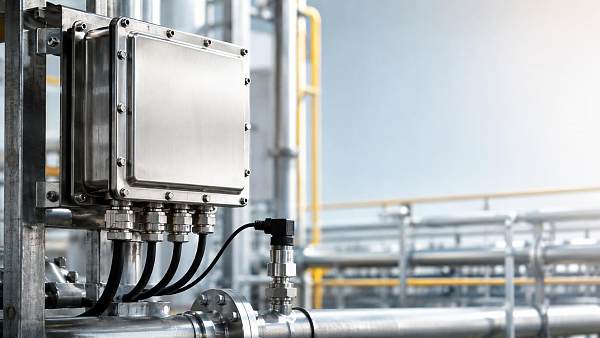
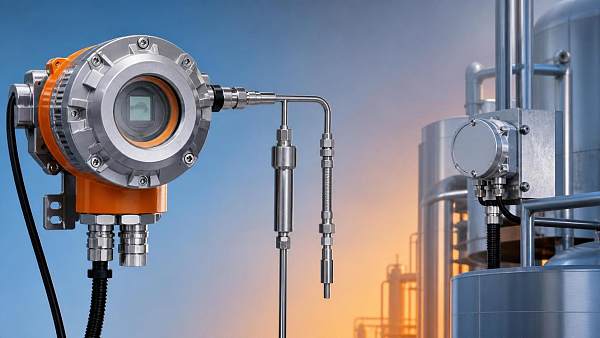
The relevant review is broader than checking whether the main analyzer carries an Ex marking. The proposed system may include sample pumps, solenoid valves, heaters, heated sample lines, flow switches, purge systems, local displays, calibration gas connections, and remote junction boxes. Each item must be appropriate for the classified location or installed using an accepted protection method. Temperature class, gas or dust group, equipment protection level, ambient range, and special conditions indicated on the certificate all require review.
A common mismatch arises when an analyzer cabinet is installed in a safe area while the sample probe and auxiliary hardware are located in a classified area. Another occurs when a purge or pressurization concept is selected without establishing reliable purge air quality, flow verification, alarm response, and restart logic. Hazardous-area certification should therefore be evaluated together with the physical installation drawing, not as an isolated procurement document.
Accuracy is only meaningful when drift, interference, and response are understood
Datasheet accuracy often describes performance under specified reference conditions. Harsh-duty selection requires evaluating how far real operating conditions depart from those conditions. Temperature fluctuations, pressure variation, background gases, humidity, vibration, fouling, electrical noise, and sample flow instability can all affect reported values.
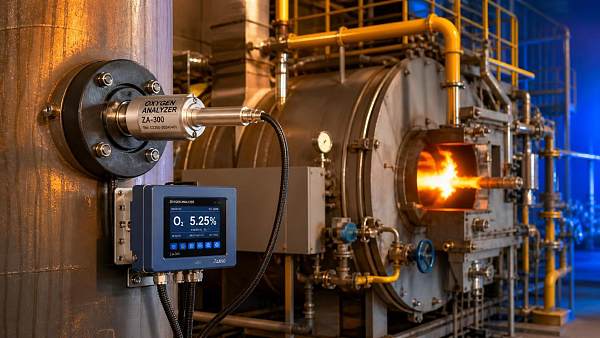
Analytical principle determines the important questions. Electrochemical sensors may offer practical measurement for certain gases but have finite service life and can be affected by cross-sensitivities or exposure to poisons. Infrared methods require attention to spectral interference, optical contamination, pressure and temperature compensation, and water vapor effects. Paramagnetic oxygen analyzers can be highly effective in suitable duties but need stable sample conditions. Zirconia oxygen probes require an application review of temperature, combustible components, dust loading, and reference-air arrangements. UV, fluorescence, conductivity, ion-selective, and optical techniques each carry their own sensitivity to matrix effects and surface condition.
The key specification is not the lowest stated detection limit. It is the uncertainty that remains acceptable at the operating range after accounting for calibration, drift, interference, and sample conditioning. A low-range analyzer can be unstable or slow when operated near the top of its range. An excessively broad range may provide poor practical resolution around the control threshold. Range selection should follow normal operating values, credible excursions, alarm limits, and the consequences of a false high or false low result.
Response time should also be assessed as a system property. A sensor may respond quickly, yet a long sample line, low flow rate, large sample volume, filter loading, or cooler arrangement can make the useful response much slower. For safety-related or tight control applications, request the stated response time boundary: sensor only, analyzer inlet, or complete sample system from process tap to output signal.
Calibration and maintainability determine long-term data reliability
Harsh environments increase the importance of maintenance design. An instrument requiring frequent calibration is not necessarily unsuitable, but the maintenance interval must be achievable under site conditions. If access involves scaffolding, confined-space procedures, work permits, respiratory protection, or process isolation, even a short routine task can become operationally expensive and may be deferred. Deferred maintenance is often the beginning of unreliable analyzer data.
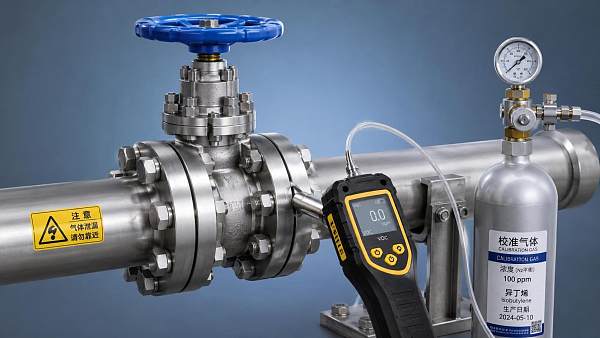
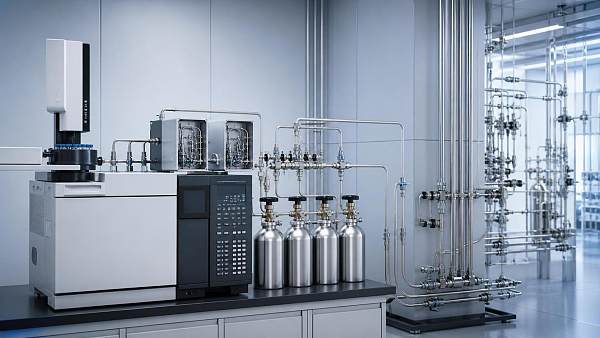
Review the calibration model in practical terms. Determine whether the analyzer uses zero and span checks, reference solutions, automatic validation, built-in diagnostics, field comparison, or laboratory verification. Confirm the required calibration media, their shelf life, storage conditions, traceability needs, and availability in the intended region. Calibration gas cylinders, regulators, humidification arrangements, and vent routing may introduce more constraints than the analyzer itself.
Diagnostic functions are useful only when they distinguish actionable conditions from generic faults. Prefer systems that can identify conditions such as low sample flow, optical contamination, sensor depletion, excessive temperature, blocked filter, unstable calibration, communication loss, or out-of-range process conditions. Diagnostics should be mapped to a maintenance response plan; otherwise, alarms become ignored notifications rather than data-quality controls.
Access to consumables deserves the same scrutiny. Filters, membranes, lamps, pumps, reagents, sensor cartridges, desiccants, O-rings, and sample tubing may determine lifecycle uptime. Check replacement procedures, required tools, purge or warm-up time, post-maintenance verification, and whether critical components can be changed without exposing personnel to hazardous process material.
Evaluate integration, data integrity, and fallback behavior
An analyzer can produce a technically correct value yet still fail its operational role if its signal is poorly integrated. Confirm the required interface—such as 4–20 mA, HART, Modbus, PROFIBUS, Ethernet-based protocols, or a site-specific digital architecture—and determine which diagnostic and status information is transmitted, not merely the primary reading.
Data-quality status should be distinguishable from a valid process value. A failed analyzer, calibration mode, sample-flow fault, or maintenance override should not be interpreted by the host system as normal measurement. For critical applications, clarify output behavior during warm-up, calibration, power loss, communication loss, and sensor fault. The required action may be hold-last-value, drive-to-fail state, substitute a calculated value, or generate an alarm for operator intervention. The appropriate choice depends on the process hazard and control philosophy.
Cybersecurity considerations also apply where analyzers connect to plant networks or remote service platforms. The review should cover user access, password management, account roles, firmware update control, network segmentation expectations, logging, and remote connection methods. A feature-rich remote interface is not automatically an advantage if it conflicts with the site’s security architecture or cannot be maintained through controlled updates.
Supplier evaluation should test engineering support, not only manufacturing capability
For harsh-duty monitoring, the supplier’s ability to define and support the measurement package is often as important as the analyzer model. Technical documentation should clearly state environmental limits, wetted materials, certifications, sample requirements, calibration method, utility needs, maintenance intervals, spare parts, and known application restrictions.
Questions that expose the quality of the proposed solution include: What process conditions invalidate the stated accuracy? Which components are expected to require periodic replacement? How is sample representativeness maintained? What happens if the sample line temperature falls below the required value? Which certification applies to each auxiliary component? What diagnostic evidence shows that a reading is valid? How are repairs, firmware changes, and calibration records controlled?
A robust selection is one in which the measurement principle, sample path, environmental protection, compliance basis, maintenance model, and control-system behavior all support the same operating duty. When these elements are evaluated together, an industrial monitoring analyzer becomes a dependable source of process information rather than another enclosure in the field producing numbers of uncertain value.
Recommended for You
 How to select an industrial monitoring analyzer for harsh environmentsIndustrial monitoring analyzer selection for harsh environments: evaluate sampling, durability, hazardous-area compliance, accuracy, maintenance, and data reliability.
 How calibration intervals affect test and measurement equipment accuracyTest and measurement equipment calibration intervals directly affect accuracy, risk, compliance, and uptime. Learn how to set evidence-based schedules that protect critical decisions.
 When does process gas monitoring need continuous measurement?Process gas monitoring needs continuous measurement when rapid changes threaten safety, quality, compliance, or uptime. Learn how to specify reliable, actionable monitoring systems.
 How to prevent false alarms in power plant instrumentationPower plant instrumentation guide: prevent false alarms with reliable signal checks, smarter alarm settings, mode-based control, and actionable operator responses.
 How fixed gas detectors help prevent leaks in enclosed workspacesFixed gas detectors provide continuous leak monitoring in enclosed workspaces, enabling faster alarms, safer responses, and stronger protection for people and processes.
 How industrial gas analysis helps detect process contamination earlyIndustrial Gas Analysis helps detect oxygen, moisture, and hydrocarbon contamination early, enabling faster fault isolation, safer operations, and stronger process control.
 What drives environmental compliance continuous monitoring setup cost?Environmental compliance continuous monitoring setup cost: uncover hidden expenses, compare bids accurately, and build a reliable, audit-ready system.
 How to select gas analysis equipment for continuous emissions monitoringGas analysis equipment selection guide for reliable continuous emissions monitoring—compare technologies, sampling, calibration, compliance, and maintenance needs.
 What detection limit is needed for NH3 environmental monitoring?High accuracy NH3 analyzer for environmental monitoring: learn how to set the right detection limit, improve sampling reliability, and make defensible decisions.
 How to select a NOX analyzer for power plant emissions complianceNOX analyzer for power plant emissions: learn how to select a compliant, reliable CEMS solution with the right range, sample handling, calibration, and data integrity.
 How to evaluate a laser gas analyzer manufacturer in GermanyLaser gas analyzer manufacturer in Germany: compare accuracy, sample handling, interference control, calibration, and service to select a reliable solution.
 How does a flue gas analyzer maintain accuracy in wet stack gas?Flue gas analyzer accuracy in wet stack gas depends on heated sampling, moisture correction, reliable sensors, and calibration. Explore key selection tips.
 What makes equipment suitable for a hazardous environment?Hazardous Environment equipment selection explained: certification, ignition control, materials, installation, and maintenance for safer operations.
 How Can Fugitive Emission Monitoring Results Be Validated?How to validate fugitive emission monitoring results: learn calibration, field documentation, data-quality checks, and compliance comparisons for credible, decision-ready reports.
 Do Stack Testing Instruments Need Heated Sample Lines?Do stack testing instruments need heated sample lines? Learn when heating protects sample integrity, prevents condensation, and improves reliable emissions measurements.
 What Are the Risks of Using Low-Cost Electrochemical Gas Analyzers?What are the risks of using low-cost electrochemical gas analyzers? Explore calibration drift, cross-sensitivity, safety, and compliance concerns before you buy.
 How Long Does It Take to Integrate a Custom Emission Monitoring Solution?How long does it take to integrate a custom emission monitoring solution? Explore timelines, site readiness, data integration, and validation factors.
 Is Industrial Safety Monitoring the Same as Emission Monitoring?is industrial safety monitoring the same as emission monitoring? Learn the key differences in purpose, alarms, compliance, and instrument selection for safer operations.
 What Monthly Maintenance Does a Wireless Measurement Node Need?What maintenance does a wireless measurement node need monthly? Explore practical checks for battery health, signal quality, sensor accuracy, enclosures, and reliable data.
 Can Measurement and Control Systems Handle Corrosive Flue Gas?Can measurement and control systems handle corrosive flue gas? Discover proven design strategies for reliable sensing, sampling, materials, and maintenance.
 How Can Data Logging Instruments Pass an Environmental Audit?Learn how to ensure data logging instruments pass environmental audit with proven calibration, data integrity, alarm control, and traceable compliance records.
 What Are the Common Pitfalls of Integrating Multiple Gas Analyzers?What are common pitfalls when integrating multiple gas analyzers? Discover how sampling, timing, calibration, and data integration risks affect reliable decisions.
 Is Predictive Analytics for Emission Control Useful or Just Hype?Is predictive analytics useful for emission control or just hype? Discover how reliable data, CEMS, and practical pilots can reduce risk and support compliance.
 How to select a hydrogen analyzer for petrochemical process safetyHydrogen analyzer for petrochemical industry selection guide: compare technologies, sample systems, response time, and safety certifications for reliable process protection.
 When does a thermal conductivity detector outperform an FID?Thermal conductivity detector vs. FID: discover when TCD is the smarter choice for permanent gases, bulk analysis, non-destructive detection, and reliable GC method design.
 What certification should you verify before buying an IECEx analyzer?IECEx analyzer buyers: verify the Certificate of Conformity, Ex marking, special conditions, and exact configuration before purchase. Avoid costly compliance risks.
 How oxygen analysis helps prevent incomplete combustionOxygen analysis helps prevent incomplete combustion by optimizing air-to-fuel balance, reducing fuel waste, improving burner safety, and supporting emissions control.
 How to size an industrial gas system for stable peak demandIndustrial gas system sizing guide for stable peak demand. Learn how to assess flow, pressure drop, buffer storage, purity, redundancy, and commissioning for reliable production.
 How to choose a process sensor for high-temperature applicationsProcess sensor selection for high-temperature applications: compare thermal limits, materials, accuracy, installation, and maintenance to secure reliable control data.
 When does continuous analysis improve industrial process control?Continuous analysis improves industrial process control with timely composition data that supports faster decisions, higher quality, safer operations, and less waste.
 How to choose emission control systems for variable industrial loadsEmission Control solutions for variable industrial loads: learn how to match technology, controls, monitoring, and lifecycle costs for reliable compliance.
 How continuous emissions monitoring supports reliable emission reductionEmission Reduction relies on reliable continuous emissions monitoring. Discover how accurate data, calibration, and process insights support compliance and smarter control.




Search Categories
Search Categories
- Smart Meters & Power Quality
- Transformer Gas Analyzers
- BESS Thermal Runaway Detectors
- Energy, Power & Smart Grid Monitoring
- Optical Profilers & CMM
- Ultrasonic & X-Ray NDT
- Calibration Standards
- Precision Metrology & NDT
- Water Quality Analyzers
- CEMS & VOCs Monitors
- Price Trends
- Import & Export Updates
- Market Trends
- Industry News
- Industry Insights
Latest Article
- How to select an industrial monitoring analyzer for harsh environmentsIndustrial monitoring analyzer selection for harsh environments: evaluate sampling, durability, hazardous-area compliance, accuracy, maintenance, and data reliability.Posted by:
- How calibration intervals affect test and measurement equipment accuracyTest and measurement equipment calibration intervals directly affect accuracy, risk, compliance, and uptime. Learn how to set evidence-based schedules that protect critical decisions.Posted by:
- When does process gas monitoring need continuous measurement?Process gas monitoring needs continuous measurement when rapid changes threaten safety, quality, compliance, or uptime. Learn how to specify reliable, actionable monitoring systems.Posted by:
Please give us a message
