
Test and Measurement Equipment Price Factors in 2026


Test and Measurement Equipment Price Factors in 2026
In 2026, test and measurement equipment pricing is moving beyond simple spec sheets. Buyers now compare not only performance, but also compliance, software fit, service depth, and supply continuity.
That shift matters because the cheapest quote can create the highest long-term cost. In many sourcing projects, hidden cost drivers appear after installation, qualification, or audit preparation.
From recent market changes, a clearer signal is emerging. Test and measurement equipment price factors are increasingly tied to risk control, data trust, and digital integration.
This also means price comparisons need more structure. A realistic cost review should cover acquisition, deployment, calibration, downtime exposure, and future upgrade needs.
For teams buying oscilloscopes, thermal imagers, pressure calibrators, power analyzers, or lab instruments, understanding these factors improves negotiation power and sourcing confidence.
Why test and measurement equipment prices look higher in 2026
Several cost layers are rising at the same time. Advanced sensors, embedded chips, and precision components still face uneven supply conditions in some categories.
At the same time, more end users expect connected test and measurement equipment. That adds firmware work, cybersecurity controls, cloud compatibility, and license management.
Compliance is another major driver. Equipment used in regulated environments often needs traceable calibration, safety certification, and full documentation readiness.
Labor costs also matter. Skilled assembly, factory calibration, application engineering, and global after-sales service all raise the delivered price of test and measurement equipment.
More importantly, buyers are paying for reliability under pressure. In critical plants or accredited labs, unstable readings create far larger losses than the initial equipment premium.
The biggest price factors behind test and measurement equipment
Not all price drivers carry equal weight. In real sourcing work, a few factors usually explain most of the gap between entry-level and premium test and measurement equipment.
1. Accuracy, repeatability, and measurement range
Higher accuracy almost always raises price. Tighter tolerances require better components, stronger thermal stability, and more rigorous calibration during manufacturing.
Repeatability is just as important. Consistent results over time often matter more than peak performance in one short acceptance test.
A wider measurement range can also increase cost. Multi-function instruments reduce device count, but they usually carry a premium.
2. Certification and compliance requirements
For many projects, compliance changes the whole cost structure. ISO/IEC 17025 traceability, CE, UL, ATEX, IECEx, or sector-specific approvals all add expense.
The cost is not only the certificate itself. It includes documentation control, validation testing, audit support, and supplier quality systems.
3. Software, connectivity, and data handling
Modern test and measurement equipment often works as part of a larger data environment. USB, Ethernet, OPC UA, API access, and analytics tools all influence price.
Software licenses can be easy to overlook. In practice, recurring fees may become a larger cost than the instrument hardware over several years.
4. Brand reputation and application support
Well-known brands usually charge more because they reduce uncertainty. Buyers often pay for stronger validation history, better documentation, and easier internal approval.
Application support matters too. When instruments are used in complex industrial or laboratory conditions, engineering guidance can prevent costly deployment mistakes.
How supply chain conditions affect test and measurement equipment cost
Supply chain risk remains a practical pricing issue in 2026. Some test and measurement equipment categories still depend on specialized chips, optical parts, and niche sensor modules.
Lead time has become a pricing lever. Faster delivery often comes with expediting charges, alternate sourcing premiums, or limited customization options.
Regional sourcing choices also shape cost. A lower factory price may be offset by tariffs, export controls, packaging standards, or local service gaps.
In actual business scenarios, continuity can be worth more than a discount. A supplier with stable delivery and replacement parts may protect production better than a cheaper alternative.
Comparing upfront price with total ownership cost
A smart buying decision should compare total ownership cost, not only the purchase order value. This is where many test and measurement equipment decisions either succeed or fail.
A lower-cost unit may need more frequent calibration. It may also have shorter service intervals, slower support response, or a weaker spare parts network.
That changes the economics quickly. If downtime interrupts production, testing, or quality release, the real cost rises far beyond the invoice price.
Useful cost lines to compare include:
- Initial hardware price and accessories
- Software license and renewal fees
- Calibration frequency and traceability costs
- Installation, validation, and training time
- Expected downtime and repair turnaround
- Upgrade path and obsolescence risk
This broader view usually creates better alignment between finance, engineering, quality, and operations.
A practical buying framework for test and measurement equipment
When price pressure is high, a simple evaluation framework helps keep decisions disciplined. It also makes supplier comparison easier and more defensible.
- Define the minimum acceptable accuracy and operating range.
- List every required certification before requesting quotations.
- Check software compatibility with existing systems and reporting workflows.
- Ask about calibration intervals, service turnaround, and local support.
- Evaluate lead time risk and replacement part availability.
- Model three-year and five-year ownership cost scenarios.
This process helps separate essential value from marketing extras. It also reveals when premium test and measurement equipment is justified and when it is not.
Quick comparison table
Common mistakes when sourcing test and measurement equipment
One common mistake is comparing quotations with different scopes. Accessories, probes, calibration certificates, or software modules may be excluded from the lowest offer.
Another mistake is ignoring user environment. Test and measurement equipment used in harsh sites needs stronger protection, temperature stability, and safety design.
Some teams also underestimate onboarding complexity. If data output does not fit the existing quality system, the hidden labor cost grows fast.
Finally, buying on brand alone can also be risky. A premium name does not automatically mean the best fit for every testing task or budget target.
How to make a confident final decision
The strongest sourcing decisions balance performance, compliance, service, and lifecycle economics. In 2026, that balance defines real value in test and measurement equipment.
A useful final step is to score each option against risk, not just cost. That includes data reliability, support depth, delivery certainty, and long-term maintainability.
For organizations managing complex industrial, laboratory, or energy projects, trusted market intelligence makes that process faster and more precise.
Global Instrument Hub supports this approach with supplier research, technical trend analysis, and compliance-focused industry insight across the instrumentation market.
When the goal is smarter sourcing, the best question is not simply, “What does this instrument cost?” It is, “What risk does this investment remove?”
Start with the full operating context, compare total ownership cost, and use that structure to select test and measurement equipment with greater clarity and control.
Recommended for You
 When does process gas monitoring need continuous measurement?Process gas monitoring needs continuous measurement when rapid changes threaten safety, quality, compliance, or uptime. Learn how to specify reliable, actionable monitoring systems.
 How to prevent false alarms in power plant instrumentationPower plant instrumentation guide: prevent false alarms with reliable signal checks, smarter alarm settings, mode-based control, and actionable operator responses.
 How fixed gas detectors help prevent leaks in enclosed workspacesFixed gas detectors provide continuous leak monitoring in enclosed workspaces, enabling faster alarms, safer responses, and stronger protection for people and processes.
 How industrial gas analysis helps detect process contamination earlyIndustrial Gas Analysis helps detect oxygen, moisture, and hydrocarbon contamination early, enabling faster fault isolation, safer operations, and stronger process control.
 What drives environmental compliance continuous monitoring setup cost?Environmental compliance continuous monitoring setup cost: uncover hidden expenses, compare bids accurately, and build a reliable, audit-ready system.
 How to select gas analysis equipment for continuous emissions monitoringGas analysis equipment selection guide for reliable continuous emissions monitoring—compare technologies, sampling, calibration, compliance, and maintenance needs.
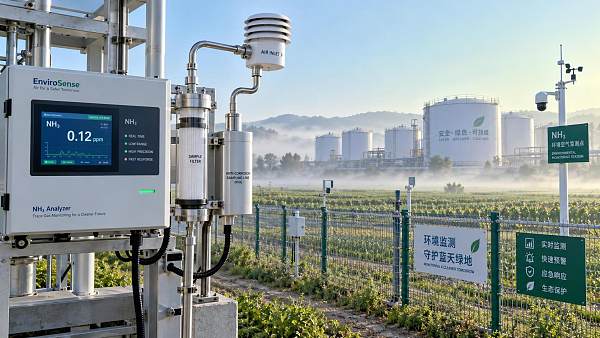
 What detection limit is needed for NH3 environmental monitoring?High accuracy NH3 analyzer for environmental monitoring: learn how to set the right detection limit, improve sampling reliability, and make defensible decisions.
 How to select a NOX analyzer for power plant emissions complianceNOX analyzer for power plant emissions: learn how to select a compliant, reliable CEMS solution with the right range, sample handling, calibration, and data integrity.
 How to evaluate a laser gas analyzer manufacturer in GermanyLaser gas analyzer manufacturer in Germany: compare accuracy, sample handling, interference control, calibration, and service to select a reliable solution.
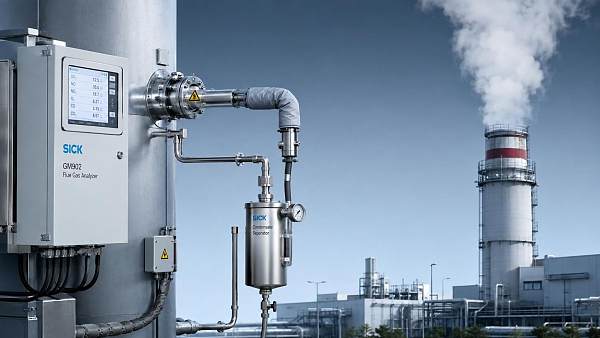
 How does a flue gas analyzer maintain accuracy in wet stack gas?Flue gas analyzer accuracy in wet stack gas depends on heated sampling, moisture correction, reliable sensors, and calibration. Explore key selection tips.
 What makes equipment suitable for a hazardous environment?Hazardous Environment equipment selection explained: certification, ignition control, materials, installation, and maintenance for safer operations.
 How Can Fugitive Emission Monitoring Results Be Validated?How to validate fugitive emission monitoring results: learn calibration, field documentation, data-quality checks, and compliance comparisons for credible, decision-ready reports.
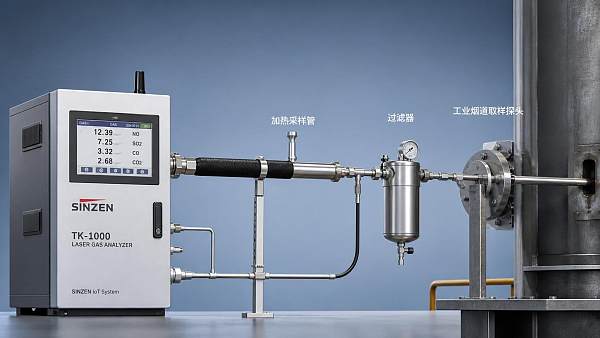
 Do Stack Testing Instruments Need Heated Sample Lines?Do stack testing instruments need heated sample lines? Learn when heating protects sample integrity, prevents condensation, and improves reliable emissions measurements.
 What Are the Risks of Using Low-Cost Electrochemical Gas Analyzers?What are the risks of using low-cost electrochemical gas analyzers? Explore calibration drift, cross-sensitivity, safety, and compliance concerns before you buy.
 How Long Does It Take to Integrate a Custom Emission Monitoring Solution?How long does it take to integrate a custom emission monitoring solution? Explore timelines, site readiness, data integration, and validation factors.
 Is Industrial Safety Monitoring the Same as Emission Monitoring?is industrial safety monitoring the same as emission monitoring? Learn the key differences in purpose, alarms, compliance, and instrument selection for safer operations.
 What Monthly Maintenance Does a Wireless Measurement Node Need?What maintenance does a wireless measurement node need monthly? Explore practical checks for battery health, signal quality, sensor accuracy, enclosures, and reliable data.
 Can Measurement and Control Systems Handle Corrosive Flue Gas?Can measurement and control systems handle corrosive flue gas? Discover proven design strategies for reliable sensing, sampling, materials, and maintenance.
 How Can Data Logging Instruments Pass an Environmental Audit?Learn how to ensure data logging instruments pass environmental audit with proven calibration, data integrity, alarm control, and traceable compliance records.
 What Are the Common Pitfalls of Integrating Multiple Gas Analyzers?What are common pitfalls when integrating multiple gas analyzers? Discover how sampling, timing, calibration, and data integration risks affect reliable decisions.
 Is Predictive Analytics for Emission Control Useful or Just Hype?Is predictive analytics useful for emission control or just hype? Discover how reliable data, CEMS, and practical pilots can reduce risk and support compliance.
 How to select a hydrogen analyzer for petrochemical process safetyHydrogen analyzer for petrochemical industry selection guide: compare technologies, sample systems, response time, and safety certifications for reliable process protection.
 When does a thermal conductivity detector outperform an FID?Thermal conductivity detector vs. FID: discover when TCD is the smarter choice for permanent gases, bulk analysis, non-destructive detection, and reliable GC method design.
 What certification should you verify before buying an IECEx analyzer?IECEx analyzer buyers: verify the Certificate of Conformity, Ex marking, special conditions, and exact configuration before purchase. Avoid costly compliance risks.
 How oxygen analysis helps prevent incomplete combustionOxygen analysis helps prevent incomplete combustion by optimizing air-to-fuel balance, reducing fuel waste, improving burner safety, and supporting emissions control.
 How to size an industrial gas system for stable peak demandIndustrial gas system sizing guide for stable peak demand. Learn how to assess flow, pressure drop, buffer storage, purity, redundancy, and commissioning for reliable production.
 How to choose a process sensor for high-temperature applicationsProcess sensor selection for high-temperature applications: compare thermal limits, materials, accuracy, installation, and maintenance to secure reliable control data.
 When does continuous analysis improve industrial process control?Continuous analysis improves industrial process control with timely composition data that supports faster decisions, higher quality, safer operations, and less waste.
 How to choose emission control systems for variable industrial loadsEmission Control solutions for variable industrial loads: learn how to match technology, controls, monitoring, and lifecycle costs for reliable compliance.
 How continuous emissions monitoring supports reliable emission reductionEmission Reduction relies on reliable continuous emissions monitoring. Discover how accurate data, calibration, and process insights support compliance and smarter control.
 When does it make sense to automate a production line?Production Line automation makes sense when processes are stable, measurable, and repeatable. Learn the key signals, risks, and ROI triggers before you invest.
 What accuracy should a monitoring device deliver in power quality applicationsMonitoring Device accuracy in power quality applications affects compliance, troubleshooting, and decision confidence. Learn what specs, standards, and installation factors truly matter.




Search Categories
Search Categories
- Smart Meters & Power Quality
- Transformer Gas Analyzers
- BESS Thermal Runaway Detectors
- Energy, Power & Smart Grid Monitoring
- Optical Profilers & CMM
- Ultrasonic & X-Ray NDT
- Calibration Standards
- Precision Metrology & NDT
- Water Quality Analyzers
- CEMS & VOCs Monitors
- Price Trends
- Import & Export Updates
- Market Trends
- Industry News
- Industry Insights
Latest Article
- When does process gas monitoring need continuous measurement?Process gas monitoring needs continuous measurement when rapid changes threaten safety, quality, compliance, or uptime. Learn how to specify reliable, actionable monitoring systems.Posted by:
- How to prevent false alarms in power plant instrumentationPower plant instrumentation guide: prevent false alarms with reliable signal checks, smarter alarm settings, mode-based control, and actionable operator responses.Posted by:
- How fixed gas detectors help prevent leaks in enclosed workspacesFixed gas detectors provide continuous leak monitoring in enclosed workspaces, enabling faster alarms, safer responses, and stronger protection for people and processes.Posted by:
Please give us a message
