
SAMR to Upgrade EV Battery Recycling Standard to Mandatory


China’s State Administration for Market Regulation (SAMR) announced on May 12, 2026, that it will complete over 1,800 standard revisions and new developments by year-end — including the elevation of GB/T 34015—202X Technical Specification for Industrial Instrument Power Modules in Traction Battery Second-Life Applications from a recommended national standard to a mandatory one. This shift directly affects Chinese manufacturers exporting power modules for industrial instrumentation to energy storage projects in Europe and North America, making compliance with this standard a legal requirement for market access.
Event Overview
On May 12, 2026, SAMR disclosed its 2026 standard-setting agenda, confirming that more than 1,800 national standards would undergo revision or development. Among them, GB/T 34015—202X is scheduled to be upgraded to a mandatory national standard (GB) by December 31, 2026, with formal submission for approval targeted before year-end. No further technical details, transitional arrangements, or enforcement timelines beyond the reporting deadline have been publicly released.
Industries Affected
Direct Exporters of Industrial Instrument Power Modules
These companies supply power modules designed for reuse of retired electric vehicle (EV) traction batteries in industrial instrumentation — particularly for European and North American energy storage integrators. The upgrade to mandatory status means non-compliant products may no longer be legally placed on the Chinese domestic market or exported under China’s conformity assessment framework, potentially triggering customs rejections or contractual liabilities in overseas tenders.
Manufacturers of Battery Management and Power Conversion Subsystems
Firms producing battery management systems (BMS), DC-DC converters, or modular power units integrated into second-life battery systems face cascading design and certification impacts. Compliance with GB/T 34015—202X now informs component-level safety, thermal management, and communication protocol requirements — all of which must be verified under mandatory conformity assessment procedures, not voluntary testing.
Suppliers of Certified Test Laboratories and Certification Bodies
Third-party labs and certification bodies accredited under China’s CCC or CNAS frameworks will need to align their test protocols and reporting templates with the updated mandatory version. Capacity gaps may emerge if current accreditation scopes do not yet cover the revised performance, aging, or fault-tolerance criteria specified in the upgraded standard.
Key Considerations and Recommended Actions for Stakeholders
Monitor official drafts and SAMR’s public consultation notices
The final mandatory text of GB/T 34015—202X has not yet been published. Stakeholders should track SAMR’s official website and the National Standardization Management Committee (SAC) portal for draft releases, comment periods, and technical clarification documents — especially those addressing definitions of ‘industrial instrument’, ‘power module’, and ‘second-life application scope’.
Assess exposure across export markets and product lines
Companies should map existing power module SKUs against the geographic and functional scope implied by the standard: specifically, those destined for EU/US grid-edge or microgrid instrumentation projects using EV battery cells. Products intended solely for domestic telecom or UPS applications may fall outside immediate scope — but confirmation requires cross-referencing the final mandatory text.
Distinguish between policy signal and operational implementation
The announcement signals regulatory intent, but enforcement depends on the issuance of supporting administrative measures — such as inspection rules, conformity assessment guidelines, or CCC catalog updates. Until those are published, compliance remains preparatory, not compulsory. Treat the December 31, 2026 reporting deadline as a procedural milestone, not an automatic effective date.
Initiate internal technical gap analysis and supplier alignment
Review current module designs, BOMs, and test reports against the latest available version of GB/T 34015. Engage key suppliers (e.g., cell vendors, isolation amplifier makers, firmware developers) early to assess readiness for revised electrical safety, insulation resistance, and state-of-health (SOH) reporting requirements — especially where traceability of original battery data is mandated.
Editorial Perspective / Industry Observation
Observably, this move reflects a broader regulatory pivot toward tightening technical governance of battery circularity — not just at the cell or pack level, but at downstream functional integration points. Analysis shows the upgrade is less about introducing novel safety thresholds and more about institutionalizing accountability: shifting verification from voluntary industry practice to enforceable national obligation. From an industry perspective, it functions primarily as a forward-looking signal — indicating that standards governing second-life applications are entering a maturation phase where interoperability, liability allocation, and cross-border harmonization become central concerns. Continued attention is warranted because the final mandatory text may clarify ambiguities around lifecycle validation methods and data provenance — both critical for international buyers assessing technical due diligence.
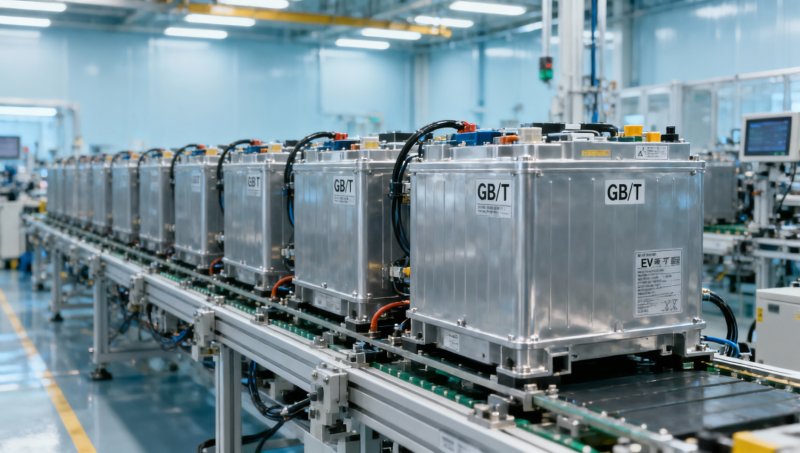
In summary, the elevation of GB/T 34015—202X marks a procedural step in China’s standardization of EV battery reuse infrastructure — with concrete implications for exporters, subsystem integrators, and conformity service providers. It does not represent an immediate compliance cliff, but rather initiates a defined timeline for technical alignment. Currently, it is more appropriately understood as a regulatory milestone signaling increased scrutiny of functional safety and data integrity in second-life power modules — not as a fully activated enforcement regime.
Source: State Administration for Market Regulation (SAMR), official announcement dated May 12, 2026.
Noted for ongoing observation: Final mandatory text of GB/T 34015—202X, supporting enforcement guidance, and potential inclusion in China’s CCC certification catalog.
Recommended for You
 When does process gas monitoring need continuous measurement?Process gas monitoring needs continuous measurement when rapid changes threaten safety, quality, compliance, or uptime. Learn how to specify reliable, actionable monitoring systems.
 How to prevent false alarms in power plant instrumentationPower plant instrumentation guide: prevent false alarms with reliable signal checks, smarter alarm settings, mode-based control, and actionable operator responses.
 How fixed gas detectors help prevent leaks in enclosed workspacesFixed gas detectors provide continuous leak monitoring in enclosed workspaces, enabling faster alarms, safer responses, and stronger protection for people and processes.
 How industrial gas analysis helps detect process contamination earlyIndustrial Gas Analysis helps detect oxygen, moisture, and hydrocarbon contamination early, enabling faster fault isolation, safer operations, and stronger process control.
 What drives environmental compliance continuous monitoring setup cost?Environmental compliance continuous monitoring setup cost: uncover hidden expenses, compare bids accurately, and build a reliable, audit-ready system.
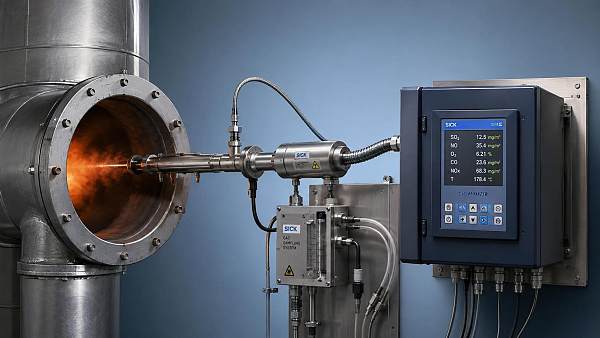
 How to select gas analysis equipment for continuous emissions monitoringGas analysis equipment selection guide for reliable continuous emissions monitoring—compare technologies, sampling, calibration, compliance, and maintenance needs.
 What detection limit is needed for NH3 environmental monitoring?High accuracy NH3 analyzer for environmental monitoring: learn how to set the right detection limit, improve sampling reliability, and make defensible decisions.
 How to select a NOX analyzer for power plant emissions complianceNOX analyzer for power plant emissions: learn how to select a compliant, reliable CEMS solution with the right range, sample handling, calibration, and data integrity.
 How to evaluate a laser gas analyzer manufacturer in GermanyLaser gas analyzer manufacturer in Germany: compare accuracy, sample handling, interference control, calibration, and service to select a reliable solution.
 How does a flue gas analyzer maintain accuracy in wet stack gas?Flue gas analyzer accuracy in wet stack gas depends on heated sampling, moisture correction, reliable sensors, and calibration. Explore key selection tips.
 What makes equipment suitable for a hazardous environment?Hazardous Environment equipment selection explained: certification, ignition control, materials, installation, and maintenance for safer operations.
 How Can Fugitive Emission Monitoring Results Be Validated?How to validate fugitive emission monitoring results: learn calibration, field documentation, data-quality checks, and compliance comparisons for credible, decision-ready reports.
 Do Stack Testing Instruments Need Heated Sample Lines?Do stack testing instruments need heated sample lines? Learn when heating protects sample integrity, prevents condensation, and improves reliable emissions measurements.
 What Are the Risks of Using Low-Cost Electrochemical Gas Analyzers?What are the risks of using low-cost electrochemical gas analyzers? Explore calibration drift, cross-sensitivity, safety, and compliance concerns before you buy.
 How Long Does It Take to Integrate a Custom Emission Monitoring Solution?How long does it take to integrate a custom emission monitoring solution? Explore timelines, site readiness, data integration, and validation factors.
 Is Industrial Safety Monitoring the Same as Emission Monitoring?is industrial safety monitoring the same as emission monitoring? Learn the key differences in purpose, alarms, compliance, and instrument selection for safer operations.
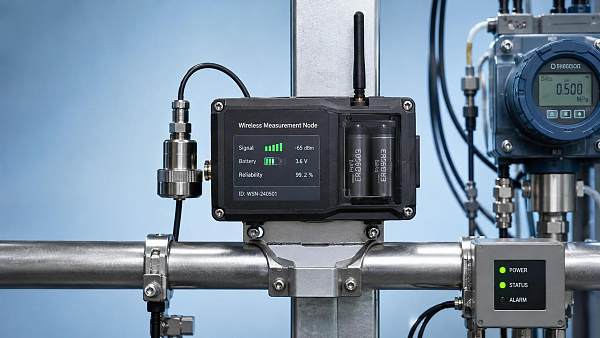
 What Monthly Maintenance Does a Wireless Measurement Node Need?What maintenance does a wireless measurement node need monthly? Explore practical checks for battery health, signal quality, sensor accuracy, enclosures, and reliable data.
 Can Measurement and Control Systems Handle Corrosive Flue Gas?Can measurement and control systems handle corrosive flue gas? Discover proven design strategies for reliable sensing, sampling, materials, and maintenance.
 How Can Data Logging Instruments Pass an Environmental Audit?Learn how to ensure data logging instruments pass environmental audit with proven calibration, data integrity, alarm control, and traceable compliance records.
 What Are the Common Pitfalls of Integrating Multiple Gas Analyzers?What are common pitfalls when integrating multiple gas analyzers? Discover how sampling, timing, calibration, and data integration risks affect reliable decisions.
 Is Predictive Analytics for Emission Control Useful or Just Hype?Is predictive analytics useful for emission control or just hype? Discover how reliable data, CEMS, and practical pilots can reduce risk and support compliance.
 How to select a hydrogen analyzer for petrochemical process safetyHydrogen analyzer for petrochemical industry selection guide: compare technologies, sample systems, response time, and safety certifications for reliable process protection.
 When does a thermal conductivity detector outperform an FID?Thermal conductivity detector vs. FID: discover when TCD is the smarter choice for permanent gases, bulk analysis, non-destructive detection, and reliable GC method design.
 What certification should you verify before buying an IECEx analyzer?IECEx analyzer buyers: verify the Certificate of Conformity, Ex marking, special conditions, and exact configuration before purchase. Avoid costly compliance risks.
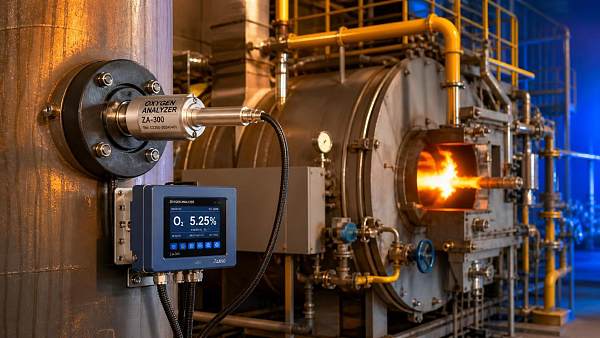
 How oxygen analysis helps prevent incomplete combustionOxygen analysis helps prevent incomplete combustion by optimizing air-to-fuel balance, reducing fuel waste, improving burner safety, and supporting emissions control.
 How to size an industrial gas system for stable peak demandIndustrial gas system sizing guide for stable peak demand. Learn how to assess flow, pressure drop, buffer storage, purity, redundancy, and commissioning for reliable production.
 How to choose a process sensor for high-temperature applicationsProcess sensor selection for high-temperature applications: compare thermal limits, materials, accuracy, installation, and maintenance to secure reliable control data.
 When does continuous analysis improve industrial process control?Continuous analysis improves industrial process control with timely composition data that supports faster decisions, higher quality, safer operations, and less waste.
 How to choose emission control systems for variable industrial loadsEmission Control solutions for variable industrial loads: learn how to match technology, controls, monitoring, and lifecycle costs for reliable compliance.
 How continuous emissions monitoring supports reliable emission reductionEmission Reduction relies on reliable continuous emissions monitoring. Discover how accurate data, calibration, and process insights support compliance and smarter control.
 When does it make sense to automate a production line?Production Line automation makes sense when processes are stable, measurable, and repeatable. Learn the key signals, risks, and ROI triggers before you invest.
 What accuracy should a monitoring device deliver in power quality applicationsMonitoring Device accuracy in power quality applications affects compliance, troubleshooting, and decision confidence. Learn what specs, standards, and installation factors truly matter.























Search Categories
Search Categories
- Smart Meters & Power Quality
- Transformer Gas Analyzers
- BESS Thermal Runaway Detectors
- Energy, Power & Smart Grid Monitoring
- Optical Profilers & CMM
- Ultrasonic & X-Ray NDT
- Calibration Standards
- Precision Metrology & NDT
- Water Quality Analyzers
- CEMS & VOCs Monitors
- Price Trends
- Import & Export Updates
- Market Trends
- Industry News
- Industry Insights
Latest Article
- When does process gas monitoring need continuous measurement?Process gas monitoring needs continuous measurement when rapid changes threaten safety, quality, compliance, or uptime. Learn how to specify reliable, actionable monitoring systems.Posted by:
- How to prevent false alarms in power plant instrumentationPower plant instrumentation guide: prevent false alarms with reliable signal checks, smarter alarm settings, mode-based control, and actionable operator responses.Posted by:
- How fixed gas detectors help prevent leaks in enclosed workspacesFixed gas detectors provide continuous leak monitoring in enclosed workspaces, enabling faster alarms, safer responses, and stronger protection for people and processes.Posted by:
Please give us a message
