
IEC 63278:2026 Released for Industrial Instrument Cybersecurity


On May 12, 2026, the International Electrotechnical Commission (IEC) formally published IEC 63278:2026 — Guidelines for Cybersecurity Verification of Industrial Instruments. This landmark standard marks the first globally harmonized framework to mandate cybersecurity verification across operational technology (OT) and information technology (IT) convergence scenarios. Its adoption is expected to reshape procurement, design, and compliance practices across industrial automation, process control, and smart infrastructure sectors.
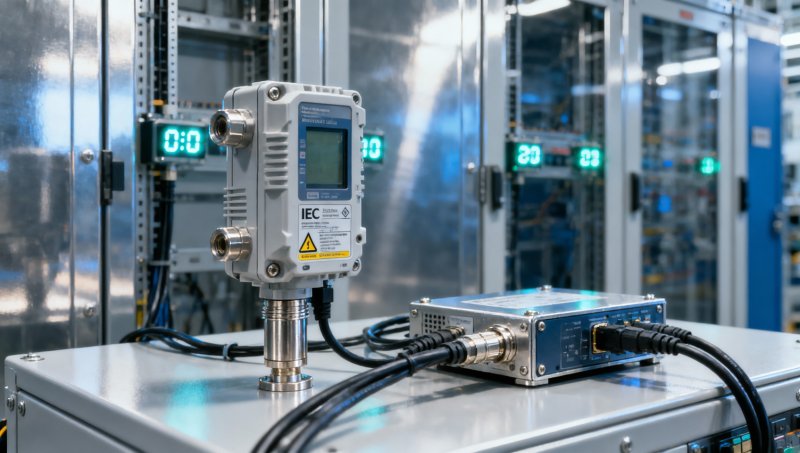
Event Overview
The International Electrotechnical Commission (IEC) released IEC 63278:2026 on May 12, 2026. The standard specifies mandatory verification requirements for remote firmware signature validation, edge AI model integrity auditing, and time-series communication anti-replay protection in industrial instrumentation. It has been fully adopted as GB/T 42278–2026 by China’s Standardization Administration. Implementation is anticipated to become a baseline requirement in European and U.S. project tenders starting Q3 2026.
Industries Affected
Direct Trade Enterprises: Export-oriented instrument vendors and system integrators will face new technical documentation and third-party certification obligations before customs clearance or contract award. Non-compliance may trigger tender disqualification or post-delivery audit liabilities — particularly for shipments to EU industrial zones and U.S. federal infrastructure projects.
Raw Material Procurement Enterprises: Suppliers of secure microcontrollers, cryptographic modules, and trusted platform hardware must align component-level security features (e.g., hardware-root-of-trust, attestation support) with IEC 63278’s verification workflows. Procurement criteria are shifting from functional specs toward verifiable security evidence chains.
Manufacturing Enterprises: OEMs producing flow meters, pressure transmitters, distributed control system (DCS) I/O modules, and field controllers must redesign firmware update mechanisms, integrate runtime integrity checks, and implement timestamped, signed telemetry channels. Legacy product lines lacking upgrade paths may require phase-out planning ahead of Q3 2026 deadlines.
Supply Chain Service Providers: Certification bodies, test laboratories, and cybersecurity assessment firms are seeing increased demand for IEC 63278-aligned verification services — especially for edge-AI-enabled instruments and time-critical OT protocols (e.g., IEEE 1588 PTP, OPC UA PubSub). Capacity constraints and accreditation timelines are emerging bottlenecks.
Key Focus Areas and Recommended Actions
Verify firmware signing architecture against Clause 6.2
Manufacturers should audit existing OTA update pipelines for asymmetric key management, certificate revocation handling, and bootloader-enforced signature validation. Systems relying solely on TLS transport-layer encryption do not satisfy this requirement.
Assess edge AI model integrity workflows per Clause 7.4
For instruments embedding inference engines (e.g., predictive maintenance sensors), operators must document provenance, versioning, and hash-based model attestation at deployment and runtime — not just training-time validation.
Implement time-synchronized anti-replay for all time-series interfaces
Protocols used in process data acquisition (e.g., Modbus TCP with timestamps, MQTT over TLS with sequence counters) must incorporate monotonic counters or synchronized nonce generation, validated end-to-end per Clause 8.3 — network-level firewalls alone are insufficient.
Align internal compliance roadmaps with GB/T 42278–2026 transition timelines
Chinese enterprises exporting to Europe or the U.S. should treat GB/T 42278–2026 not as a domestic guideline but as a de facto global entry requirement. Cross-border product families should adopt unified verification logs and evidence packages acceptable to both CNAS-accredited labs and EU Notified Bodies.
Editorial Perspective / Industry Observation
Analysis shows that IEC 63278:2026 does not merely extend IT-style security controls into OT environments; rather, it redefines verification as an *observable, auditable, and time-bound process* — not a one-time certification event. Observably, its emphasis on edge-AI integrity and anti-replay for time-series traffic signals a structural shift: cybersecurity is now treated as a real-time operational constraint, not a pre-deployment checklist. From an industry perspective, this standard is better understood as a catalyst for converging safety, reliability, and security assurance frameworks — especially where functional safety (IEC 61508) and cybersecurity (IEC 62443) previously operated in parallel silos. Current more critical concerns include interoperability gaps between vendor-specific attestation implementations and limited availability of accredited labs capable of validating timing-sensitive replay protections.
Conclusion
IEC 63278:2026 represents a foundational step toward making cybersecurity verification measurable, repeatable, and enforceable across industrial instrumentation — not just for high-risk critical infrastructure, but for mid-tier process sensors and edge controllers deployed at scale. Its real-world impact will hinge less on theoretical compliance and more on whether ecosystem actors can co-develop open tooling, shared testbeds, and standardized evidence formats that lower verification costs without compromising rigor.
Source Attribution
Official publication: IEC Webstore (IEC 63278:2026, issued May 12, 2026); Standardization Administration of the People’s Republic of China (GB/T 42278–2026, announced April 2026). Note: Tender clause adoption status in EU Member States and U.S. federal agencies remains under active monitoring; final enforcement guidance from NIST and ENISA is pending.
Recommended for You
 When does process gas monitoring need continuous measurement?Process gas monitoring needs continuous measurement when rapid changes threaten safety, quality, compliance, or uptime. Learn how to specify reliable, actionable monitoring systems.
 How to prevent false alarms in power plant instrumentationPower plant instrumentation guide: prevent false alarms with reliable signal checks, smarter alarm settings, mode-based control, and actionable operator responses.
 How fixed gas detectors help prevent leaks in enclosed workspacesFixed gas detectors provide continuous leak monitoring in enclosed workspaces, enabling faster alarms, safer responses, and stronger protection for people and processes.
 How industrial gas analysis helps detect process contamination earlyIndustrial Gas Analysis helps detect oxygen, moisture, and hydrocarbon contamination early, enabling faster fault isolation, safer operations, and stronger process control.
 What drives environmental compliance continuous monitoring setup cost?Environmental compliance continuous monitoring setup cost: uncover hidden expenses, compare bids accurately, and build a reliable, audit-ready system.
 How to select gas analysis equipment for continuous emissions monitoringGas analysis equipment selection guide for reliable continuous emissions monitoring—compare technologies, sampling, calibration, compliance, and maintenance needs.
 What detection limit is needed for NH3 environmental monitoring?High accuracy NH3 analyzer for environmental monitoring: learn how to set the right detection limit, improve sampling reliability, and make defensible decisions.
 How to select a NOX analyzer for power plant emissions complianceNOX analyzer for power plant emissions: learn how to select a compliant, reliable CEMS solution with the right range, sample handling, calibration, and data integrity.
 How to evaluate a laser gas analyzer manufacturer in GermanyLaser gas analyzer manufacturer in Germany: compare accuracy, sample handling, interference control, calibration, and service to select a reliable solution.
 How does a flue gas analyzer maintain accuracy in wet stack gas?Flue gas analyzer accuracy in wet stack gas depends on heated sampling, moisture correction, reliable sensors, and calibration. Explore key selection tips.
 What makes equipment suitable for a hazardous environment?Hazardous Environment equipment selection explained: certification, ignition control, materials, installation, and maintenance for safer operations.
 How Can Fugitive Emission Monitoring Results Be Validated?How to validate fugitive emission monitoring results: learn calibration, field documentation, data-quality checks, and compliance comparisons for credible, decision-ready reports.
 Do Stack Testing Instruments Need Heated Sample Lines?Do stack testing instruments need heated sample lines? Learn when heating protects sample integrity, prevents condensation, and improves reliable emissions measurements.
 What Are the Risks of Using Low-Cost Electrochemical Gas Analyzers?What are the risks of using low-cost electrochemical gas analyzers? Explore calibration drift, cross-sensitivity, safety, and compliance concerns before you buy.
 How Long Does It Take to Integrate a Custom Emission Monitoring Solution?How long does it take to integrate a custom emission monitoring solution? Explore timelines, site readiness, data integration, and validation factors.
 Is Industrial Safety Monitoring the Same as Emission Monitoring?is industrial safety monitoring the same as emission monitoring? Learn the key differences in purpose, alarms, compliance, and instrument selection for safer operations.
 What Monthly Maintenance Does a Wireless Measurement Node Need?What maintenance does a wireless measurement node need monthly? Explore practical checks for battery health, signal quality, sensor accuracy, enclosures, and reliable data.
 Can Measurement and Control Systems Handle Corrosive Flue Gas?Can measurement and control systems handle corrosive flue gas? Discover proven design strategies for reliable sensing, sampling, materials, and maintenance.
 How Can Data Logging Instruments Pass an Environmental Audit?Learn how to ensure data logging instruments pass environmental audit with proven calibration, data integrity, alarm control, and traceable compliance records.
 What Are the Common Pitfalls of Integrating Multiple Gas Analyzers?What are common pitfalls when integrating multiple gas analyzers? Discover how sampling, timing, calibration, and data integration risks affect reliable decisions.
 Is Predictive Analytics for Emission Control Useful or Just Hype?Is predictive analytics useful for emission control or just hype? Discover how reliable data, CEMS, and practical pilots can reduce risk and support compliance.
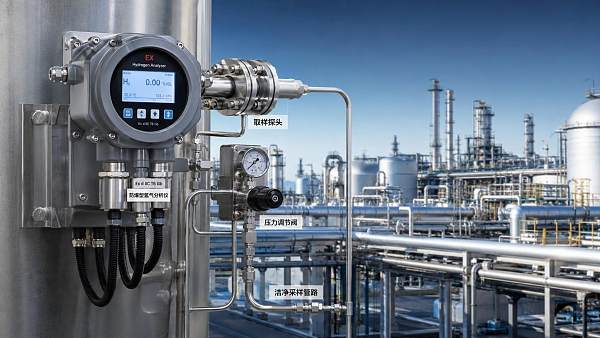
 How to select a hydrogen analyzer for petrochemical process safetyHydrogen analyzer for petrochemical industry selection guide: compare technologies, sample systems, response time, and safety certifications for reliable process protection.
 When does a thermal conductivity detector outperform an FID?Thermal conductivity detector vs. FID: discover when TCD is the smarter choice for permanent gases, bulk analysis, non-destructive detection, and reliable GC method design.
 What certification should you verify before buying an IECEx analyzer?IECEx analyzer buyers: verify the Certificate of Conformity, Ex marking, special conditions, and exact configuration before purchase. Avoid costly compliance risks.
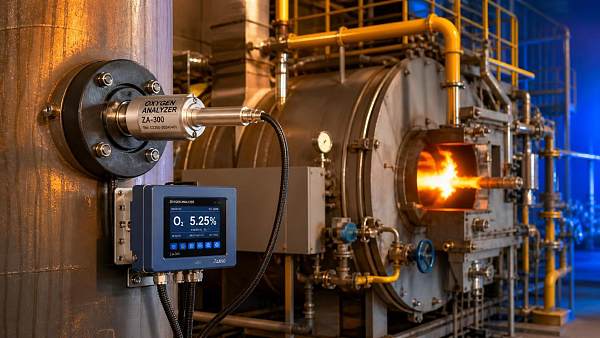
 How oxygen analysis helps prevent incomplete combustionOxygen analysis helps prevent incomplete combustion by optimizing air-to-fuel balance, reducing fuel waste, improving burner safety, and supporting emissions control.
 How to size an industrial gas system for stable peak demandIndustrial gas system sizing guide for stable peak demand. Learn how to assess flow, pressure drop, buffer storage, purity, redundancy, and commissioning for reliable production.
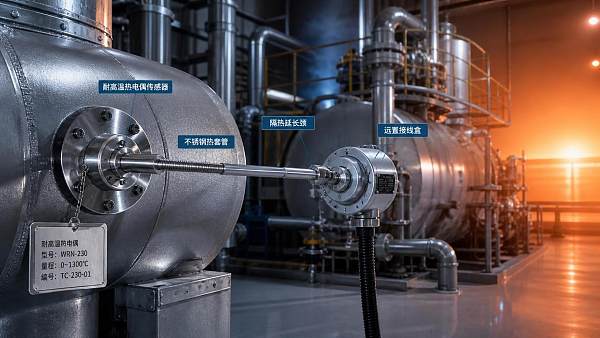
 How to choose a process sensor for high-temperature applicationsProcess sensor selection for high-temperature applications: compare thermal limits, materials, accuracy, installation, and maintenance to secure reliable control data.
 When does continuous analysis improve industrial process control?Continuous analysis improves industrial process control with timely composition data that supports faster decisions, higher quality, safer operations, and less waste.
 How to choose emission control systems for variable industrial loadsEmission Control solutions for variable industrial loads: learn how to match technology, controls, monitoring, and lifecycle costs for reliable compliance.
 How continuous emissions monitoring supports reliable emission reductionEmission Reduction relies on reliable continuous emissions monitoring. Discover how accurate data, calibration, and process insights support compliance and smarter control.
 When does it make sense to automate a production line?Production Line automation makes sense when processes are stable, measurable, and repeatable. Learn the key signals, risks, and ROI triggers before you invest.
 What accuracy should a monitoring device deliver in power quality applicationsMonitoring Device accuracy in power quality applications affects compliance, troubleshooting, and decision confidence. Learn what specs, standards, and installation factors truly matter.















Search Categories
Search Categories
- Smart Meters & Power Quality
- Transformer Gas Analyzers
- BESS Thermal Runaway Detectors
- Energy, Power & Smart Grid Monitoring
- Optical Profilers & CMM
- Ultrasonic & X-Ray NDT
- Calibration Standards
- Precision Metrology & NDT
- Water Quality Analyzers
- CEMS & VOCs Monitors
- Price Trends
- Import & Export Updates
- Market Trends
- Industry News
- Industry Insights
Latest Article
- When does process gas monitoring need continuous measurement?Process gas monitoring needs continuous measurement when rapid changes threaten safety, quality, compliance, or uptime. Learn how to specify reliable, actionable monitoring systems.Posted by:
- How to prevent false alarms in power plant instrumentationPower plant instrumentation guide: prevent false alarms with reliable signal checks, smarter alarm settings, mode-based control, and actionable operator responses.Posted by:
- How fixed gas detectors help prevent leaks in enclosed workspacesFixed gas detectors provide continuous leak monitoring in enclosed workspaces, enabling faster alarms, safer responses, and stronger protection for people and processes.Posted by:
Please give us a message
