
How to choose a low range analyzer for trace-level measurements


Choosing a low range analyzer for trace-level measurements requires more than comparing detection limits on a specification sheet. Sample composition, measurement uncertainty, potential interferences, calibration methods, and operating conditions can all affect whether an instrument delivers reliable results at the concentrations you need to measure. This guide helps technical evaluators assess these factors, compare analyzer technologies, and identify the performance and support requirements that matter for their application.
Start with the decision the measurement must support
A trace analyzer may be used to detect contamination in a high-purity gas, monitor a process stream, check water quality, or quantify a compound in a laboratory sample. Those applications can involve similar concentration units but very different performance requirements. An analyzer that provides an early warning of a rising impurity may not be suitable for reporting a defensible result near a specification limit.
Define the analyte and its chemical form, the sample matrix, the expected operating range, and the concentration at which someone must act. Include the highest credible concentration as well as the lowest relevant one: an instrument optimized for trace measurements may require dilution, protection, or recovery time after an upset.
Be explicit about units and reporting basis. A gas concentration expressed by volume is not automatically interchangeable with a mass concentration; conversion depends on conditions and molecular properties. For liquids, distinguish dissolved, total, and recoverable fractions where applicable. If the reference method measures a different fraction from the online analyzer, apparent disagreement may not be an instrument fault.
Also decide how quickly the result must be available. A laboratory method with longer sample preparation may deliver better selectivity, while an online instrument can reveal a short-lived process excursion that periodic grab samples miss. The right choice depends on the consequence of missing that event, not just the number of decimal places displayed.
Read low-end specifications as a measurement system
The detection limit is useful for screening, but it is a poor stand-alone buying criterion. It generally describes the ability to distinguish a signal from background under stated conditions; it does not necessarily establish that the concentration can be quantified with the uncertainty your decision requires. The limit of quantification is closer to that question, although its definition and determination method must still be checked.
Ask suppliers how each limit was established: in which matrix, over what measurement interval, with what blank treatment, and using which statistical approach. Compare results on the same basis. A clean laboratory blank and a stable ambient temperature may produce a lower stated limit than a humid, variable process sample.
Resolution is another frequent distraction. A display can show a fine increment even when noise, drift, or bias makes that increment meaningless. Review repeatability near the action level, zero and span drift between calibrations, and the stated uncertainty or accuracy over the relevant range. Specifications expressed as a percentage of full scale deserve particular attention: their absolute contribution can become significant when the reading is close to zero.
Where the result is used against a threshold, agree in advance how uncertainty and any decision rule will be applied. A result close to the limit is not automatically an unambiguous pass or fail. The acceptable uncertainty should be set by the application and any governing method, contract, or local requirement—not inferred from the instrument’s display.
Match the technology to the sample, not just the analyte
There is no universal trace-measurement technology. Electrochemical, optical, chromatographic, and mass-spectrometric methods can all be appropriate in different circumstances, but the target compound, matrix, required selectivity, and maintenance resources determine the shortlist.
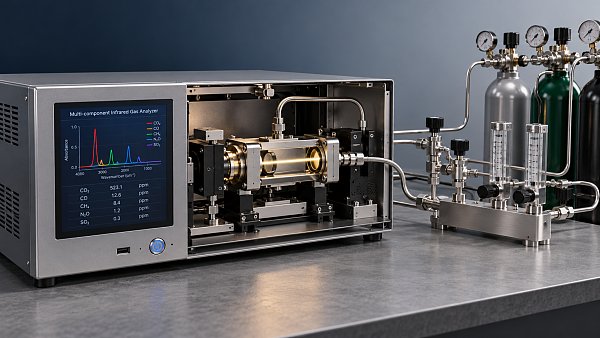
For example, an electrochemical sensor may offer a compact online solution for a particular gas, provided cross-sensitivity, sensor life, and operating conditions are acceptable. An optical analyzer may avoid some consumables associated with wet chemistry, but its suitability still depends on spectral interference, optical-path contamination, and the measurement principle used.
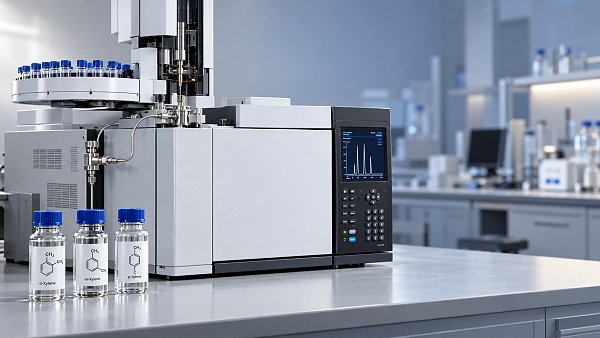
Chromatography can separate components before detection, which is valuable when a complex mixture makes direct measurement ambiguous. The trade-off may be longer cycle time, carrier gas or other consumables, and method maintenance. Mass spectrometry can provide strong analytical capability for suitable methods, but sample introduction, interference control, operating expertise, and cost remain part of the decision.
Treat technology labels as starting points. Two analyzers using the same broad principle can differ substantially in sample handling, calibration strategy, interference correction, and validated operating range. Request evidence for the specific analyte in a representative matrix rather than assuming a generic detection claim transfers to your process.
Inspect the sampling path before comparing the instruments
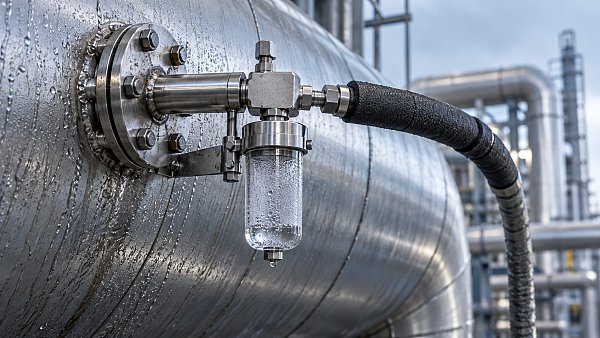
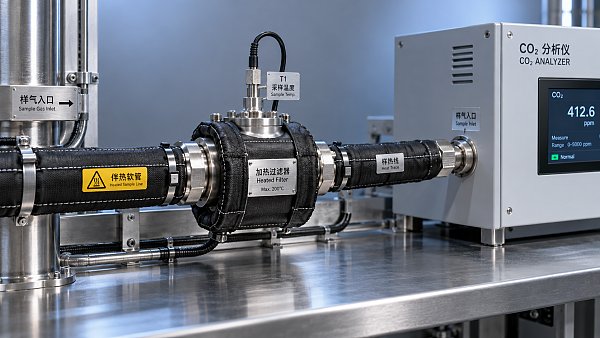
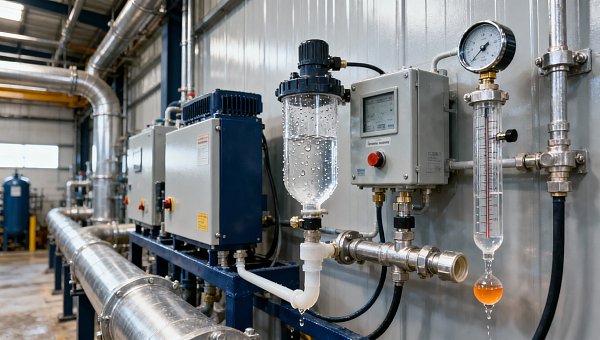
At trace levels, the sample line can be as consequential as the analyzer. Tubing, fittings, filters, regulators, containers, and conditioning equipment can introduce contamination or remove the analyte before it reaches the detector. Reactive compounds may adsorb onto surfaces; volatile components may be lost from liquid samples; water vapor can condense or affect certain measurement methods.
For a gas installation, examine material compatibility, leak integrity, pressure reduction, flow control, dead volume, and the need for heated lines. For liquids, assess sampling location, filtration, preservation, container cleanliness, and delay before analysis. Each conditioning step should have a purpose: a filter that protects the instrument may also remove the fraction the method is intended to measure.
Consider the whole response time, from a change at the sampling point to a usable result. Transport delay, sample-system mixing, analyzer cycle time, and signal filtering all contribute. A fast sensor connected to a long or poorly purged sample line can still respond too late for process control.
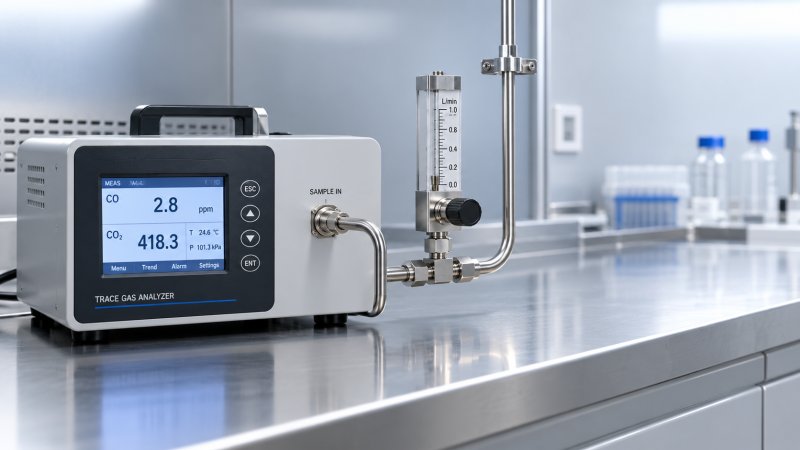
The practical test is to challenge the complete installed path, not only the instrument inlet. Where safe and feasible, introduce a suitable reference or check sample at a defined point upstream and compare the observed response with the expected value. This helps expose losses, contamination, or delay that a bench demonstration may miss.
Plan calibration and quality control before purchase
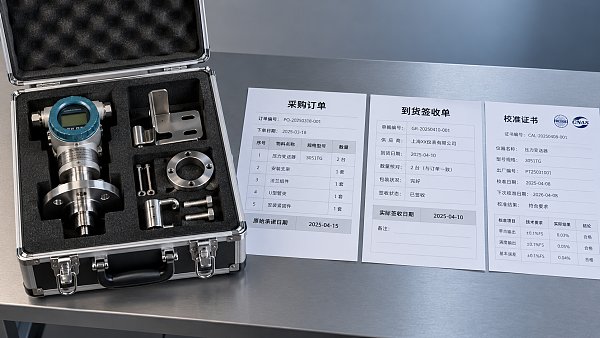
A low-range measurement is only as credible as its calibration and ongoing checks. Confirm that suitable reference materials or standards are available at concentrations relevant to the application, with documented traceability and stability appropriate to their use. For reactive gases or unstable solutions, preparation, storage, delivery, and expiration can be just as important as the nominal concentration.
Ask how zero is established and whether the zero material is sufficiently free of the analyte. A contaminated blank can create a persistent bias that repeated calibration will not fix. Equally, a high-concentration span check alone does not demonstrate reliable performance at the low end. Include a check near the intended decision level where practical.
Calibration intervals should reflect observed drift, the consequence of an incorrect result, and method or supplier guidance. Plan for checks after maintenance, sensor replacement, sample-system changes, and exposure to unusually high concentrations. Record adjustments and failed checks; otherwise, a gradual loss of performance can be hidden by frequent recalibration.
If an accredited calibration or test result is required, verify the provider’s current ISO/IEC 17025 accreditation scope for the relevant measurement and range. Accreditation alone does not mean every service offered by a laboratory is covered, nor does it replace validation of the installed analyzer.
Make interference testing part of the evaluation
List likely interferents with the people who understand the process: operators, process chemists, laboratory staff, and maintenance personnel. Include normal matrix components, cleaning chemicals, seasonal changes, and plausible upset conditions. A supplier may have cross-sensitivity data for common compounds, but that information is only useful if concentrations and test conditions resemble yours.
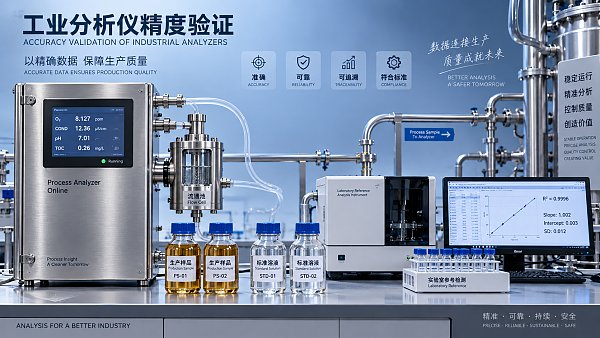
A representative trial should include a blank, a low-level check, a sample near the decision point, and samples covering expected matrix variation. Where appropriate, use a known addition to investigate recovery, while recognizing that a spike may not behave exactly like analyte naturally present in the sample. Compare with an independent, fit-for-purpose reference method and agree on sample timing, preservation, and acceptance criteria beforehand.
Do not dismiss disagreements too quickly. They may reflect interference, but they can also arise from mismatched sampling points, different measured fractions, transport delay, or reference-method uncertainty. Investigating those differences is often more valuable than selecting the instrument with the closest single result.
Check installation constraints and lifetime support
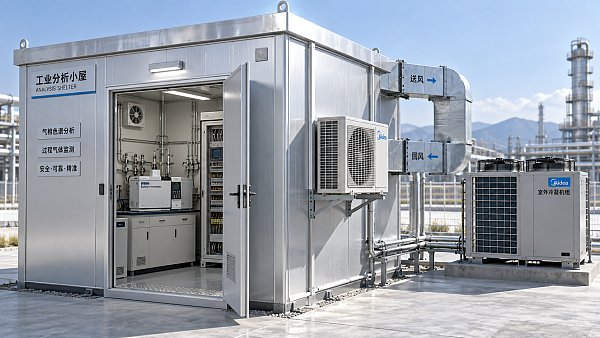
Trace performance can deteriorate when the analyzer is installed outside its intended temperature, humidity, vibration, pressure, or power-supply conditions. Verify utility requirements, enclosure protection, sample and exhaust handling, and the accessibility of routine service points. For hazardous locations, confirm the required protection concept and verify that the complete proposed equipment and installation meet the applicable local requirements; an ATEX or IECEx marking on one component is not proof that the entire installation is suitable.
Compare ownership costs using the proposed operating schedule. Include sensors, reagents, standards, filters, carrier gas where applicable, preventive maintenance, calibration labor, and downtime. Ask which parts are locally stocked, how software and firmware are supported, and whether service personnel can diagnose the instrument remotely or on site. A lower purchase price may be reasonable, but not if a routine replacement leaves the measurement unavailable for an unacceptable period.
For connected systems, verify output behavior during calibration, faults, warm-up, and loss of sample flow. A process control system should be able to distinguish a valid low reading from an invalid signal. Agree on alarm handling and data retention before commissioning, especially where results support operational or quality decisions.
Use a common evidence package to make the final comparison
Give each shortlisted supplier the same sample description, concentration range, decision threshold, expected interferents, installation conditions, and required response time. Request a proposed sampling system alongside the analyzer, not as an afterthought. Ask vendors to identify assumptions and exclusions in writing, including any external conditioning, utilities, reference materials, and operator tasks.
A useful acceptance plan specifies the test matrix, reference method, low-level performance checks, response-time measurement, operating conditions, and remedies if agreed criteria are not met. Where a factory test cannot reproduce the real sample, distinguish what can be checked before shipment from what must be verified on site.
For teams comparing suppliers across regions, industry resources such as Global Instrument Hub can help frame the technical and supply-chain questions. The selection should still rest on application-specific evidence: a credible low-end result, a sample path that preserves it, and a support arrangement that keeps it credible after installation.
Recommended for You
 How to choose a low range analyzer for trace-level measurementsChoose the right low range analyzer for trace-level measurements. Compare detection limits, sampling, calibration and support to make a confident decision.
 How to choose combustible gas detectors for a specific gasChoose combustible gas detectors with confidence. Compare sensor technologies, gas response, calibration, placement, and certification for your application.
 How to choose an air quality analyzer for the pollutants you need to measureChoose an air quality analyzer with confidence. Compare pollutant measurement methods, sampling, accuracy and calibration to find the right fit for your needs.
 How to choose industrial metrology tools for tight tolerancesChoose industrial metrology tools for tight tolerances with confidence. Compare uncertainty, calibration, tool types, and costs to reduce inspection risk.
 How moisture affects fixed analyzer accuracy in stack gas monitoringImprove fixed analyzer accuracy in stack gas monitoring. Discover how moisture causes dilution, interference, and sample loss—and learn practical ways to protect emissions data.
 How does production line speed affect in-line measurement accuracy?Discover how production line speed affects in-line measurement accuracy. Explore sensor response, sampling, and timing to boost throughput without compromising quality.
 How condensation affects HCl concentration analyzer accuracyHCl concentration analyzer accuracy can suffer when condensation traps HCl. Learn how to spot sampling losses, prevent low readings, and improve measurement reliability.
 How does cross-interference affect multi-component gas analyzers?How does cross-interference affect multi component gas analyzers? Explore measurement errors, compensation limits, and validation tips to choose the right system for your process.
 How does temperature affect high-accuracy sensor performance?Explore how temperature affects high accuracy sensor performance. Learn to reduce thermal drift, evaluate compensation, and select the right sensor for reliable measurements.
 Can a C4H8O concentration analyzer distinguish between isomers?Can a C4H8O concentration analyzer distinguish isomers? Compare GC, FTIR and MS methods, uncover selectivity limits, and learn what to validate before choosing your instrument.
 How to identify a reliable supplier using on-time delivery recordsIdentify a Reliable Supplier by verifying on-time delivery records, original commitments, and complete shipments. Learn practical checks to reduce purchasing risk and protect your project schedule.
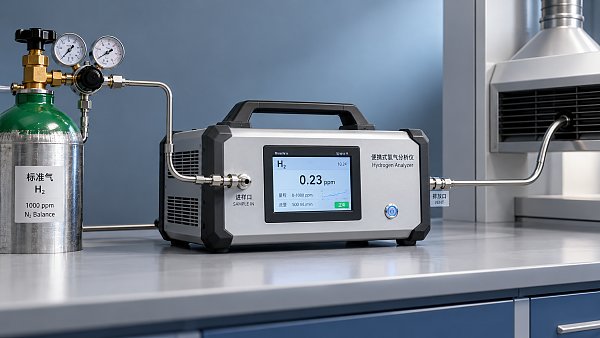
 How sensitive should a portable hydrogen analyzer be for lab use?Choose a portable hydrogen analyzer for laboratory use with the right quantification limit, accuracy, and range. Learn how to verify performance and avoid costly buying mistakes.
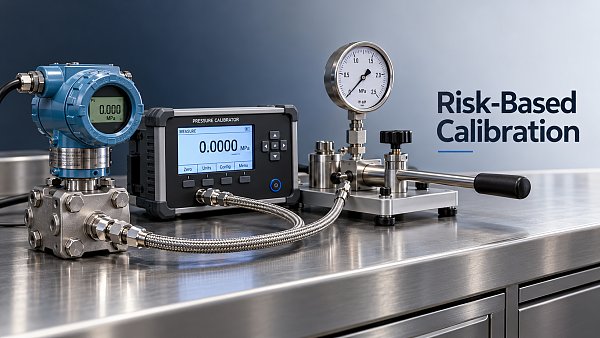
 How to set industrial calibration intervals based on equipment riskSet industrial calibration intervals based on equipment risk, drift, and as-found data. Learn when to shorten or extend schedules to improve reliability and avoid unnecessary costs.
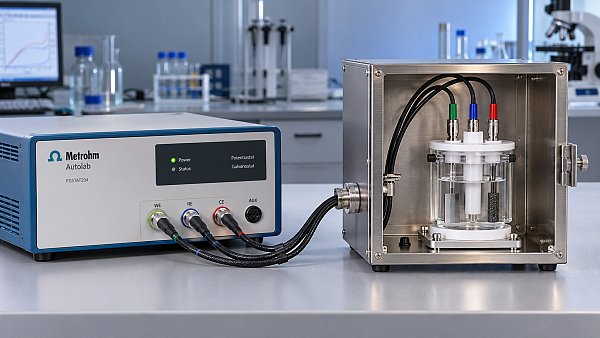
 How to choose electrochemical analyzers for low-current measurementsCompare electrochemical analyzers for precise low-current measurements. Learn how noise, leakage, bandwidth, and real-cell testing help you choose the right instrument.
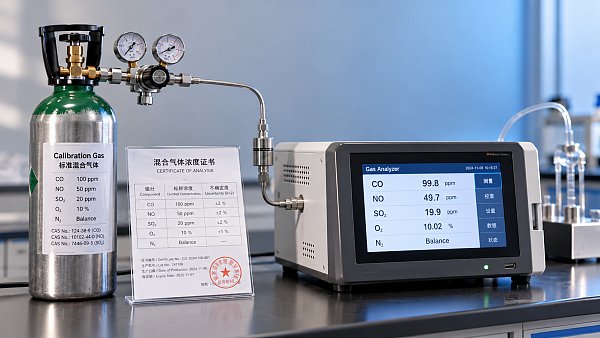
 What tolerance does a custom gas mixture need for calibration?Choose the right custom gas tolerance for calibration. Learn how blending tolerance, certified uncertainty, and stability affect accuracy—and avoid paying for precision you don’t need.
 How condensation affects stack detector readings in wet flue gasStack detector readings can drift when wet flue gas condenses. Learn how to identify moisture interference, prevent sample losses, and improve emissions monitoring reliability.
 How to prevent condensation in a CO2 analyzer sampling systemPrevent condensation in your CO2 analyzer sampling system. Learn how to control dew point, eliminate cold spots, and manage moisture for reliable readings and fewer costly disruptions.
 How to verify accuracy claims for industrial quality analyzersVerify accuracy claims for industrial quality analyzers with calibration checks, independent testing, and clear acceptance criteria. Learn how to reduce risk and buy with confidence.
 How to calculate cooling loads for an industrial analyzer shelterSize industrial analyzer shelter cooling with confidence. Learn to calculate equipment heat, solar gains, and ventilation loads, then select HVAC capacity for reliable analyzer performance.
 Hydrogen Analyzers for Energy Storage: Purity Monitoring vs. Leak DetectionChoosing a hydrogen analyzer for energy storage systems? Compare purity monitoring and leak detection to select the right sensors, improve safety, and protect fuel cell performance.
 NH3 Monitoring in Fertilizer Plants: Where Should Leak Analyzers Be Installed?NH3 analyzer for fertilizer production: discover where to place leak detectors around storage, compressors, and loading areas to reduce blind spots and improve early warning.
 Diesel Engine NOx Analyzers: Response Time and NO2 Conversion ExplainedChoosing a NOX analyzer for diesel engines? Learn how response time, NO2 conversion, and sampling design affect accuracy—and make a smarter, evidence-based purchase.
 SO2 Analyzers for Smelter Emissions: Sampling Hot, Dust-Laden Flue GasSelect an SO2 analyzer for smelting industry applications. Discover how to handle hot, dust-laden flue gas, prevent sample losses, and achieve reliable emissions monitoring.
 Unstable CH4 Readings in Biogas Monitoring? Check Moisture and Sample FlowCH4 analyzer for biogas monitoring giving unstable readings? Discover how moisture, sample flow, and pressure checks help pinpoint faults and restore reliable methane measurements.
 Buying a CO2 Analyzer for Brewery Gas Recovery: Costs Beyond the Purchase PriceBuying a CO2 analyzer for brewery applications? Compare sampling, installation, calibration, and downtime costs to uncover hidden expenses and make a smarter gas recovery investment.
 Where to Place CO Analyzers for Effective Parking Garage VentilationOptimize your CO analyzer for parking garage ventilation with practical placement tips. Learn how sensor height, airflow, and zone coverage support timely detection and effective fan control.
 NDIR vs. FTIR Gas Analyzers: Which Fits Your Environmental Research?Find the right infrared gas analyzer for environmental research. Compare NDIR vs. FTIR on sensitivity, gas coverage, sampling needs, and cost to choose confidently for your study.
 Oxygen Analyzers for Diving: Calibration Checks Before Nitrox BlendingUsing an oxygen analyzer for diving applications? Discover essential calibration, sensor, and sampling checks before nitrox blending to support reliable readings.
 How Paramagnetic Oxygen Analyzers Work and Why Sample Pressure MattersLearn how a paramagnetic oxygen analyzer works, why sample pressure affects accuracy, and what to check in compensation and calibration before choosing your system.
 How Much Does a Complete CEMS Integration Project Typically Cost?How much does a complete CEMS integration project typically cost? Explore budget ranges, hidden installation costs, and compliance needs to compare quotes and plan confidently.
 What Is the Typical Response Time for Industrial Air Monitors?What is the typical response time for industrial air monitors? Explore T90, sampling delays, and alarm settings to compare performance and choose the right monitor with confidence.
 Do Regulatory Monitoring Systems Need Third-Party Certification?Do regulatory monitoring systems need third-party certification? Learn when it is required, what certificates prove, and how to verify compliance before buying.
Search Categories
Search Categories
- Smart Meters & Power Quality
- Transformer Gas Analyzers
- BESS Thermal Runaway Detectors
- Energy, Power & Smart Grid Monitoring
- Optical Profilers & CMM
- Ultrasonic & X-Ray NDT
- Calibration Standards
- Precision Metrology & NDT
- Water Quality Analyzers
- CEMS & VOCs Monitors
- Price Trends
- Import & Export Updates
- Market Trends
- Industry News
- Industry Insights
Latest Article
- How to choose a low range analyzer for trace-level measurementsChoose the right low range analyzer for trace-level measurements. Compare detection limits, sampling, calibration and support to make a confident decision.Posted by:
- How to choose combustible gas detectors for a specific gasChoose combustible gas detectors with confidence. Compare sensor technologies, gas response, calibration, placement, and certification for your application.Posted by:
- How to choose an air quality analyzer for the pollutants you need to measureChoose an air quality analyzer with confidence. Compare pollutant measurement methods, sampling, accuracy and calibration to find the right fit for your needs.Posted by:
Please give us a message
