How to choose combustible gas detectors for a specific gas


Choosing combustible gas detectors for a specific gas requires more than matching a measurement range. Sensor technology, target-gas response, cross-sensitivity, operating conditions, and calibration all affect whether a detector can provide reliable warning. For technical evaluators, the decision also involves assessing hazardous-area certification, installation requirements, and ongoing maintenance. This guide explains the key criteria for comparing detection technologies and selecting equipment suited to your gas, application, and safety requirements.
Define the gas hazard before comparing detectors
Start with the actual material that could escape, not just the name of the process. “Natural gas,” for example, may be predominantly methane, but its composition varies. A solvent storage area may contain several flammable vapors, while a hydrogen installation may also have inerting conditions that affect sensor performance.
Document the target gas or mixture, potential release points, normal and abnormal operating conditions, and whether the detector must warn of an explosion hazard, a toxic exposure hazard, or both. A combustible gas reading does not establish that the atmosphere is safe to breathe. Separate oxygen and toxic-gas measurements may be necessary, particularly for confined-space entry.
Also distinguish between fixed detection, which monitors selected locations continuously, and portable instruments used for personal protection, leak investigation, or pre-entry checks. One does not automatically replace the other: a fixed detector can miss a release outside its coverage, while a portable detector only measures where and when it is used.
Choose a sensing principle that can detect the target gas
The most consequential screening question is whether the sensing technology responds reliably to the gas under the expected conditions. A detector advertised for “combustible gas” is not necessarily suitable for every fuel.
Catalytic bead sensors
Catalytic sensors detect heat produced when combustible gas oxidizes on a treated element. They can respond to many flammable gases, including hydrogen and hydrocarbons, but response varies by substance. Ask for the manufacturer’s target-gas response data rather than assuming a methane calibration produces the correct reading for every gas.
These sensors require sufficient oxygen to operate as specified. Silicones, sulfur compounds, lead-containing substances, and other contaminants can poison or inhibit the sensing element, depending on the design and exposure. Very high gas concentrations may also produce misleading behavior; verify the instrument’s over-range indication and recovery requirements.
Infrared sensors
Infrared detection measures absorption at wavelengths associated with particular gases. It is widely used for suitable hydrocarbons and does not depend on oxygen for the sensing reaction. That can be useful where catalytic sensors are unsuitable because of oxygen deficiency or potential poisoning.
The limitation matters just as much: conventional hydrocarbon infrared sensors do not detect hydrogen. A unit configured for methane should not be presumed to measure every solvent vapor accurately. Confirm the supported gases, response factors, optical interference, and any restrictions on humidity, condensation, or dirty optics.
Other technologies
Semiconductor sensors can respond to a broad range of gases, but selectivity and environmental influences need careful evaluation. Electrochemical hydrogen sensors may suit certain hydrogen applications, depending on their specified range and intended use. Photoionization detectors are useful for many volatile organic compounds at low concentrations, but they do not detect every flammable gas and are not interchangeable with an LEL detector.
For any alternative technology, request evidence for the exact gas, concentration range, background atmosphere, and alarm purpose. A sensitive response is not enough if the sensor cannot distinguish the target adequately or is not validated for the intended safety application.
Understand what the reading actually means
Combustible gas detectors commonly display concentration as a percentage of the lower explosive limit, or %LEL. The LEL is the concentration at which a particular gas or vapor can form an ignitable mixture with air under specified conditions. Because gases have different LEL values, the same %LEL does not represent the same volume concentration for every substance.
Check which LEL reference the instrument and site procedures use. Published values and regulatory conventions can differ, and temperature, pressure, and mixture composition can affect flammability behavior. Alarm setpoints should follow the site risk assessment, applicable requirements, and the detector manufacturer’s instructions—not a value copied from an unrelated project.
For mixtures, ask how the instrument represents combined response. A single reading may indicate the presence of combustible material without identifying each component or its individual concentration. If composition changes substantially, a detector calibrated for one constituent may not provide the intended warning margin for another.
Treat calibration and cross-sensitivity as selection criteria
Calibration establishes the relationship between a known test gas and the displayed reading. The strongest comparison is not simply “factory calibrated,” but whether the supplier can explain the calibration gas, concentration, procedure, expected tolerance, and recommended interval for the intended application.
Where direct calibration with the target gas is impractical, manufacturers may provide a validated surrogate gas and response factor. Check that the factor applies to the exact sensor and configuration, and understand whether it is already incorporated into the instrument. Applying it twice—or not at all—can materially change the interpretation.
Cross-sensitivity has two sides. A background gas can trigger a reading that complicates diagnosis, but another concern is a target gas producing less response than expected. Ask for documented interference and response information at concentrations relevant to the installation. If the expected mixture is not covered, arrange a representative evaluation with the manufacturer before accepting the instrument.
A bump test is a functional check that gas reaches the sensor and that the instrument and alarms respond; it is not a substitute for calibration. Define both activities in the maintenance plan, along with test-gas availability, shelf life, regulators, accessories, and records.
Place the detector where a release can reach it
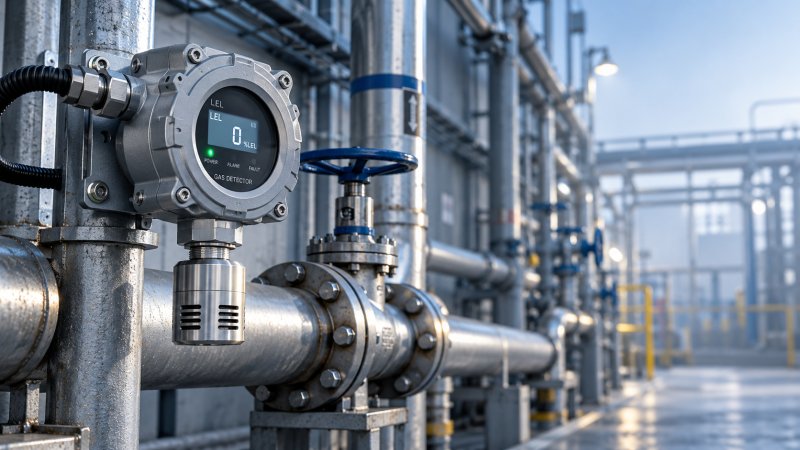
Sensor selection and placement are inseparable. Hydrogen often rises in open, still air, while many heavier-than-air vapors can collect in low areas. Neither rule alone determines mounting height: ventilation, release pressure, temperature, obstructions, and enclosure geometry can redirect a plume.
Map credible leak sources such as valves, seals, connections, and sampling points. Then consider air movement during normal operation and ventilation failure. A detector behind an obstruction or outside the likely gas path may have an excellent specification and still provide no useful warning.
For complex installations, gas-dispersion assessment or specialist detector mapping may be justified. Allow access for testing and replacement without placing maintenance personnel in unnecessary danger. Weather protection, sensor orientation, and guards must be compatible with the instrument because accessories can affect gas access and response time.
For aspirated systems, assess the complete sampling path rather than the sensor alone. Tubing length, flow rate, filters, moisture, leaks, and adsorption of some vapors can delay or reduce the sample reaching the detector. The relevant response time is the time from release to alarm under the installed conditions.
Check certification, environment, and system behavior
A hazardous-area approval addresses whether equipment can be used safely in a defined explosive atmosphere; it does not by itself prove measurement performance for a particular gas. Review the certificate and its conditions for the installation location, protection concept, gas group, temperature classification, ambient range, and accessories. ATEX, IECEx, or other marking requirements depend on the jurisdiction and project.
Separately, verify any required gas-detection performance certification and its scope. A certificate for one sensor, range, or configuration should not be assumed to cover every option. If a detector is part of a safety instrumented function, assess the full safety lifecycle and applicable functional-safety requirements rather than relying on a component claim alone.
Environmental limits deserve the same attention. Compare expected temperature, humidity, water exposure, vibration, corrosive atmosphere, electromagnetic conditions, and power quality with the specifications. Determine what the controller sees during sensor fault, power loss, blocked optics, maintenance, and communications failure.
Finally, define the required action: local warning, control-room notification, ventilation, isolation, or shutdown. Check output compatibility, alarm latching, fault signaling, bypass control, and proof-test arrangements with the system designer. A detector that cannot communicate a fault clearly may leave operators believing a protected area is being monitored when it is not.
Compare suppliers on evidence and lifetime support
A practical technical evaluation asks suppliers to respond to the same application brief. Include the gas composition, desired measurement range, atmospheric conditions, potential contaminants, installation layout, hazardous-area classification, and expected alarm actions. Request the applicable manuals, response data, certification documents, calibration procedure, and maintenance requirements for the proposed configuration.
Look beyond the initial instrument price. Replacement sensor availability, calibration gas logistics, local service capability, spare-parts lead time, and software or controller compatibility all affect whether the system remains supportable. Clarify who will commission the installation and provide training, and what acceptance testing will demonstrate that gas can reach each sensing point.
Global Instrument Hub’s instrumentation and supplier-research focus offers a useful framework for comparing these details across manufacturers, particularly when equipment is sourced internationally. Before making a final selection, resolve any unsupported gas-response claims, confirm the certificates for the exact configuration, and agree on the test and maintenance arrangements that will keep the detector credible after installation.
Recommended for You
 How to choose combustible gas detectors for a specific gasChoose combustible gas detectors with confidence. Compare sensor technologies, gas response, calibration, placement, and certification for your application.
 How to choose an air quality analyzer for the pollutants you need to measureChoose an air quality analyzer with confidence. Compare pollutant measurement methods, sampling, accuracy and calibration to find the right fit for your needs.
 How to choose industrial metrology tools for tight tolerancesChoose industrial metrology tools for tight tolerances with confidence. Compare uncertainty, calibration, tool types, and costs to reduce inspection risk.
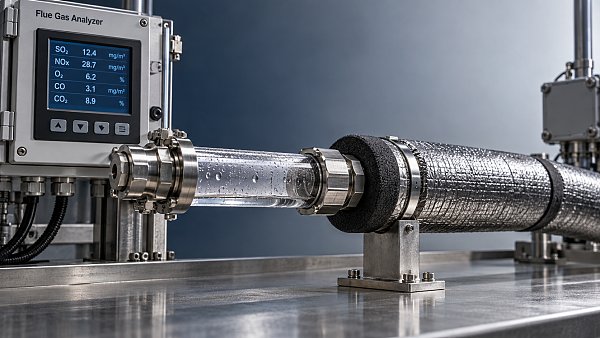
 How moisture affects fixed analyzer accuracy in stack gas monitoringImprove fixed analyzer accuracy in stack gas monitoring. Discover how moisture causes dilution, interference, and sample loss—and learn practical ways to protect emissions data.
 How does production line speed affect in-line measurement accuracy?Discover how production line speed affects in-line measurement accuracy. Explore sensor response, sampling, and timing to boost throughput without compromising quality.
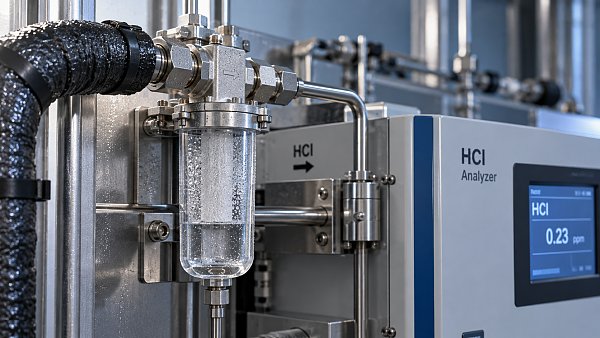
 How condensation affects HCl concentration analyzer accuracyHCl concentration analyzer accuracy can suffer when condensation traps HCl. Learn how to spot sampling losses, prevent low readings, and improve measurement reliability.
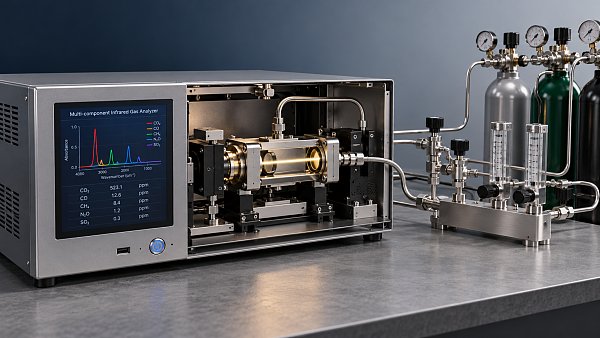
 How does cross-interference affect multi-component gas analyzers?How does cross-interference affect multi component gas analyzers? Explore measurement errors, compensation limits, and validation tips to choose the right system for your process.
 How does temperature affect high-accuracy sensor performance?Explore how temperature affects high accuracy sensor performance. Learn to reduce thermal drift, evaluate compensation, and select the right sensor for reliable measurements.
 Can a C4H8O concentration analyzer distinguish between isomers?Can a C4H8O concentration analyzer distinguish isomers? Compare GC, FTIR and MS methods, uncover selectivity limits, and learn what to validate before choosing your instrument.
 How to identify a reliable supplier using on-time delivery recordsIdentify a Reliable Supplier by verifying on-time delivery records, original commitments, and complete shipments. Learn practical checks to reduce purchasing risk and protect your project schedule.
 How sensitive should a portable hydrogen analyzer be for lab use?Choose a portable hydrogen analyzer for laboratory use with the right quantification limit, accuracy, and range. Learn how to verify performance and avoid costly buying mistakes.
 How to set industrial calibration intervals based on equipment riskSet industrial calibration intervals based on equipment risk, drift, and as-found data. Learn when to shorten or extend schedules to improve reliability and avoid unnecessary costs.
 How to choose electrochemical analyzers for low-current measurementsCompare electrochemical analyzers for precise low-current measurements. Learn how noise, leakage, bandwidth, and real-cell testing help you choose the right instrument.
 What tolerance does a custom gas mixture need for calibration?Choose the right custom gas tolerance for calibration. Learn how blending tolerance, certified uncertainty, and stability affect accuracy—and avoid paying for precision you don’t need.
 How condensation affects stack detector readings in wet flue gasStack detector readings can drift when wet flue gas condenses. Learn how to identify moisture interference, prevent sample losses, and improve emissions monitoring reliability.
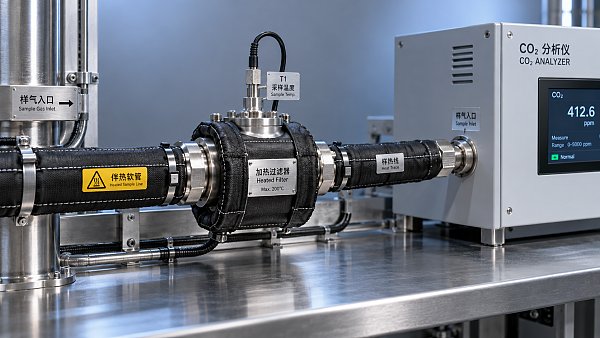
 How to prevent condensation in a CO2 analyzer sampling systemPrevent condensation in your CO2 analyzer sampling system. Learn how to control dew point, eliminate cold spots, and manage moisture for reliable readings and fewer costly disruptions.
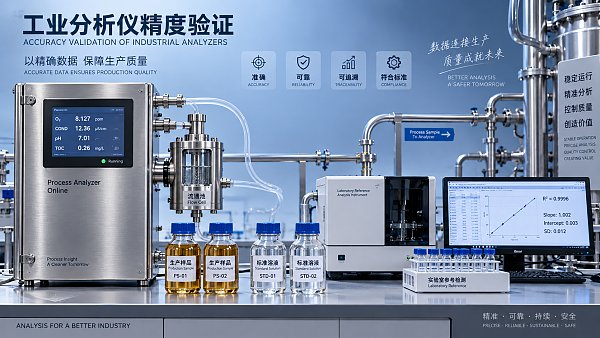
 How to verify accuracy claims for industrial quality analyzersVerify accuracy claims for industrial quality analyzers with calibration checks, independent testing, and clear acceptance criteria. Learn how to reduce risk and buy with confidence.
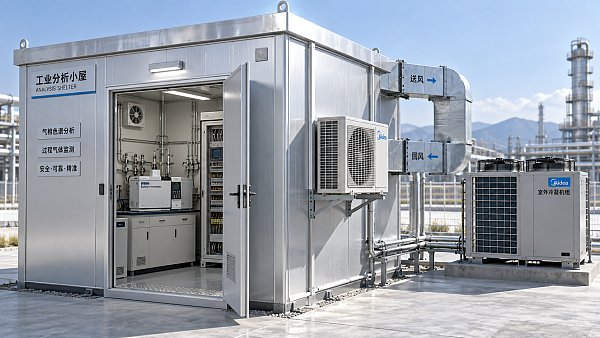
 How to calculate cooling loads for an industrial analyzer shelterSize industrial analyzer shelter cooling with confidence. Learn to calculate equipment heat, solar gains, and ventilation loads, then select HVAC capacity for reliable analyzer performance.
 Hydrogen Analyzers for Energy Storage: Purity Monitoring vs. Leak DetectionChoosing a hydrogen analyzer for energy storage systems? Compare purity monitoring and leak detection to select the right sensors, improve safety, and protect fuel cell performance.
 NH3 Monitoring in Fertilizer Plants: Where Should Leak Analyzers Be Installed?NH3 analyzer for fertilizer production: discover where to place leak detectors around storage, compressors, and loading areas to reduce blind spots and improve early warning.
 Diesel Engine NOx Analyzers: Response Time and NO2 Conversion ExplainedChoosing a NOX analyzer for diesel engines? Learn how response time, NO2 conversion, and sampling design affect accuracy—and make a smarter, evidence-based purchase.
 SO2 Analyzers for Smelter Emissions: Sampling Hot, Dust-Laden Flue GasSelect an SO2 analyzer for smelting industry applications. Discover how to handle hot, dust-laden flue gas, prevent sample losses, and achieve reliable emissions monitoring.
 Unstable CH4 Readings in Biogas Monitoring? Check Moisture and Sample FlowCH4 analyzer for biogas monitoring giving unstable readings? Discover how moisture, sample flow, and pressure checks help pinpoint faults and restore reliable methane measurements.
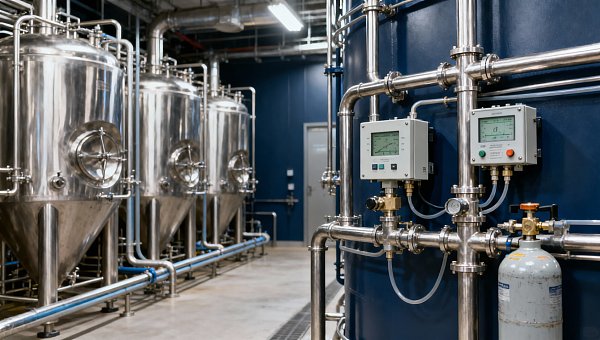
 Buying a CO2 Analyzer for Brewery Gas Recovery: Costs Beyond the Purchase PriceBuying a CO2 analyzer for brewery applications? Compare sampling, installation, calibration, and downtime costs to uncover hidden expenses and make a smarter gas recovery investment.
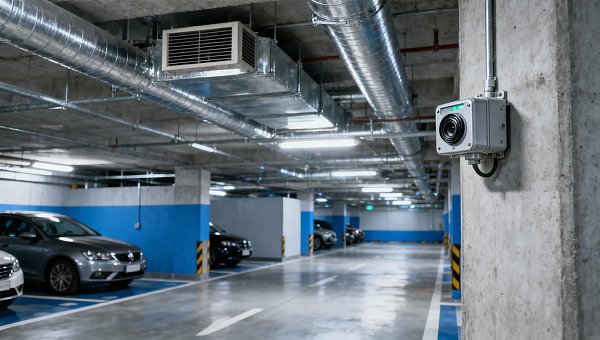
 Where to Place CO Analyzers for Effective Parking Garage VentilationOptimize your CO analyzer for parking garage ventilation with practical placement tips. Learn how sensor height, airflow, and zone coverage support timely detection and effective fan control.
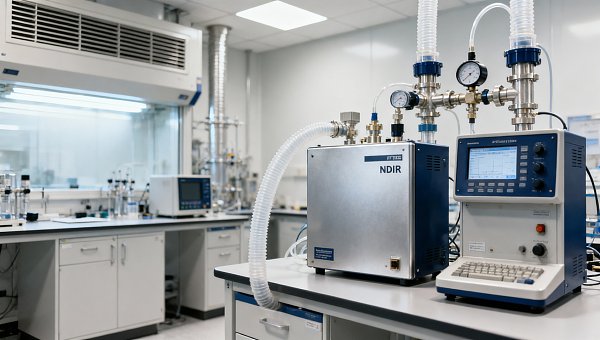
 NDIR vs. FTIR Gas Analyzers: Which Fits Your Environmental Research?Find the right infrared gas analyzer for environmental research. Compare NDIR vs. FTIR on sensitivity, gas coverage, sampling needs, and cost to choose confidently for your study.
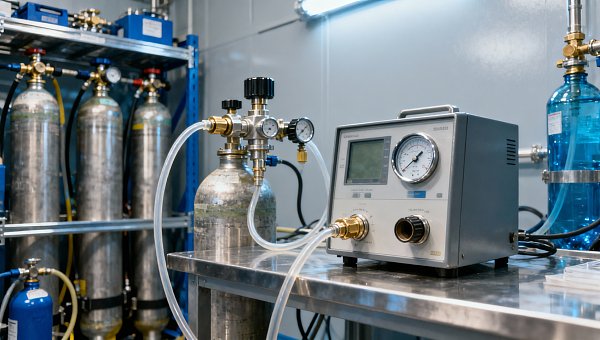
 Oxygen Analyzers for Diving: Calibration Checks Before Nitrox BlendingUsing an oxygen analyzer for diving applications? Discover essential calibration, sensor, and sampling checks before nitrox blending to support reliable readings.
 How Paramagnetic Oxygen Analyzers Work and Why Sample Pressure MattersLearn how a paramagnetic oxygen analyzer works, why sample pressure affects accuracy, and what to check in compensation and calibration before choosing your system.
 How Much Does a Complete CEMS Integration Project Typically Cost?How much does a complete CEMS integration project typically cost? Explore budget ranges, hidden installation costs, and compliance needs to compare quotes and plan confidently.
 What Is the Typical Response Time for Industrial Air Monitors?What is the typical response time for industrial air monitors? Explore T90, sampling delays, and alarm settings to compare performance and choose the right monitor with confidence.
 Do Regulatory Monitoring Systems Need Third-Party Certification?Do regulatory monitoring systems need third-party certification? Learn when it is required, what certificates prove, and how to verify compliance before buying.
 How Do You Choose Wired or Wireless for Stack Monitoring?Learn how to choose between wired and wireless for stack monitoring. Compare reliability, lifecycle costs, and data recovery to find the right CEMS setup for your site.
Search Categories
Search Categories
- Smart Meters & Power Quality
- Transformer Gas Analyzers
- BESS Thermal Runaway Detectors
- Energy, Power & Smart Grid Monitoring
- Optical Profilers & CMM
- Ultrasonic & X-Ray NDT
- Calibration Standards
- Precision Metrology & NDT
- Water Quality Analyzers
- CEMS & VOCs Monitors
- Price Trends
- Import & Export Updates
- Market Trends
- Industry News
- Industry Insights
Latest Article
- How to choose combustible gas detectors for a specific gasChoose combustible gas detectors with confidence. Compare sensor technologies, gas response, calibration, placement, and certification for your application.Posted by:
- How to choose an air quality analyzer for the pollutants you need to measureChoose an air quality analyzer with confidence. Compare pollutant measurement methods, sampling, accuracy and calibration to find the right fit for your needs.Posted by:
- How to choose industrial metrology tools for tight tolerancesChoose industrial metrology tools for tight tolerances with confidence. Compare uncertainty, calibration, tool types, and costs to reduce inspection risk.Posted by:
Please give us a message