
Explosion-Proof Instruments: Compliance Risks Before You Order


Ordering explosion-proof instruments without verifying compliance details can expose procurement teams to costly delays, failed inspections, and serious safety liabilities. Before you compare prices or lead times, it is critical to confirm certifications, hazardous area ratings, documentation, and supplier reliability. This article highlights the key compliance risks buyers should assess in advance to make safer, smarter purchasing decisions.
Why do procurement teams face high compliance risk when buying explosion-proof instruments?
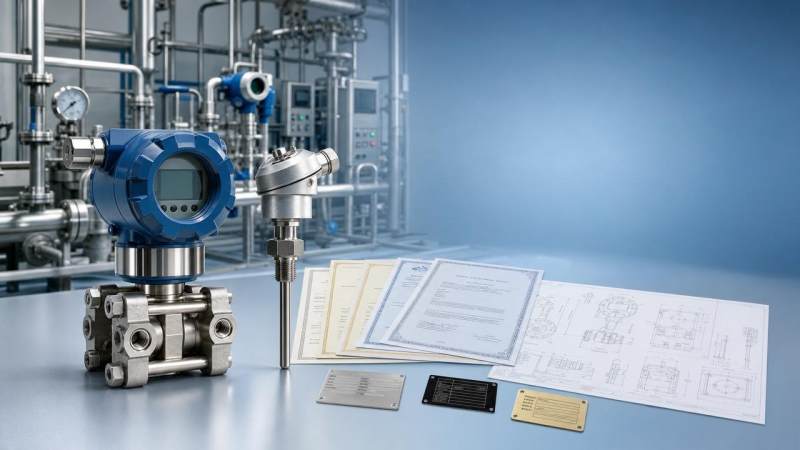
Explosion-proof instruments are not ordinary measurement devices. They are used in hazardous areas where flammable gas, vapor, or dust may be present, so a compliance mistake can affect safety, installation approval, insurance exposure, and project schedule at the same time.
In the broader instrumentation industry, buyers often source pressure transmitters, temperature sensors, flow meters, level switches, analyzers, and control devices for industrial manufacturing, energy, environmental monitoring, laboratories, and automation systems. In these environments, hazardous area requirements vary widely, and that is where procurement risk begins.
A low quotation may look attractive, but if the instrument does not match the site classification, cable gland requirement, ambient temperature range, or required certificate format, the real cost rises quickly. Rework, replacement, shutdown coordination, and delayed commissioning usually cost far more than the initial price difference.
Common reasons compliance issues are missed before ordering
- Procurement receives only a basic model number but not the full hazardous area specification, such as Zone, gas group, temperature class, or protection concept.
- The approved vendor list focuses on price and delivery history, while technical file review is left until factory inspection or site acceptance.
- Global projects require different certification schemes across regions, yet the purchase order states only “explosion-proof” without naming the expected standard.
- Replacement orders assume the new device is equivalent to the old one, even though enclosure entries, power parameters, and installation methods may differ.
What exactly should be checked before ordering explosion-proof instruments?
Procurement teams need a practical review framework that connects engineering intent, regulatory expectations, and supplier capability. The table below summarizes the most important compliance checkpoints for explosion-proof instruments before a purchase order is released.
This review should happen before commercial comparison. Once the supplier has quoted a precise certified configuration, procurement can compare price, lead time, and service on a fair basis instead of evaluating incompatible offers.
Minimum documents buyers should request
- Certificate copies that clearly identify the ordered product family and key options.
- Datasheet with electrical, mechanical, environmental, and hazardous area parameters.
- Installation and maintenance instructions, especially for cable entry, sealing, grounding, and barriers.
- Nameplate or marking example so the receiving team can verify labels at goods inspection.
- Any required declarations tied to destination market, project specification, or end-user standards.
Which standards and certification details matter most?
The phrase “explosion-proof instruments” is too broad for purchasing decisions. Different projects may reference IECEx, ATEX, NEC, CEC, or local regulatory frameworks. A compliant device in one market may still require different markings or approvals in another.
Buyers should not try to replace engineering judgment, but they do need enough knowledge to ask the right questions and stop incomplete quotations from moving forward. The comparison below helps distinguish major review points.
For procurement teams in integrated industrial projects, the key is consistency. The purchase order, technical datasheet, certificate set, and inspection documents should all describe the same configuration. If any one of them differs, the compliance chain becomes weak.
How should buyers compare explosion-proof instruments beyond price?
Instruments for hazardous areas are often bought under schedule pressure. Yet the best commercial decision is rarely the lowest unit price. Buyers should compare total procurement risk, not just quotation value.
Key comparison dimensions for purchasing
- Certification completeness: Does the supplier provide valid, traceable documents for the exact configuration ordered?
- Application fit: Are process connection, material, output signal, ingress protection, and ambient rating suitable for the installation site?
- Delivery realism: Is the quoted lead time based on standard build, certified options availability, and required inspection steps?
- Lifecycle support: Can the supplier support spare parts, recalibration, replacement traceability, and document retrieval later?
- Change management: If the project changes cable entry, display option, bracket, or protocol, can the supplier confirm whether certification remains valid?
This matters across the instrumentation industry because explosion-proof instruments are rarely standalone purchases. They connect to automation, monitoring, analysis, and control systems that support digital operations, plant reliability, and intelligent upgrades. A compliance error in one field device can delay an entire package.
Typical hidden costs when procurement focuses only on price
- Engineering revalidation when the approved drawing no longer matches the delivered item.
- Urgent reshipment costs if a certified accessory or gland is missing.
- Site labor standby during troubleshooting, especially in shutdown windows or offshore logistics cycles.
- Additional inspections or third-party review fees caused by inconsistent documentation.
Which application scenarios require extra caution?
Not all hazardous locations create the same buying risk. Procurement teams should pay close attention when explosion-proof instruments are intended for demanding process, environmental, or operational conditions. The table below highlights scenarios where compliance review should be more rigorous.
These scenarios show why procurement cannot separate compliance from application. The instrumentation sector supports industrial automation, testing, analysis, and digital transformation, but those gains depend on each field device being selected correctly for its environment.
A practical procurement workflow for explosion-proof instruments
A structured buying process reduces risk and improves supplier comparison. The goal is not to make procurement slower. It is to move compliance verification earlier, where corrections are cheaper and easier.
Recommended workflow
- Collect complete application inputs, including hazardous area classification, process conditions, installation method, and destination market.
- Issue RFQ with exact compliance requirements rather than only a generic reference to explosion-proof instruments.
- Request technical and certification documents together with the commercial quote.
- Cross-check the offered model and options against certificate scope, drawings, and site needs.
- Confirm inspection, packing, traceability, and document submission requirements before order release.
- Verify marking and documents again at incoming inspection to catch discrepancies before site dispatch.
This workflow is especially useful for procurement departments handling multiple categories such as pressure, flow, level, temperature, analytical, and online monitoring instruments. A repeatable checklist improves consistency across projects and suppliers.
FAQ: what do buyers most often ask about explosion-proof instruments?
How can I tell whether explosion-proof instruments match my hazardous area?
Start with the site classification, not the product brochure. You need to confirm the area category, substance type, gas or dust group, and temperature requirement. Then compare those conditions with the instrument marking, certificate scope, and installation instructions. If the RFQ does not include those site details, commercial comparison is premature.
Is a certificate copy alone enough for procurement approval?
No. A certificate may apply only to a certain configuration or under specific conditions of use. Buyers should also request the datasheet, option breakdown, marking format, and installation manual. This is the only reliable way to confirm that the exact ordered version of the explosion-proof instrument remains compliant after accessories and site conditions are considered.
What are the most common procurement mistakes?
The most frequent mistakes are using “explosion-proof” as a generic requirement, copying an old model number without checking revised standards, ignoring ambient temperature limitations, and assuming all cable entries or display options are automatically certified. Another common problem is waiting until site inspection to review documents, when replacement lead time becomes a project risk.
Do lead times change when compliance requirements are stricter?
Yes, they can. Specific certified options, material selections, inspection points, and destination-market documents may extend delivery. However, clarifying those requirements early usually shortens the total project timeline because it avoids redesign, rejection, and expedited replacement later.
Why choose us for explosion-proof instrument sourcing support?
In the instrumentation industry, procurement value comes from more than product supply. It depends on whether technical selection, compliance review, documentation control, and delivery coordination work together. That is especially true for explosion-proof instruments used in manufacturing, energy, environmental systems, laboratory-related processes, construction engineering, and automation projects.
We support buyers with practical pre-order checks that reduce compliance uncertainty and shorten internal review cycles. You can consult us about hazardous area parameter confirmation, product selection across pressure, temperature, flow, level, and analytical instruments, certification document matching, accessory compatibility, delivery schedule evaluation, and sample or quotation discussions for project comparison.
If your team is comparing explosion-proof instruments from multiple suppliers, send the application conditions, required certificates, and target delivery plan. We can help you review specification gaps before ordering, so your procurement decision is safer, clearer, and easier to execute.
Recommended for You
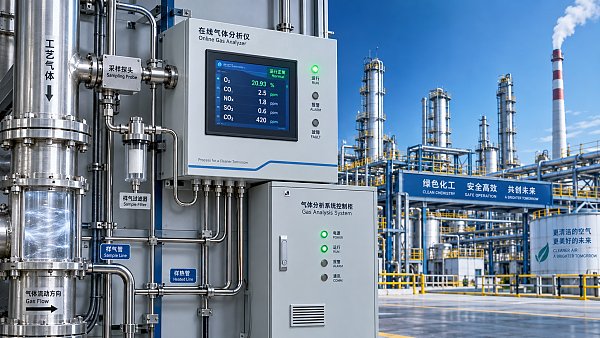
 When does process gas monitoring need continuous measurement?Process gas monitoring needs continuous measurement when rapid changes threaten safety, quality, compliance, or uptime. Learn how to specify reliable, actionable monitoring systems.
 How to prevent false alarms in power plant instrumentationPower plant instrumentation guide: prevent false alarms with reliable signal checks, smarter alarm settings, mode-based control, and actionable operator responses.
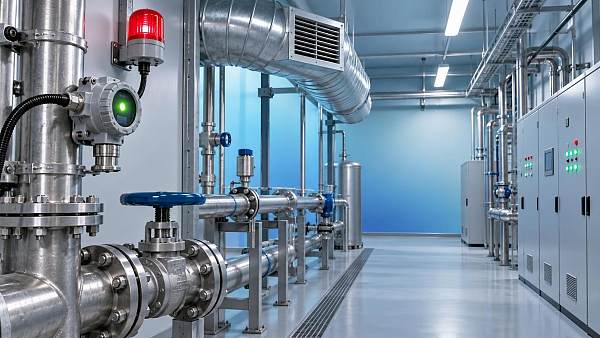
 How fixed gas detectors help prevent leaks in enclosed workspacesFixed gas detectors provide continuous leak monitoring in enclosed workspaces, enabling faster alarms, safer responses, and stronger protection for people and processes.
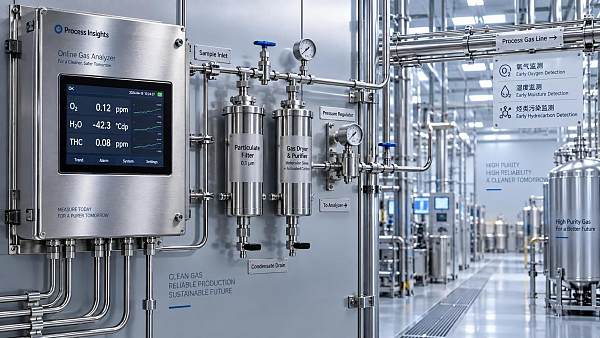
 How industrial gas analysis helps detect process contamination earlyIndustrial Gas Analysis helps detect oxygen, moisture, and hydrocarbon contamination early, enabling faster fault isolation, safer operations, and stronger process control.
 What drives environmental compliance continuous monitoring setup cost?Environmental compliance continuous monitoring setup cost: uncover hidden expenses, compare bids accurately, and build a reliable, audit-ready system.
 How to select gas analysis equipment for continuous emissions monitoringGas analysis equipment selection guide for reliable continuous emissions monitoring—compare technologies, sampling, calibration, compliance, and maintenance needs.
 What detection limit is needed for NH3 environmental monitoring?High accuracy NH3 analyzer for environmental monitoring: learn how to set the right detection limit, improve sampling reliability, and make defensible decisions.
 How to select a NOX analyzer for power plant emissions complianceNOX analyzer for power plant emissions: learn how to select a compliant, reliable CEMS solution with the right range, sample handling, calibration, and data integrity.
 How to evaluate a laser gas analyzer manufacturer in GermanyLaser gas analyzer manufacturer in Germany: compare accuracy, sample handling, interference control, calibration, and service to select a reliable solution.
 How does a flue gas analyzer maintain accuracy in wet stack gas?Flue gas analyzer accuracy in wet stack gas depends on heated sampling, moisture correction, reliable sensors, and calibration. Explore key selection tips.
 What makes equipment suitable for a hazardous environment?Hazardous Environment equipment selection explained: certification, ignition control, materials, installation, and maintenance for safer operations.
 How Can Fugitive Emission Monitoring Results Be Validated?How to validate fugitive emission monitoring results: learn calibration, field documentation, data-quality checks, and compliance comparisons for credible, decision-ready reports.
 Do Stack Testing Instruments Need Heated Sample Lines?Do stack testing instruments need heated sample lines? Learn when heating protects sample integrity, prevents condensation, and improves reliable emissions measurements.
 What Are the Risks of Using Low-Cost Electrochemical Gas Analyzers?What are the risks of using low-cost electrochemical gas analyzers? Explore calibration drift, cross-sensitivity, safety, and compliance concerns before you buy.
 How Long Does It Take to Integrate a Custom Emission Monitoring Solution?How long does it take to integrate a custom emission monitoring solution? Explore timelines, site readiness, data integration, and validation factors.
 Is Industrial Safety Monitoring the Same as Emission Monitoring?is industrial safety monitoring the same as emission monitoring? Learn the key differences in purpose, alarms, compliance, and instrument selection for safer operations.
 What Monthly Maintenance Does a Wireless Measurement Node Need?What maintenance does a wireless measurement node need monthly? Explore practical checks for battery health, signal quality, sensor accuracy, enclosures, and reliable data.
 Can Measurement and Control Systems Handle Corrosive Flue Gas?Can measurement and control systems handle corrosive flue gas? Discover proven design strategies for reliable sensing, sampling, materials, and maintenance.
 How Can Data Logging Instruments Pass an Environmental Audit?Learn how to ensure data logging instruments pass environmental audit with proven calibration, data integrity, alarm control, and traceable compliance records.
 What Are the Common Pitfalls of Integrating Multiple Gas Analyzers?What are common pitfalls when integrating multiple gas analyzers? Discover how sampling, timing, calibration, and data integration risks affect reliable decisions.
 Is Predictive Analytics for Emission Control Useful or Just Hype?Is predictive analytics useful for emission control or just hype? Discover how reliable data, CEMS, and practical pilots can reduce risk and support compliance.
 How to select a hydrogen analyzer for petrochemical process safetyHydrogen analyzer for petrochemical industry selection guide: compare technologies, sample systems, response time, and safety certifications for reliable process protection.
 When does a thermal conductivity detector outperform an FID?Thermal conductivity detector vs. FID: discover when TCD is the smarter choice for permanent gases, bulk analysis, non-destructive detection, and reliable GC method design.
 What certification should you verify before buying an IECEx analyzer?IECEx analyzer buyers: verify the Certificate of Conformity, Ex marking, special conditions, and exact configuration before purchase. Avoid costly compliance risks.
 How oxygen analysis helps prevent incomplete combustionOxygen analysis helps prevent incomplete combustion by optimizing air-to-fuel balance, reducing fuel waste, improving burner safety, and supporting emissions control.
 How to size an industrial gas system for stable peak demandIndustrial gas system sizing guide for stable peak demand. Learn how to assess flow, pressure drop, buffer storage, purity, redundancy, and commissioning for reliable production.
 How to choose a process sensor for high-temperature applicationsProcess sensor selection for high-temperature applications: compare thermal limits, materials, accuracy, installation, and maintenance to secure reliable control data.
 When does continuous analysis improve industrial process control?Continuous analysis improves industrial process control with timely composition data that supports faster decisions, higher quality, safer operations, and less waste.
 How to choose emission control systems for variable industrial loadsEmission Control solutions for variable industrial loads: learn how to match technology, controls, monitoring, and lifecycle costs for reliable compliance.
 How continuous emissions monitoring supports reliable emission reductionEmission Reduction relies on reliable continuous emissions monitoring. Discover how accurate data, calibration, and process insights support compliance and smarter control.
 When does it make sense to automate a production line?Production Line automation makes sense when processes are stable, measurable, and repeatable. Learn the key signals, risks, and ROI triggers before you invest.
 What accuracy should a monitoring device deliver in power quality applicationsMonitoring Device accuracy in power quality applications affects compliance, troubleshooting, and decision confidence. Learn what specs, standards, and installation factors truly matter.






Search Categories
Search Categories
- Smart Meters & Power Quality
- Transformer Gas Analyzers
- BESS Thermal Runaway Detectors
- Energy, Power & Smart Grid Monitoring
- Optical Profilers & CMM
- Ultrasonic & X-Ray NDT
- Calibration Standards
- Precision Metrology & NDT
- Water Quality Analyzers
- CEMS & VOCs Monitors
- Price Trends
- Import & Export Updates
- Market Trends
- Industry News
- Industry Insights
Latest Article
- When does process gas monitoring need continuous measurement?Process gas monitoring needs continuous measurement when rapid changes threaten safety, quality, compliance, or uptime. Learn how to specify reliable, actionable monitoring systems.Posted by:
- How to prevent false alarms in power plant instrumentationPower plant instrumentation guide: prevent false alarms with reliable signal checks, smarter alarm settings, mode-based control, and actionable operator responses.Posted by:
- How fixed gas detectors help prevent leaks in enclosed workspacesFixed gas detectors provide continuous leak monitoring in enclosed workspaces, enabling faster alarms, safer responses, and stronger protection for people and processes.Posted by:
Please give us a message
