
Common Gas Analysis System Mistakes That Lead to Unstable Readings


Unstable data from a Gas Analysis System is rarely just an “analyzer problem.” In many plants, fluctuating readings come from the sampling path, installation details, maintenance habits, calibration practice, or operating conditions that are easy to overlook during daily use. For operators, that matters because unstable values do more than create confusion on a screen. They can trigger false alarms, hide real process shifts, increase product losses, and create safety risks when gas quality or emissions are not being measured correctly.
If you regularly use a gas analyzer and keep seeing drift, spikes, lag, or inconsistent results, the best starting point is not replacing parts at random. It is checking the common mistakes that affect measurement stability before the gas even reaches the analyzer, as well as the way the system is calibrated, maintained, and operated. In practice, a stable Gas Analysis System depends on the whole chain working together: extraction, transport, conditioning, measurement, and routine verification.
This article focuses on the mistakes operators and daily users encounter most often. Instead of discussing theory in a general way, it explains what typically goes wrong, what symptoms you will see, why the issue creates unstable readings, and what practical actions help restore reliable performance. If your goal is to improve accuracy without unnecessary downtime or wasted troubleshooting effort, these are the areas that deserve the most attention first.
Why a Gas Analysis System Becomes Unstable in Real Operating Conditions
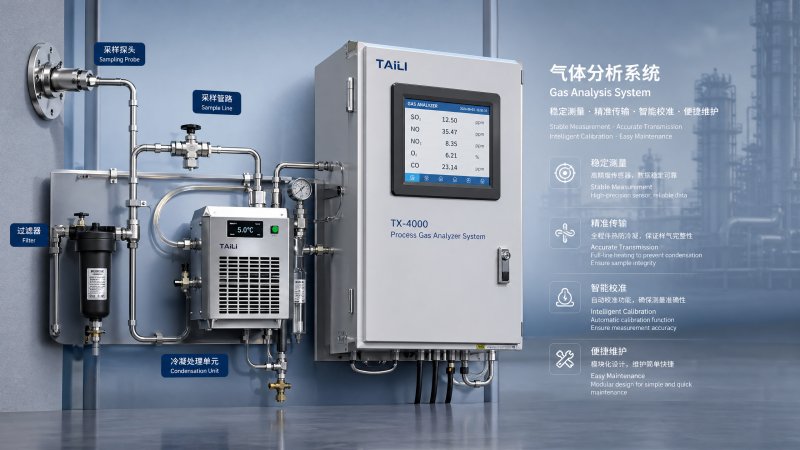
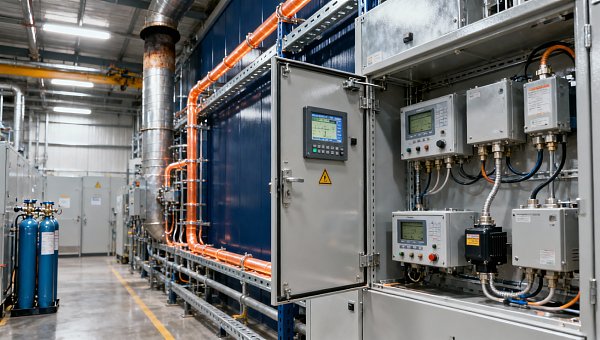
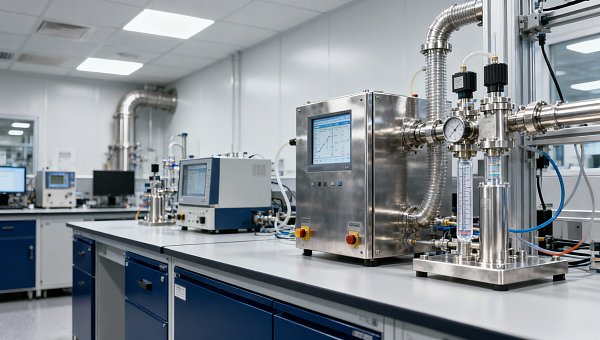
Many users assume a gas analyzer should produce steady readings as long as the instrument powers on and passes a basic check. In reality, gas measurement is highly sensitive to process conditions and system design. A Gas Analysis System does not measure gas in isolation. It measures a gas sample that must be extracted from the process, moved through tubing, conditioned to the right temperature and moisture level, and presented to the analyzer at a consistent flow and pressure. Any weakness in that chain can create unstable data.
This is why two systems using the same analyzer model can behave very differently in the field. One may provide repeatable, trustworthy values, while another drifts every shift. The difference often comes down to practical details such as probe placement, sample line routing, leaks, contamination, condensate buildup, calibration gas handling, or maintenance discipline. These are not small issues. They directly affect whether the analyzer sees a true process sample or a distorted one.
For operators, the key point is simple: unstable readings usually have a physical cause. Random fluctuations are often not random at all. They are signs that sample quality, sample delivery, environmental conditions, or verification methods are inconsistent. Once you approach the problem in that way, troubleshooting becomes faster and more effective.
Common Sampling Mistakes That Distort the Reading Before It Reaches the Analyzer
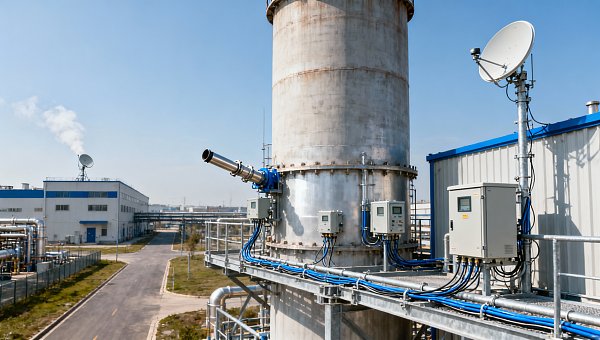
One of the most common mistakes is assuming the sample being measured is truly representative of the process. Poor sample extraction location is a major reason for unstable values. If the probe is installed in a dead zone, near turbulence, too close to a wall, or in an area where gas composition is not well mixed, the measured value may swing simply because the local gas concentration is changing. Operators may think the analyzer is unstable when the real issue is poor sample point selection.
Another frequent problem is sample line design. Long lines, unnecessary bends, unsuitable tubing material, or lines exposed to ambient temperature changes can all affect the sample on its way to the analyzer. Some gases adsorb onto surfaces, react with contaminants, or separate when moisture condenses. That means the gas arriving at the analyzer may no longer match the gas at the sampling point. The result can be lagging response, drifting values, or sudden spikes after flow changes.
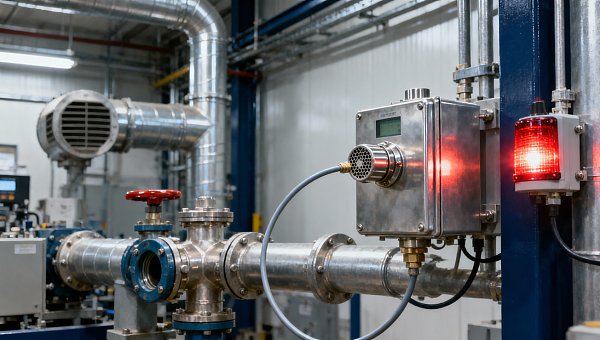
Leaks are also a major source of unstable readings, especially in low-pressure systems or when measuring trace components. Even a small leak can let ambient air enter the line or process gas escape, shifting concentration readings and making them inconsistent. This is particularly serious for oxygen analysis, toxic gas monitoring, and low-level impurity measurements. When the symptom is unexplained variability, leak checking should be one of the first actions, not one of the last.
Blocked filters and dirty probes create similar confusion. As particulate matter accumulates, sample flow becomes restricted and less predictable. The analyzer may still display numbers, but response time can increase and readings may oscillate as flow conditions change. Operators sometimes respond by adjusting settings or recalibrating, but if the sample path is restricted, those actions only mask the underlying issue for a short time.
Temperature, Moisture, and Condensation Problems Operators Often Underestimate
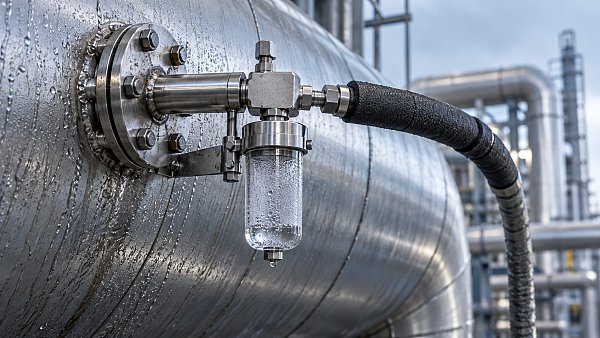
Moisture is one of the biggest reasons a Gas Analysis System becomes unreliable. If the sample gas contains water vapor and the sample path falls below the dew point, condensation can form inside tubing, filters, pumps, or conditioning components. Once liquid water appears, gas composition can change in the line. Water-soluble components may dissolve, droplets can block flow, and intermittent slugs of moisture can create unstable or delayed readings.
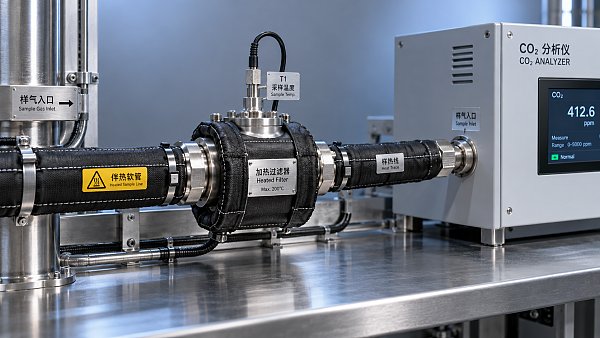
This is why heat tracing, insulation, and proper sample conditioning are not optional details in many applications. If heated lines are set too low, or if heated sections are interrupted by unheated fittings or valves, condensation can still occur. Operators may only notice the effect indirectly: unstable values in the morning, poor repeatability in cold weather, or drift after plant washdown or seasonal changes. These patterns often point to temperature control issues rather than analyzer failure.
Overcooling can be just as problematic as insufficient cooling. In systems designed to remove moisture, aggressive cooling may also remove or alter the gases you actually want to measure. If condensate traps or coolers are not selected correctly for the application, the conditioned sample may no longer represent the original process gas. Stability then suffers because the sample composition changes depending on moisture load, ambient temperature, or operating rate.
Operators should also watch for moisture-related maintenance mistakes. Drain pots that are not emptied, separators that are not cleaned, and membranes that are not inspected can cause intermittent problems that are hard to reproduce. If a reading becomes unstable only during certain process loads, a moisture handling issue is often a stronger suspect than an electrical fault.
Calibration Errors That Make a Healthy Analyzer Look Unreliable
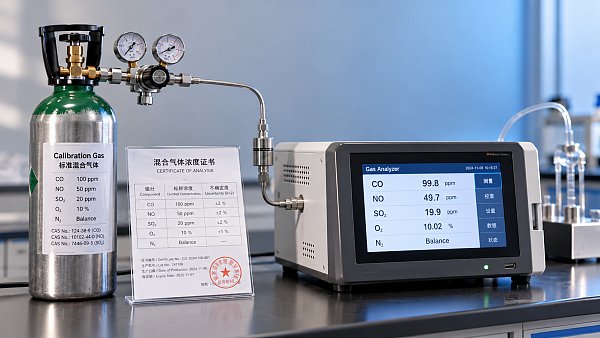
Calibration is supposed to improve confidence, but poor calibration practice often creates the opposite result. One common mistake is using calibration gas that is expired, improperly stored, or not suitable for the analyzer range and process application. If the reference itself is unreliable, stable measurement is impossible. Operators may end up chasing false drift that comes from the calibration standard rather than the Gas Analysis System.
Another issue is applying calibration too often without diagnosing why the reading changed in the first place. Frequent zero and span adjustments can hide developing problems such as contamination, leaks, sensor aging, or unstable sample pressure. If operators keep forcing the analyzer back into expected values, they may delay the discovery of a more serious fault. Good calibration practice should confirm performance, not replace troubleshooting.
Insufficient stabilization time is also a major source of error. After switching from process gas to zero gas or span gas, the system needs enough time to purge the previous gas from the lines and allow the analyzer to settle. If calibration is performed too quickly, the recorded adjustment will be based on a mixed or still-changing sample. That leads to poor repeatability and inconsistent readings once the system returns to normal operation.
Flow and pressure conditions during calibration matter as well. If calibration gas is introduced at a different pressure, flow rate, or path resistance than the process sample, the analyzer may behave differently during calibration than during actual measurement. This is especially important in systems using pumps, ejectors, or pressure-sensitive detection methods. Matching real operating conditions as closely as possible produces much more reliable results.
Maintenance Habits That Quietly Reduce Stability Over Time
Many unstable reading problems develop slowly, which is why they are often accepted as normal until they become severe. Preventive maintenance gaps are a common reason. Filters gradually clog, pumps wear, tubing hardens, seals age, and fittings loosen. Because the decline is gradual, operators may adapt to slower response or wider variation without realizing the system has moved far from its original condition.
Cleaning practices can also create problems when they are not done correctly. For example, replacing a filter but contaminating the sample path during handling can introduce debris or moisture into the system. Using the wrong cleaning solvent may damage seals or leave residues that affect sensitive gas components. Maintenance should restore system integrity, not introduce new instability.
Another overlooked issue is failing to document recurring symptoms. If one shift notices occasional spikes and another notices long response times, but these observations are not recorded in a consistent way, the pattern may be missed. Good maintenance for a Gas Analysis System includes trend review, event logging, and comparison between current behavior and previous baseline performance. Stability problems are easier to solve when operators track them as system behavior, not isolated incidents.
Consumables deserve more attention too. Drying media, pump diaphragms, sample cell windows, traps, and seals all have service limits. Waiting until complete failure is inefficient because measurement quality often degrades before a part stops working entirely. Replacing worn consumables on a defined schedule is one of the simplest ways to reduce unstable readings.
Installation and Operating Mistakes That Trigger False Instability
Sometimes the system itself is healthy, but the way it is installed or operated creates unstable output. Inadequate mounting support can allow vibration to affect components, especially in industrial environments with compressors, blowers, or rotating machinery. Vibration may loosen fittings, disturb optical paths, or create intermittent electrical connections. If readings fluctuate when nearby equipment starts or stops, mechanical installation should be checked.
Power quality is another common factor. Voltage fluctuations, poor grounding, and electrical noise can affect analyzer electronics, transmitters, pumps, and communication signals. Operators may see unstable digital values and assume the gas measurement is changing, when the actual problem is signal integrity. Separating instrument power from heavy equipment loads and verifying grounding can eliminate this type of false instability.
Sample flow settings are often mishandled during routine operation. Too low a flow can cause delayed response and weak cell purging. Too high a flow can upset pressure-sensitive analyzers or stress conditioning components. If operators adjust flow without following system specifications, they may create instability while trying to improve responsiveness. Stable performance requires the correct flow and pressure window, not simply “more” or “less.”
Operating mode changes can also mislead users. Switching processes, starting up after shutdown, or moving between low-load and high-load conditions can temporarily alter gas composition, temperature, and moisture content. If users do not account for these transitional states, they may interpret normal process dynamics as instrument instability. Understanding when the process is changing and when the measurement system is failing is a critical part of using the analyzer correctly.
How Operators Can Troubleshoot Unstable Gas Analysis System Readings More Effectively
When readings become unstable, start with the sample path before making major analyzer adjustments. Check whether the issue is continuous or only appears under certain process conditions. Look for obvious signs such as condensate, discolored filters, unusual pump noise, loose fittings, or unstable sample flow. Confirm that valves are in the correct position and that no recent maintenance introduced changes to tubing or connections.
Next, compare analyzer behavior in process mode and calibration mode. If the reading is stable on calibration gas but unstable on process gas, the sampling system or process condition is the stronger suspect. If it is unstable in both modes, the cause may involve the analyzer, utilities, pressure control, or electrical conditions. This simple comparison often saves time by narrowing the problem quickly.
Trend data is highly valuable. Do the fluctuations happen at a certain time of day, during weather changes, after filter replacement, when process load increases, or when another nearby machine starts? Patterns reveal causes. Random-looking instability often turns out to be linked to a repeatable operating event. Operators who use trend history instead of only instantaneous values make better troubleshooting decisions.
It also helps to check one variable at a time. If you replace filters, adjust flow, recalibrate, and change tubing all at once, you may solve the issue but never know what caused it. Controlled troubleshooting produces more reliable long-term results. For systems that support critical safety, emissions, or product quality decisions, that discipline is essential.
A Practical Checklist to Prevent Unstable Readings in Daily Use
For daily operation, a simple prevention routine can do more than repeated corrective maintenance. Verify sample flow and pressure are within the recommended range at the start of the shift. Inspect drains, filters, and heated sections for signs of blockage, moisture, or temperature loss. If your application is sensitive to leaks, perform periodic leak checks even when readings appear normal. Stability problems often begin before obvious failure appears.
Use calibration gases that are in date, stored correctly, and matched to the measurement range. Allow enough purge and stabilization time during zero and span checks. Record calibration results, not just pass or fail outcomes. Small but consistent changes in adjustment values can provide early warning that the Gas Analysis System is drifting due to contamination, wear, or sample path problems.
Keep maintenance records detailed enough to support diagnosis. Note component replacements, unusual process events, ambient temperature shifts, and cleaning actions. Over time, these records make it much easier to identify recurring causes of instability. A stable Gas Analysis System is not maintained by guesswork. It is maintained by routine observation, correct operating practice, and systematic follow-up.
Finally, train operators to recognize the difference between process variation and measurement variation. That single distinction can prevent unnecessary recalibration, unnecessary downtime, and missed faults. The best users are not just people who can read the display. They are people who understand how the sample gets there, what can change it, and what stable performance should look like.
Conclusion
Most unstable readings in a Gas Analysis System do not begin at the display screen. They begin earlier, in sampling, conditioning, calibration, installation, or maintenance. For operators, this is good news because many of the most common problems are preventable and diagnosable with the right routine checks. Better stability usually does not require complicated action first. It requires disciplined attention to sample quality, moisture control, flow conditions, leak integrity, and calibration practice.
If your system produces inconsistent data, avoid assuming the analyzer alone is at fault. Start by reviewing the entire measurement chain and the practical mistakes discussed above. In industrial environments, stable gas analysis depends on consistent operating conditions and careful daily use. When those fundamentals are in place, readings become more trustworthy, troubleshooting becomes faster, and the system delivers the value it was designed to provide.
Recommended for You
 How to choose an air quality analyzer for the pollutants you need to measureChoose an air quality analyzer with confidence. Compare pollutant measurement methods, sampling, accuracy and calibration to find the right fit for your needs.
 How to choose industrial metrology tools for tight tolerancesChoose industrial metrology tools for tight tolerances with confidence. Compare uncertainty, calibration, tool types, and costs to reduce inspection risk.
 How moisture affects fixed analyzer accuracy in stack gas monitoringImprove fixed analyzer accuracy in stack gas monitoring. Discover how moisture causes dilution, interference, and sample loss—and learn practical ways to protect emissions data.
 How does production line speed affect in-line measurement accuracy?Discover how production line speed affects in-line measurement accuracy. Explore sensor response, sampling, and timing to boost throughput without compromising quality.
 How condensation affects HCl concentration analyzer accuracyHCl concentration analyzer accuracy can suffer when condensation traps HCl. Learn how to spot sampling losses, prevent low readings, and improve measurement reliability.
 How does cross-interference affect multi-component gas analyzers?How does cross-interference affect multi component gas analyzers? Explore measurement errors, compensation limits, and validation tips to choose the right system for your process.
 How does temperature affect high-accuracy sensor performance?Explore how temperature affects high accuracy sensor performance. Learn to reduce thermal drift, evaluate compensation, and select the right sensor for reliable measurements.
 Can a C4H8O concentration analyzer distinguish between isomers?Can a C4H8O concentration analyzer distinguish isomers? Compare GC, FTIR and MS methods, uncover selectivity limits, and learn what to validate before choosing your instrument.
 How to identify a reliable supplier using on-time delivery recordsIdentify a Reliable Supplier by verifying on-time delivery records, original commitments, and complete shipments. Learn practical checks to reduce purchasing risk and protect your project schedule.
 How sensitive should a portable hydrogen analyzer be for lab use?Choose a portable hydrogen analyzer for laboratory use with the right quantification limit, accuracy, and range. Learn how to verify performance and avoid costly buying mistakes.
 How to set industrial calibration intervals based on equipment riskSet industrial calibration intervals based on equipment risk, drift, and as-found data. Learn when to shorten or extend schedules to improve reliability and avoid unnecessary costs.
 How to choose electrochemical analyzers for low-current measurementsCompare electrochemical analyzers for precise low-current measurements. Learn how noise, leakage, bandwidth, and real-cell testing help you choose the right instrument.
 What tolerance does a custom gas mixture need for calibration?Choose the right custom gas tolerance for calibration. Learn how blending tolerance, certified uncertainty, and stability affect accuracy—and avoid paying for precision you don’t need.
 How condensation affects stack detector readings in wet flue gasStack detector readings can drift when wet flue gas condenses. Learn how to identify moisture interference, prevent sample losses, and improve emissions monitoring reliability.
 How to prevent condensation in a CO2 analyzer sampling systemPrevent condensation in your CO2 analyzer sampling system. Learn how to control dew point, eliminate cold spots, and manage moisture for reliable readings and fewer costly disruptions.
 How to verify accuracy claims for industrial quality analyzersVerify accuracy claims for industrial quality analyzers with calibration checks, independent testing, and clear acceptance criteria. Learn how to reduce risk and buy with confidence.
 How to calculate cooling loads for an industrial analyzer shelterSize industrial analyzer shelter cooling with confidence. Learn to calculate equipment heat, solar gains, and ventilation loads, then select HVAC capacity for reliable analyzer performance.
 Hydrogen Analyzers for Energy Storage: Purity Monitoring vs. Leak DetectionChoosing a hydrogen analyzer for energy storage systems? Compare purity monitoring and leak detection to select the right sensors, improve safety, and protect fuel cell performance.
 NH3 Monitoring in Fertilizer Plants: Where Should Leak Analyzers Be Installed?NH3 analyzer for fertilizer production: discover where to place leak detectors around storage, compressors, and loading areas to reduce blind spots and improve early warning.
 Diesel Engine NOx Analyzers: Response Time and NO2 Conversion ExplainedChoosing a NOX analyzer for diesel engines? Learn how response time, NO2 conversion, and sampling design affect accuracy—and make a smarter, evidence-based purchase.
 SO2 Analyzers for Smelter Emissions: Sampling Hot, Dust-Laden Flue GasSelect an SO2 analyzer for smelting industry applications. Discover how to handle hot, dust-laden flue gas, prevent sample losses, and achieve reliable emissions monitoring.
 Unstable CH4 Readings in Biogas Monitoring? Check Moisture and Sample FlowCH4 analyzer for biogas monitoring giving unstable readings? Discover how moisture, sample flow, and pressure checks help pinpoint faults and restore reliable methane measurements.
 Buying a CO2 Analyzer for Brewery Gas Recovery: Costs Beyond the Purchase PriceBuying a CO2 analyzer for brewery applications? Compare sampling, installation, calibration, and downtime costs to uncover hidden expenses and make a smarter gas recovery investment.
 Where to Place CO Analyzers for Effective Parking Garage VentilationOptimize your CO analyzer for parking garage ventilation with practical placement tips. Learn how sensor height, airflow, and zone coverage support timely detection and effective fan control.
 NDIR vs. FTIR Gas Analyzers: Which Fits Your Environmental Research?Find the right infrared gas analyzer for environmental research. Compare NDIR vs. FTIR on sensitivity, gas coverage, sampling needs, and cost to choose confidently for your study.
 Oxygen Analyzers for Diving: Calibration Checks Before Nitrox BlendingUsing an oxygen analyzer for diving applications? Discover essential calibration, sensor, and sampling checks before nitrox blending to support reliable readings.
 How Paramagnetic Oxygen Analyzers Work and Why Sample Pressure MattersLearn how a paramagnetic oxygen analyzer works, why sample pressure affects accuracy, and what to check in compensation and calibration before choosing your system.
 How Much Does a Complete CEMS Integration Project Typically Cost?How much does a complete CEMS integration project typically cost? Explore budget ranges, hidden installation costs, and compliance needs to compare quotes and plan confidently.
 What Is the Typical Response Time for Industrial Air Monitors?What is the typical response time for industrial air monitors? Explore T90, sampling delays, and alarm settings to compare performance and choose the right monitor with confidence.
 Do Regulatory Monitoring Systems Need Third-Party Certification?Do regulatory monitoring systems need third-party certification? Learn when it is required, what certificates prove, and how to verify compliance before buying.
 How Do You Choose Wired or Wireless for Stack Monitoring?Learn how to choose between wired and wireless for stack monitoring. Compare reliability, lifecycle costs, and data recovery to find the right CEMS setup for your site.
 What Happens When Combustible Gas Sensor Calibration Is Overdue?What happens if combustible gas sensor is not recalibrated on time? Discover the risks of inaccurate readings and missed alarms, plus steps to restore reliable protection.
Search Categories
Search Categories
- Smart Meters & Power Quality
- Transformer Gas Analyzers
- BESS Thermal Runaway Detectors
- Energy, Power & Smart Grid Monitoring
- Optical Profilers & CMM
- Ultrasonic & X-Ray NDT
- Calibration Standards
- Precision Metrology & NDT
- Water Quality Analyzers
- CEMS & VOCs Monitors
- Price Trends
- Import & Export Updates
- Market Trends
- Industry News
- Industry Insights
Latest Article
- How to choose an air quality analyzer for the pollutants you need to measureChoose an air quality analyzer with confidence. Compare pollutant measurement methods, sampling, accuracy and calibration to find the right fit for your needs.Posted by:
- How to choose industrial metrology tools for tight tolerancesChoose industrial metrology tools for tight tolerances with confidence. Compare uncertainty, calibration, tool types, and costs to reduce inspection risk.Posted by:
- How moisture affects fixed analyzer accuracy in stack gas monitoringImprove fixed analyzer accuracy in stack gas monitoring. Discover how moisture causes dilution, interference, and sample loss—and learn practical ways to protect emissions data.Posted by:
Please give us a message
